Wire Protection and Routing Component Systems for Vehicles Market

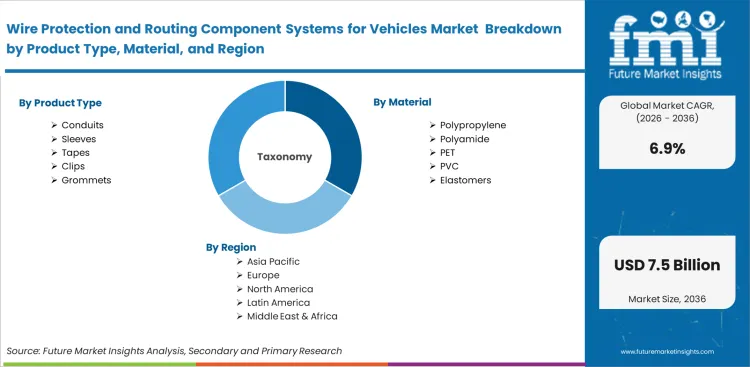
The wire protection and routing component systems for vehicles market is segmented by Product Type (Conduits, Sleeves, Tapes, Clips, Grommets), Material (Polypropylene, Polyamide, PET, PVC, Elastomers), Vehicle Type (Passenger Cars, Light Commercial, Heavy Commercial, Off-Highway, Buses), Voltage Class (Low Voltage, High Voltage, Mixed Voltage), Application Zone (Engine Bay, Cabin, Chassis, Doors, Battery Pack), and Region. Forecast for 2026 to 2036.

Methodology

Wire Protection and Routing Component Systems for Vehicles Market Size, Market Forecast and Outlook By FMI

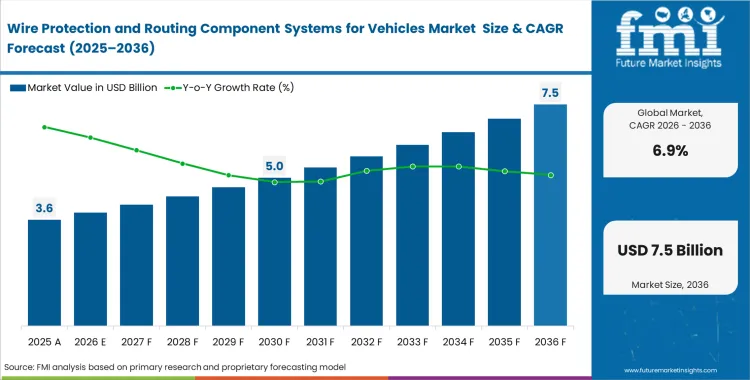
The wire protection and routing component systems for vehicles market was valued at USD 3.3 billion in 2025. Revenue is poised to reach USD 3.6 billion in 2026 at a CAGR of 6.9% during forecast parameters. Sustained investment carries cumulative buildup to USD 7.0 billion through 2036 as high-voltage shielding requirements force automakers to upgrade baseline insulation standards across all electrified platforms.

Packaging constraints specifically affecting the engineering teams at Tier-1 suppliers involve thermal and electromagnetic interference shielding. The move to 800-volt platforms significantly increases thermal signatures. This causes a significant problem in the automotive wiring harness architectures. Failure to move to these architectures in a timely manner creates significant warranty risk to the OEM. Surface volume projections do not accurately reflect the fact that standard internal combustion platforms now require specialized vehicle routing hardware to accommodate growing sensor packages without expanding physical channel space. Sourcing directors working to implement modern OEM wire harness protection component sourcing strategies prioritize suppliers that can deliver on multi-material geometries.
Summary of Wire Protection and Routing Component Systems for Vehicles Market

  • Wire Protection and Routing Component Systems for Vehicles Market Definition
    • The wire protection and routing component systems for vehicles market involves specialized hardware engineered to secure, shield, and manage electrical cabling against thermal, mechanical, and electromagnetic stress across automotive platforms.
  • Demand Drivers in the Market
    • High-voltage architecture upgrades require electrical engineering leads to specify temperature-resistant conduits.
    • Automated assembly requirements compel Tier-1 procurement directors to source integrated edge clips reducing installation time.
    • Stringent electromagnetic interference standards push chassis designers to mandate shielded routing enclosures.
  • Key Segments Analyzed in the FMI Report
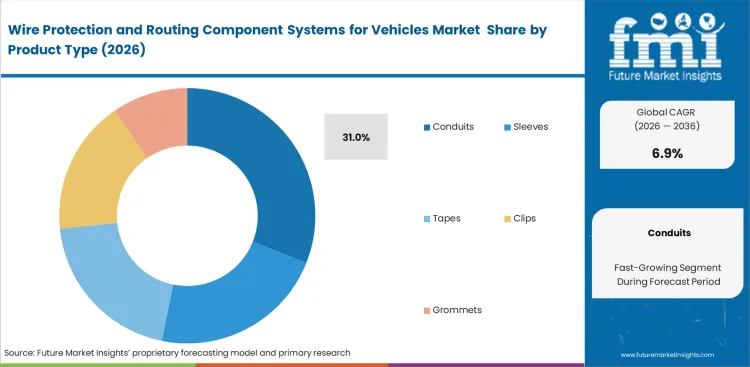
    • Conduits is anticipated to grab 31.0% share in 2026, supported by mandatory crush-resistance standards in engine compartments.
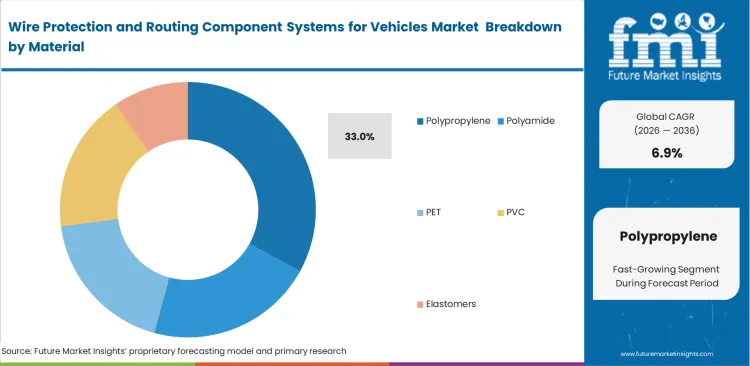
    • Polypropylene is projected to account for 33.0% share in 2026 due to an optimal balance of thermal stability and cost efficiency.
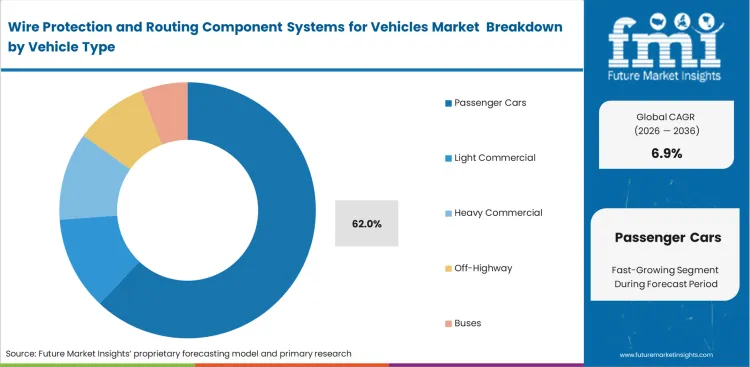
    • Passenger Cars is estimated to hold 62.0% share in 2026 based on total global production volume scaling.
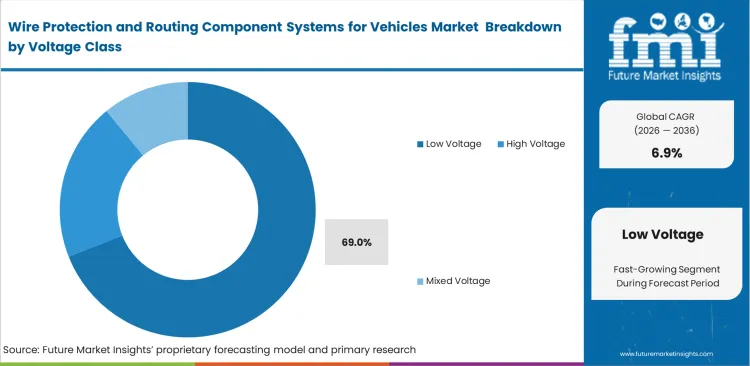
    • Low Voltage is expected to record 69.0% share in 2026 as legacy sensor networks still dominate total vehicle cable length.
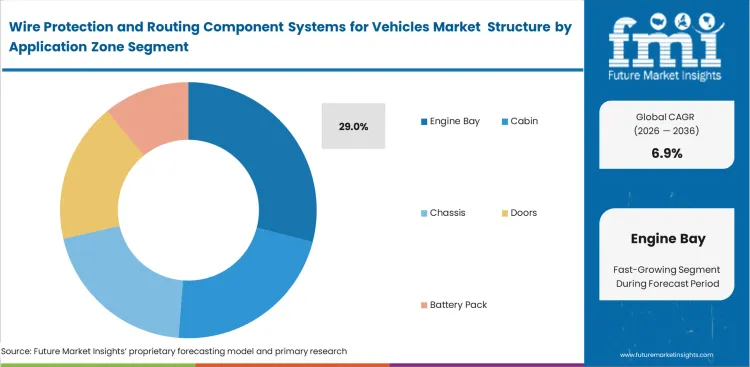
    • Engine Bay is set to garner 29.0% share in 2026 driven by extreme temperature shielding requirements.
    • India is poised to register an 8.4% compound growth, anchored by rapid electrification in two-wheeler and entry-level passenger categories.
  • Analyst Opinion at FMI:
    • Nikhil Kaitwade, Principal Analyst, Automotive, at FMI, points out, "Generalist models assume a shift to zonal architectures proportionally shrinks addressable demand for protective components. Procurement directors at Tier-1 suppliers actually see shorter cable runs in high-voltage environments requiring exponentially more sophisticated shielding per meter. A single high-voltage run from battery packs to inverters demands specialized multi-layer conduits, high-temperature tapes, and isolated routing clips eclipsing the cost parameters of standard low-voltage protection for entire legacy cabins. Unit volumes of plastic might drop, but component value density increases sharply."
  • Strategic Implications / Executive Takeaways
    • Component suppliers face immediate qualification pressure from OEMs demanding validated 800-volt shielding hardware.
    • Procurement directors must secure capacity agreements for specialized polymers before high-voltage platform volumes scale globally.
    • Tooling engineers require design synchronization with harness builders ensuring clips accommodate automated insertion routines.
  • Methodology
    • Primary Research: Sourcing directors at Tier-1 harness manufacturers and electrical architecture lead engineers at major automakers.
    • Desk Research: USCAR specification registries, OEM supplier qualification documents, and FMVSS No. 305a safety filings.
    • Market-Sizing and Forecasting: Global vehicle production volume indexed against platform-specific electrification intensity models.
    • Data Validation and Update Cycle: Tier-1 component supplier revenue footprints cross-referenced against global wire harness value pool estimates.

Wire Protection And Routing Component Systems For Vehicles Market Market Value Analysis

Wire Protection and Routing Component Systems for Vehicles Market Key Takeaways

Metric Details
Industry Size (2026) USD 3.6 Billion
Industry Value (2036) USD 7.0 Billion
CAGR (2026 to 2036) 6.9%

Source: Future Market Insights (FMI) analysis, based on proprietary forecasting model and primary research

Once the zonal controllers move closer to the edge sensors to process data, cable length is minimized. This architecture replaces wire with complex nodes that require highly specific vehicle cable protection components to withstand severe vibration profiles. The wire harness routing algorithms ensure integration into these new pathways. Advanced wire routing components in the design of the new zonal architecture define the success of platforms attempting to meet specific weight reduction targets.

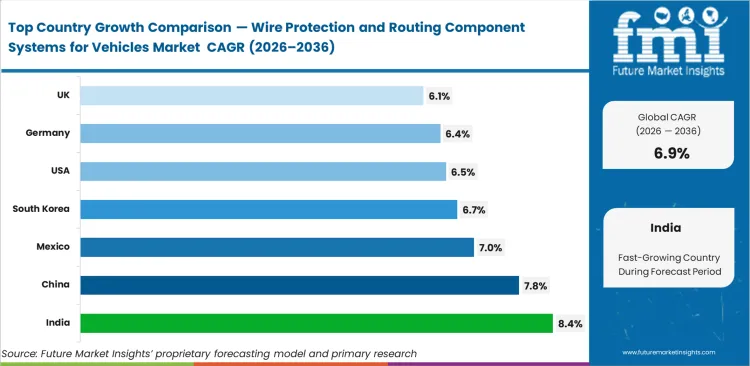
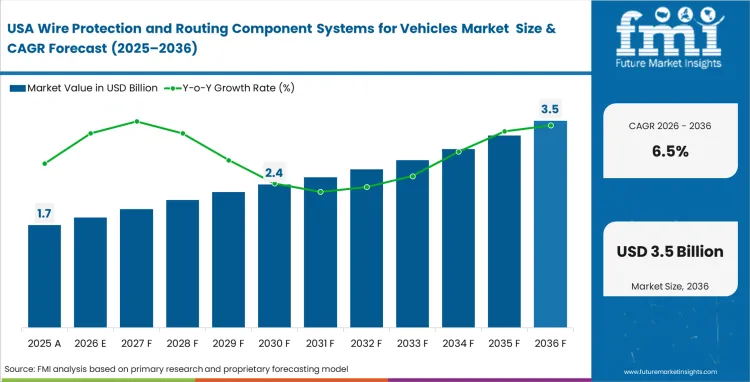
Global growth in the integration of vehicle harness protection solutions is driving regional production variations. India leads at 8.4%, with electrification intensity requiring new thermal shielding protocols, while China tracks at 7.8% on the back of rapid electric vehicle manufacturing scale. Mexico expands at 7.0% as North America assembly localization accelerates. South Korea advances at 6.7% due to premium platform exports. United States volumes grow at 6.5% under strict high-voltage safety mandates. Germany progresses at 6.4% driven by luxury segment complexity. United Kingdom output climbs at 6.1% and Japan follows at 5.6%. Variations in regional growth stem entirely from the speed of local assembly plants integrating vehicle harness protection solutions.

Wire Protection and Routing Component Systems for Vehicles Market Definition

The wire protection and routing component systems for vehicles market encompasses specialized hardware required to secure, shield, and manage electrical cabling within automotive platforms. Evaluating the core scope of the wire protection and routing component systems for vehicles market reveals conduits, tapes, grommets, and clips designed to maintain physical integrity. It isolates mechanical stress from critical power distribution networks. These core automotive cable management components ensure long-term electrical reliability.

Wire Protection and Routing Component Systems for Vehicles Market Inclusions

Components integrated specifically for securing and protecting automotive wires fall within this scope. Products evaluated include corrugated tubing, heat-shrinkable sleeves, specialized wire harness tape, and edge clips designed for chassis mounting. High-voltage identification markers and electromagnetic interference shielding wraps are actively modeled. Evaluating automotive clip and clamp systems for harness routing provides accurate baseline metrics for retention hardware.

Wire Protection and Routing Component Systems for Vehicles Market Exclusions

Bare copper wiring and internal battery cell connectors are excluded because they constitute conductive pathways rather than protective housings. Standard fasteners not specifically engineered for wire and cable management are omitted. Aftermarket cosmetic wire covers lack OEM qualification standards and sit outside evaluations of factory-installed component demand.
Wire Protection and Routing Component Systems for Vehicles Market Research Methodology

  • Primary Research: Sourcing directors at Tier-1 harness manufacturers and electrical architecture lead engineers at major automakers.
  • Desk Research: USCAR specification registries, OEM supplier qualification documents, and FMVSS No. 305a safety filings.
  • Market-Sizing and Forecasting: Global vehicle production volume indexed against platform-specific electrification intensity models.
  • Data Validation and Update Cycle: Tier-1 component supplier revenue footprints cross-referenced against global harness value pool estimates.

Segmental Analysis

Wire Protection and Routing Component Systems for Vehicles Market Analysis by Product Type

Wire Protection And Routing Component Systems For Vehicles Market Analysis By Product Type

Crush resistance in high-temperature zones determines the survival rate of essential cabling. Conduits segment holds 31.0% share in this market area owing to the efforts of procurement directors at Tier-1 suppliers who favor corrugated shapes to counteract constant engine vibration. Ensuring high-end zonal harness systems channels necessitates rigid yet flexible boundaries. Unit shipment data does not reveal the fact that modern automotive convolute tubing now features co-extruded internal layers specifically to counteract acoustic rattling in vehicle compartments. Delays in shifting from smooth tubing to corrugated conduit in vehicle wiring formats forces automotive designers to battle with mechanical abrasion-related failures in prolonged warranty periods. Requiring RFQs for automotive cable clips conduits sleeves presently necessitates defining specific thermal deflection parameters. Comparing wire harness tapes with corrugated conduits in vehicle applications reveals superior flexibility in tapes yet failure when subjected to direct crush load testing.
  • Vibration mitigation: Corrugated profiles absorb mechanical shock before reaching internal wires. Engineering leads face severe warranty claims causing internal wire chafing.
  • Acoustic dampening: Co-extruded inner layers silence the noise of wires moving against outer tube walls. Cabin acoustic engineers specifying cabin wire noise damping tapes avoid harsh plastics amplifying road vibration.
  • Thermal isolation: Heat-reflective additives in conduit shells deflect ambient engine heat away from data lines. Reliability directors require this barrier preventing signal degradation in engine sensors.

Wire Protection and Routing Component Systems for Vehicles Market Analysis by Material

Wire Protection And Routing Component Systems For Vehicles Market Analysis By Material

The choice of material determines the precise temperature limits that routing assemblies will withstand before catastrophic deformation. Polypropylene segment accounts for a 33.0% market share based on material choice due to low density and high resistance to chemicals, which survive under hood fluid exposure. FMI finds automotive wires cable materials evaluations ranking polypropylene over other options for mass market platforms based on molding characteristics. Assumptions that high-end polymers will replace basic materials for all platforms overlook the fact that lower-temperature cabin spaces will still require weight reduction over extreme temperature ratings. Incorrect polymer blends will necessitate costly mid-cycle recalls to fix clips that snap during winter-temperature servicing. Comparing PP vs. PA for automotive cable protection materials shows that polyamides have higher heat resistance but will absorb moisture, compromising electrical properties.
  • Chemical resistance: Polypropylene repels brake fluid, coolant, and oil exposure. Maintenance designers specify this material preventing routing clips from dissolving during routine vehicle servicing.
  • Weight reduction: The low specific gravity of polymers contributes to overall vehicle mass reduction. Weight engineering teams analyzing EV cable protection material suppliers demand lightweight plastics meeting strict fleet emissions targets.
  • Cold weather durability: Specific elastomer blends within materials prevent shattering at sub-zero temperatures. Quality directors mandate cold-impact testing before approving chassis-mounted clips.

Wire Protection and Routing Component Systems for Vehicles Market Analysis by Vehicle Type

Wire Protection And Routing Component Systems For Vehicles Market Analysis By Vehicle Type

Platform scale is a critical factor in establishing the business viability of bespoke injection-molded routing hardware. The passenger cars segment accounts for a commanding 62.0% market share, driven by volume purchasing power, which enables category managers to spread the financial burden of costly tooling expenses on millions of identical automotive power distribution modules layouts. The volume segment dominance, however, belies the reality of cable protection system needs in commercial vehicles, which require a significantly increased per-unit tooling investment in extreme-abrasion clips due to exposed chassis layouts. Inability to develop clips for automated assembly line production can result in line speed being brought to a standstill. The standardization of passenger vehicle wire routing protocols has a direct bearing on production line speeds
  • Automated insertion: Clips designed for passenger vehicles feature self-guiding alignment pins. Manufacturing directors require these features allowing robotic arms installing harnesses without human intervention.
  • Packaging density: Tight cabin spaces force the use of low-profile routing channels. Interior packaging engineers specifying off-highway vehicle harness protection components must adapt flat-ribbon conduits fitting behind aesthetic trim panels without causing bulges.
  • Aesthetic integration: Visible grommets in passenger doors must match interior textures perfectly. Trim designers reject protective hardware disrupting the visual continuity of cabins.

Wire Protection and Routing Component Systems for Vehicles Market Analysis by Voltage Class

Wire Protection And Routing Component Systems For Vehicles Market Analysis By Voltage Class

Legacy 12-volt systems are the determining factor for the vast majority of individual cable run requirements. Low Voltage segment retains 69.0% of the revenue share, fueled by the dominance of legacy sensor networks on overall vehicle cable length. Based on FMI analysis, the cable integration of the automotive key interlock cable system will be measured at hundreds of low-voltage connections far outpacing the limited number of heavy-gauge traction cables found in electrified vehicles. The misconception that electrification of vehicles eliminates the need for low-voltage shielding fails to take into account the proliferation of modern safety systems that have multiplied the number of fine data cables that need to be shielded. Failure to consider low-voltage abrasion risks will result in phantom electrical faults that will create significant dealership diagnostic time. Analyzing low-voltage vs. high-voltage cable protection.
  • Sensor proliferation: Advanced driver assistance systems require dozens of low-voltage shielded runs. Systems engineers evaluating low-voltage and high-voltage vehicle cable protection must route fragile lines far away from high-current power cables.
  • Bulkweight management: Using thinner wall conduits for 12-volt lines offsets heavy shielding required for battery packs. Mass optimization directors carefully balance these material thickness trade-offs.
  • Connector strain relief: Tapes and grommets secure low-voltage wires exactly entering rigid plastic housings. Reliability managers focus on these stress points preventing wire breakage during vehicle operation.

Wire Protection and Routing Component Systems for Vehicles Market Analysis by Application Zone

Wire Protection And Routing Component Systems For Vehicles Market Analysis By Application Zone

Extreme heat cycling and chemical spray are the determinants for survival criteria within engine hoods. Engine bay segment holds a 29.0% share in 2026, which is dictated by extreme temperature shielding criteria and critical thermal deflections. According to FMI, procurement specialists have always approved higher unit costs for automotive connectors and routing clips within this environment to prevent immediate thermal failures. A critical factor to consider is that electric vehicles still have front structures that require thermal management pumps and inverters that need to be shielded to an equivalent degree as internal combustion engines. Using cabin-grade plastics to replace engine bay harness protection components ensures that components will melt within the first thousand miles. Battery pack cable routing components have entirely different fire retardancy criteria.
  • Thermal deflection: Engine bay conduits employ metallic heat shields reflecting radiant heat. Powertrain engineers require this barrier preventing internal wire insulation from blistering.
  • Fluid shedding: Smooth outer layers on specific chassis harness protection sleeves prevent oil and coolant from pooling. Maintenance engineers design these shapes avoiding trapping corrosive liquids against wiring.
  • Vibration isolation: Specialized dampening door harness routing clips suspend harnesses away from vibrating structures. NVH engineers specify these soft-mount points preventing noise transmission.

Wire Protection and Routing Component Systems for Vehicles Market Drivers, Restraints, and Opportunities

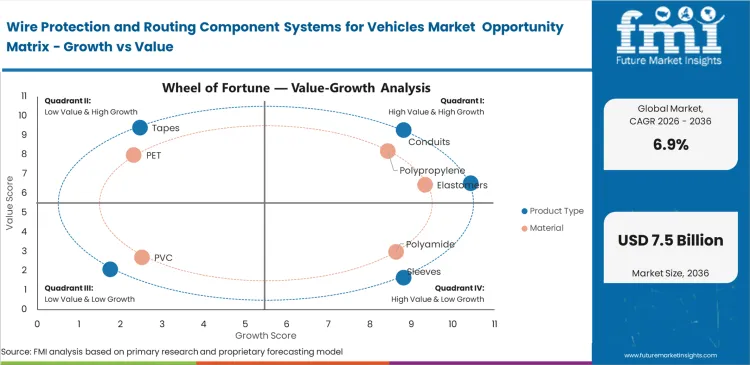
Wire Protection And Routing Component Systems For Vehicles Market Opportunity Matrix Growth Vs Value

Warranty liabilities require electrical architecture directors to revise the base specifications of cable shielding. The change from 800-volt battery systems significantly increases levels of electromagnetic interference from traction cables, which compromises the reliability of nearby low-voltage sensor systems. Delays in the adoption of heavily shielded cable conduits and locomotive wiring harness style isolation hardware pose systemic safety faults for automakers. Consumers understand the importance of reserving supply capacity for high-temperature polymers currently, as the EV market saturates supplier bases. The increased demand for EV high-voltage cable protection redefines legacy budgets.

Physical space limitations hinder the adoption of increased protective materials inside the cabin space. Packaging engineers face challenges designing required for PFA resins for wire and cable insulation components without affecting interior space dimensions. The negotiation process has been ongoing, which causes automakers to compromise cable placement through high-stress chassis areas, which necessitates costly exterior shielding solutions. Advanced thin-wall corrugated tubes provide partial solutions, but the cost of materials hinders adoption for economy vehicles. Designing EV platform wire protection components necessitates constant negotiation between electrical and interior packaging engineers.

Opportunities in the Wire Protection and Routing Component Systems for Vehicles Market

  • Automated harness assembly: Tooling engineers designing clips specifically for robotic insertion capture major contracts. Tier-1 suppliers avoid components requiring manual seating, accelerating demand for clip mounting vs adhesive routing systems automotive solutions.
  • Thermal event containment: Battery safety directors require fire-retardant conduits delaying flame propagation. Suppliers offering self-extinguishing polymer blends supporting hybrid vehicle high-voltage cable protection gain immediate qualification.
  • Electromagnetic shielding tapes: Sensor integration teams desperately need lightweight armored cable alternatives. Tapes woven with conductive metal fibers allow precise shielding for autonomous vehicle harness routing systems without the bulk of solid metal tubes.

Regional Analysis

Based on regional analysis, the wire protection and routing component systems for vehicles market is segmented into North America, Europe, Asia Pacific, Latin America, and Middle East & Africa across 40 plus countries.

Top Country Growth Comparison Wire Protection And Routing Component Systems For Vehicles Market Cagr (2026 2036)

Country CAGR (2026 to 2036)
India 8.4%
China 7.8%
Mexico 7.0%
South Korea 6.7%
United States 6.5%
Germany 6.4%
United Kingdom 6.1%
Japan 5.6%

Source: Future Market Insights (FMI) analysis, based on proprietary forecasting model and primary research
Wire Protection And Routing Component Systems For Vehicles Market Cagr Analysis By Country

Asia Pacific Wire Protection and Routing Component Systems for Vehicles Market Analysis

Manufacturing scale impacts local assembly line volume directly. The analysis done by FMI reveals that supply chain localization mandates force Tier-1 harness builders to source clips, tapes, and conduits from domestic polymer extrusion facilities, not imported as finished components. The scale of two-wheeler and passenger car production at the entry-level necessitates cost-optimized interlocked armored cable substitutes, which must survive harsh road conditions without adding unnecessary weight.

  • India: Growing at an impressive pace of 8.4% CAGR, local suppliers have a substantial share as they design weather-resistant routing hardware for exposed architectures, primarily driven by the aggressive adoption of electrification in two-wheeler segments. Quality directors of Indian automotive cable routing systems demand necessitates specialized conduits for protecting wire routings from harsh monsoon weather.
  • China: The China market is growing at a rate of 7.8% CAGR, mainly because China is strategically pursuing a goal of self-sufficiency in the development of advanced polymer extrusion technologies. This is mainly driven by the growing rate of exports in EVs, as these components must comply with international standards. Sourcing managers in the industry have underscored the importance of fully validated high voltage shielding components.
  • South Korea: Local Korea EV cable protection component manufacturers dominate the premium segment with a 6.7% CAGR by closely working with local OEM acoustic teams owing to advanced acoustic dampening in cabin routing systems.
  • Japan: The Japan market is growing at a CAGR of 5.6%, and the existing Japan vehicle cable protection systems players are retaining their positions through highly optimized efforts, owing to the existing manufacturing base that uses highly refined designs for the components.

FMI's report includes detailed assessments of emerging Southeast Asian assembly hubs. Supply chain managers actively qualify secondary component sources in Vietnam and Thailand mitigating single-country manufacturing risks.
North America Wire Protection and Routing Component Systems for Vehicles Market Analysis

Wire Protection And Routing Component Systems For Vehicles Market Country Value Analysis

Cross-border assembly integration is the flow of components in the manufacturing ecosystem. Regional trade agreements have a major impact on bulk plastic extrusion placement near final assembly plants to minimize transportation costs. FMI has observed a high preference for large truck and SUV platforms, which dictate high volumes of extreme weather chassis shielding.

  • Mexico: The growth in this region is expected to increase by a CAGR of 7.0%. The business opportunity in this region is to establish local injection molding facilities to supply these massive harness plants, which is driven by nearshoring trends. Plant managers in this region require local Mexican suppliers to provide automotive routing hardware to meet just-in-time delivery.
  • United States: The growth in this region is tracking a CAGR of 6.5%. Local United States vehicle harness protection suppliers are focused on designing high-margin safety components, which are governed by federal regulations related to high-voltage battery integrity in a crash scenario. Safety engineering leads require hose protection sleeves to withstand extreme physical impacts.

FMI's report includes analysis of Canadian automotive supply chain dynamics. Cold-weather testing facilities continuously validate new elastomer blends ensuring routing hardware survives extreme winter operation.
Europe Wire Protection and Routing Component Systems for Vehicles Market Analysis

Wire Protection And Routing Component Systems For Vehicles Market Europe Country Market Share Analysis, 2026 & 2036

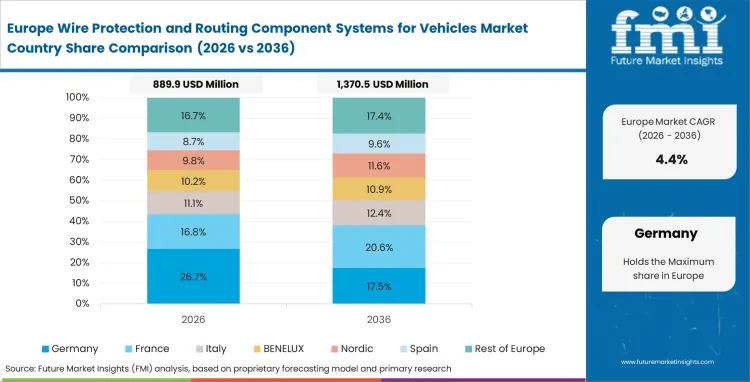
Platform complexity in luxury cars creates a need for highly specialized, low-profile routing products. Chemical recycling regulations require procurement teams to fully analyze the sustainability of each plastic clip and conduit in vehicles. Based on FMI analysis, the move to 800-volt architectures by luxury brands necessitates entirely new categories of electromagnetic shielding products.

  • Germany: The electrical architecture leads require woven tapes to protect EV charging cable locks and security devices from powertrain noise. The Germany market is growing at a CAGR of 6.4%, with innovators in automotive wire routing components contributing to the creation of new global standards in high-voltage cable protection, a necessity in the high-performance development environment of electric vehicles.
  • United Kingdom: The United Kingdom market is growing at a CAGR of 6.1%, with supply bases in this region depending on extreme customization rather than mass production scales, with luxury manufacturing niches dictating new product developments in routing hardware.

FMI's report includes analysis of Eastern Europe harness manufacturing centers. Assembly plant managers in Poland and Romania dictate regional demand for automated insertion-ready clips.

Latin America Wire Protection and Routing Component Systems for Vehicles Market Analysis

Nearshoring strategies and vehicle production scales in these regions shape the demand. Brazil and Argentina act as major hubs in assembling commercial fleet vehicles. The regions require strong chassis protection parts to withstand rugged terrain. Harness manufacturers in these regions focus on cost-effective heavy-duty elastomers to withstand prolonged physical stress. Procurement networks in these regions help in developing local supply chains to ensure maximum resilience against global shipping challenges.

Middle East and Africa Wire Protection and Routing Component Systems for Vehicles Market Analysis

Extreme temperature parameters shape the procurement strategies in the Middle East and Africa. GCC states rely on high-specification routing parts to ensure luxury vehicle platforms withstand extreme ambient temperatures. Parallel commercial fleet vehicle expansion in South Africa demands ruggedized corrugated conduits to ensure essential vehicle functions operate correctly during long-haul transport. Distributors in these regions primarily focus on procuring ruggedized shielding parts to ensure vehicle electronic systems operate correctly in extreme climate conditions.
Competitive Aligners for Market Players

Wire Protection And Routing Component Systems For Vehicles Market Analysis By Company

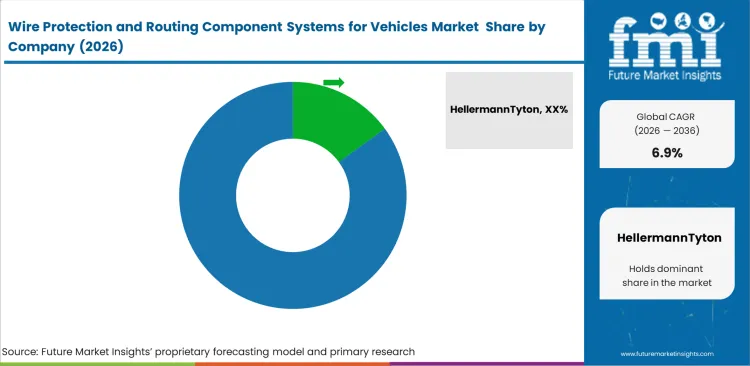
Engineering qualification creates significant barriers to entry across this component sector. Securing positions on automaker approved vendor lists requires passing extreme temperature, vibration, and chemical exposure tests taking years to complete. Leading automotive wire protection component suppliers like HellermannTyton and LEONI secure positions by holding massive libraries of pre-validated component geometries. Facing tight deadlines for new vehicle platforms, procurement directors evaluating the leading suppliers select from these pre-approved catalogues rather than risk delaying vehicle launches testing cheaper alternatives.

Global manufacturing footprints dictate abilities serving major harness assemblers. High-volume components like ccw armored cable shielding and corrugated conduits are lightweight but bulky, making long-distance shipping economically unviable. Aptiv and Sumitomo Wiring Systems integrate vehicle cable routing component manufacturers capacity directly into broader harness assembly strategies, co-locating extrusion lines near major automotive manufacturing hubs. Challengers attempting establishing automotive harness routing hardware suppliers dominance must build local injection molding capacity before Tier-1 buyers will even consider bids.

Large harness manufacturers resist total reliance on single component suppliers by heavily standardizing internal design rules. Engineering directors force multiple suppliers conforming to identical clip mounting hole dimensions, ensuring vendor flexibility if pricing or capacity issues arise. Toward 2036, supplier dominance relies entirely on developing proprietary, multi-material components evading replication by generic injection molding facilities.
Key Players in Wire Protection and Routing Component Systems for Vehicles Market

  • HellermannTyton
  • Aptiv
  • LEONI
  • Yazaki
  • Sumitomo Wiring Systems
  • Furukawa Electric
  • Coroplast

Scope of the Report

Wire Protection And Routing Component Systems For Vehicles Market Breakdown By Product Type, Material, And Region

Metric Value
Quantitative Units USD 3.6 Billion to USD 7.0 Billion, at a CAGR of 6.9%
Market Definition The wire protection and routing component systems for vehicles market involves specialized hardware engineered to secure, shield, and manage electrical cabling against thermal, mechanical, and electromagnetic stress across automotive platforms.
Segmentation Product Type, Material, Vehicle Type, Voltage Class, Application Zone
Regions Covered North America, Europe, Asia Pacific, Latin America, Middle East & Africa
Countries Covered India, China, Mexico, South Korea, United States, Germany, United Kingdom, Japan
Key Companies Profiled HellermannTyton, Aptiv, LEONI, Yazaki, Sumitomo Wiring Systems, Furukawa Electric, Coroplast
Forecast Period 2026 to 2036
Approach Global vehicle production volume indexed against platform-specific electrification intensity models

Source: Future Market Insights (FMI) analysis, based on proprietary forecasting model and primary research

Wire Protection and Routing Component Systems for Vehicles Market Analysis by Segments

Product Type

  • Conduits
  • Sleeves
  • Tapes
  • Clips
  • Grommets

Material

  • Polypropylene
  • Polyamide
  • PET
  • PVC
  • Elastomers

Vehicle Type

  • Passenger Cars
  • Light Commercial
  • Heavy Commercial
  • Off-Highway
  • Buses

Voltage Class

  • Low Voltage
  • High Voltage
  • Mixed Voltage

Application Zone

  • Engine Bay
  • Cabin
  • Chassis
  • Doors
  • Battery Pack

Region

  • North America
    • United States
    • Canada
    • Mexico
  • Europe
    • Germany
    • United Kingdom
    • France
    • Italy
    • Spain
    • Rest of Europe
  • Asia Pacific
    • China
    • Japan
    • India
    • South Korea
    • Australia
    • Rest of Asia Pacific
  • Latin America
    • Brazil
    • Argentina
    • Rest of Latin America
  • Middle East & Africa
    • GCC Countries
    • South Africa
    • Rest of Middle East & Africa

Bibliography

  • Karlsson, T., Åblad, E., Hermansson, T., Carlson, J. S., & Tenfält, G. (2024, April). Automatic cable harness layout routing in a customizable 3D environment. Computer-Aided Design, 169, 103671.
  • Kim, K., Yoon, Y., Kim, B. C., Kim, J., Han, S., & Kwon, S. (2024, October). Automatic cable routing based on improved pathfinding algorithm and B-spline optimization for collision avoidance. Journal of Computational Design and Engineering, 11(5), 303-317.
  • Reis, B., Della Cella, H., Ferreira, M., Vaz, S., Cossolino, G., Montes, R., & Ferreira, F. F. V. M. (2024, January). A systematic review of automotive wiring harness innovations. SAE Technical Paper Series.
  • Aptiv. (2024, March). Hybrid connectors bring together power and data.
  • ABB. (2024, June 26). ABB creates universally compatible multi-sleeve adaptor to help protect wiring in heavy-duty vehicles.

This bibliography is provided for reader reference. The full FMI report contains the complete reference list with primary source documentation.

This Report Addresses

  • Identifies specific crush-resistance mandates driving automotive convolute tubing demand in high-temperature engine bays.
  • Explains the reality of mass-market platforms prioritizing polypropylene tooling over high-end polymers for vehicle routing hardware.
  • Analyzes vendor lock-in created by pre-validated component libraries held by top suppliers of vehicle routing clips and clamps.
  • Evaluates acoustic dampening requirements pushing interior engineering teams toward wire harness tape for vehicles.
  • Details the shift toward specialized thermal shielding necessitated by transitions to 800-volt battery architectures.
  • Compares high-volume, cost-optimized clip demand in India against strict high-voltage compliance requirements defining vehicle cable protection components.
  • Clarifies the impact of automated harness insertion on the design of passenger car edge clips.
  • Surfaces the hidden engineering tension between lightweight cabin materials and severe chemical resistance needs governing underbody HV cable shielding.

Frequently Asked Questions

What are wire protection and routing component systems in vehicles?

These systems encompass specialized hardware required to secure, shield, and manage electrical cabling against thermal, mechanical, and electromagnetic stress across automotive platforms.

Which components are included in vehicle wire routing systems?

Evaluating which components are included in vehicle wire routing systems reveals corrugated conduits, heat-shrinkable sleeves, specialized adhesive tapes, edge clips designed for chassis mounting, and pass-through grommets securing physical integrity of wiring paths.

How big is the vehicle wire protection components market?

Assessing how big is the vehicle wire protection components industry reveals projected valuations reaching USD 7.0 billion by 2036. This figure signals upgrades in baseline shielding requirements as high-voltage battery systems force all vehicle platforms to adopt heavier thermal isolation hardware.

Why are EVs increasing demand for cable protection components?

Analyzing why are EVs increasing demand for cable protection components demonstrates that high-voltage architectures generate extreme electromagnetic interference and heat signatures, requiring specialized multi-layer conduits that drastically exceed cost parameters of standard legacy internal combustion engine protection.

What materials are used in automotive cable protection systems?

Determining what materials are used in automotive cable protection systems highlights polypropylene, polyamides, PET, PVC, and specialized elastomers. Material selection dictates exact temperature thresholds routing assemblies endure before catastrophic deformation under heavy mechanical stress.

What is the best material for EV underbody cable protection?

Identifying the best material for EV underbody cable protection involves balancing extreme abrasion resistance against chemical deflection capabilities. Specialized elastomer blends prevent shattering at sub-zero temperatures while repelling corrosive road salts and battery coolants.

How do zonal architectures affect harness routing components?

Evaluating how EV battery and underbody layouts change cable protection demand alongside zonal controllers reveals that while total cable length drops, remaining pathways require highly specific clips and multi-layered conduits capable of surviving severe localized vibration profiles.

What distinguishes low-voltage vs high-voltage cable protection in vehicles?

Comparing low-voltage vs high-voltage cable protection in vehicles shows that high-voltage lines require thick thermal and electromagnetic shielding layers, whereas low-voltage sensor networks prioritize thin-wall, highly flexible tapes to navigate tight packaging constraints within cabins.

How does passenger car demand differ from commercial vehicles?

Passenger car applications prioritize automated insertion clips and acoustic dampening tapes fitting tight interior channels. Conversely, commercial trucking routes require significantly higher per-unit spending on extreme-abrasion sleeves due to exposed chassis layouts enduring constant environmental hazards.

Which product type dominates component demand?

Conduits secure 31.0% share in 2026. Procurement directors rely heavily on corrugated tubing because rigid yet flexible geometry absorbs continuous engine vibration while providing crucial physical barriers against mechanical abrasion and thermal spikes.

Why does polypropylene hold leading material shares?

Polypropylene captures 33.0% share because its low specific gravity and high chemical resistance perfectly match requirements for under-hood routing clips. Maintenance engineers specify this material ensuring components survive prolonged exposure to brake fluid and engine coolant.

What defines competitive moats for incumbent component suppliers?

Engineering qualification remains the primary barrier to entry. Automakers require extensive thermal and vibration testing before approving routing hardware. Established suppliers hold massive libraries of pre-validated geometries, allowing Tier-1 buyers selecting proven parts without delaying vehicle launch schedules.

Table of Content

  1. Executive Summary
    • Global Market Outlook
    • Demand to side Trends
    • Supply to side Trends
    • Technology Roadmap Analysis
    • Analysis and Recommendations
  2. Market Overview
    • Market Coverage / Taxonomy
    • Market Definition / Scope / Limitations
  3. Research Methodology
    • Chapter Orientation
    • Analytical Lens and Working Hypotheses
      • Market Structure, Signals, and Trend Drivers
      • Benchmarking and Cross-market Comparability
      • Market Sizing, Forecasting, and Opportunity Mapping
    • Research Design and Evidence Framework
      • Desk Research Programme (Secondary Evidence)
        • Company Annual and Sustainability Reports
        • Peer-reviewed Journals and Academic Literature
        • Corporate Websites, Product Literature, and Technical Notes
        • Earnings Decks and Investor Briefings
        • Statutory Filings and Regulatory Disclosures
        • Technical White Papers and Standards Notes
        • Trade Journals, Industry Magazines, and Analyst Briefs
        • Conference Proceedings, Webinars, and Seminar Materials
        • Government Statistics Portals and Public Data Releases
        • Press Releases and Reputable Media Coverage
        • Specialist Newsletters and Curated Briefings
        • Sector Databases and Reference Repositories
        • FMI Internal Proprietary Databases and Historical Market Datasets
        • Subscription Datasets and Paid Sources
        • Social Channels, Communities, and Digital Listening Inputs
        • Additional Desk Sources
      • Expert Input and Fieldwork (Primary Evidence)
        • Primary Modes
          • Qualitative Interviews and Expert Elicitation
          • Quantitative Surveys and Structured Data Capture
          • Blended Approach
        • Why Primary Evidence is Used
        • Field Techniques
          • Interviews
          • Surveys
          • Focus Groups
          • Observational and In-context Research
          • Social and Community Interactions
        • Stakeholder Universe Engaged
          • C-suite Leaders
          • Board Members
          • Presidents and Vice Presidents
          • R&D and Innovation Heads
          • Technical Specialists
          • Domain Subject-matter Experts
          • Scientists
          • Physicians and Other Healthcare Professionals
        • Governance, Ethics, and Data Stewardship
          • Research Ethics
          • Data Integrity and Handling
      • Tooling, Models, and Reference Databases
    • Data Engineering and Model Build
      • Data Acquisition and Ingestion
      • Cleaning, Normalisation, and Verification
      • Synthesis, Triangulation, and Analysis
    • Quality Assurance and Audit Trail
  4. Market Background
    • Market Dynamics
      • Drivers
      • Restraints
      • Opportunity
      • Trends
    • Scenario Forecast
      • Demand in Optimistic Scenario
      • Demand in Likely Scenario
      • Demand in Conservative Scenario
    • Opportunity Map Analysis
    • Product Life Cycle Analysis
    • Supply Chain Analysis
    • Investment Feasibility Matrix
    • Value Chain Analysis
    • PESTLE and Porter’s Analysis
    • Regulatory Landscape
    • Regional Parent Market Outlook
    • Production and Consumption Statistics
    • Import and Export Statistics
  5. Global Market Analysis 2021 to 2025 and Forecast, 2026 to 2036
    • Historical Market Size Value (USD Million) Analysis, 2021 to 2025
    • Current and Future Market Size Value (USD Million) Projections, 2026 to 2036
      • Y to o to Y Growth Trend Analysis
      • Absolute $ Opportunity Analysis
  6. Global Market Pricing Analysis 2021 to 2025 and Forecast 2026 to 2036
  7. Global Market Analysis 2021 to 2025 and Forecast 2026 to 2036, By Product Type
    • Introduction / Key Findings
    • Historical Market Size Value (USD Million) Analysis By Product Type , 2021 to 2025
    • Current and Future Market Size Value (USD Million) Analysis and Forecast By Product Type , 2026 to 2036
      • Conduits
      • Sleeves
      • Tapes
      • Clips
      • Grommets
    • Y to o to Y Growth Trend Analysis By Product Type , 2021 to 2025
    • Absolute $ Opportunity Analysis By Product Type , 2026 to 2036
  8. Global Market Analysis 2021 to 2025 and Forecast 2026 to 2036, By Material
    • Introduction / Key Findings
    • Historical Market Size Value (USD Million) Analysis By Material, 2021 to 2025
    • Current and Future Market Size Value (USD Million) Analysis and Forecast By Material, 2026 to 2036
      • Polypropylene
      • Polyamide
      • PET
      • PVC
      • Elastomers
    • Y to o to Y Growth Trend Analysis By Material, 2021 to 2025
    • Absolute $ Opportunity Analysis By Material, 2026 to 2036
  9. Global Market Analysis 2021 to 2025 and Forecast 2026 to 2036, By Vehicle Type
    • Introduction / Key Findings
    • Historical Market Size Value (USD Million) Analysis By Vehicle Type, 2021 to 2025
    • Current and Future Market Size Value (USD Million) Analysis and Forecast By Vehicle Type, 2026 to 2036
      • Passenger Cars
      • Light Commercial
      • Heavy Commercial
      • Off-Highway
      • Buses
    • Y to o to Y Growth Trend Analysis By Vehicle Type, 2021 to 2025
    • Absolute $ Opportunity Analysis By Vehicle Type, 2026 to 2036
  10. Global Market Analysis 2021 to 2025 and Forecast 2026 to 2036, By Voltage Class
    • Introduction / Key Findings
    • Historical Market Size Value (USD Million) Analysis By Voltage Class, 2021 to 2025
    • Current and Future Market Size Value (USD Million) Analysis and Forecast By Voltage Class, 2026 to 2036
      • Low Voltage
      • High Voltage
      • Mixed Voltage
    • Y to o to Y Growth Trend Analysis By Voltage Class, 2021 to 2025
    • Absolute $ Opportunity Analysis By Voltage Class, 2026 to 2036
  11. Global Market Analysis 2021 to 2025 and Forecast 2026 to 2036, By Application Zone
    • Introduction / Key Findings
    • Historical Market Size Value (USD Million) Analysis By Application Zone, 2021 to 2025
    • Current and Future Market Size Value (USD Million) Analysis and Forecast By Application Zone, 2026 to 2036
      • Engine Bay
      • Cabin
      • Chassis
      • Doors
      • Battery Pack
    • Y to o to Y Growth Trend Analysis By Application Zone, 2021 to 2025
    • Absolute $ Opportunity Analysis By Application Zone, 2026 to 2036
  12. Global Market Analysis 2021 to 2025 and Forecast 2026 to 2036, By Region
    • Introduction
    • Historical Market Size Value (USD Million) Analysis By Region, 2021 to 2025
    • Current Market Size Value (USD Million) Analysis and Forecast By Region, 2026 to 2036
      • North America
      • Latin America
      • Western Europe
      • Eastern Europe
      • East Asia
      • South Asia and Pacific
      • Middle East & Africa
    • Market Attractiveness Analysis By Region
  13. North America Market Analysis 2021 to 2025 and Forecast 2026 to 2036, By Country
    • Historical Market Size Value (USD Million) Trend Analysis By Market Taxonomy, 2021 to 2025
    • Market Size Value (USD Million) Forecast By Market Taxonomy, 2026 to 2036
      • By Country
        • USA
        • Canada
        • Mexico
      • By Product Type
      • By Material
      • By Vehicle Type
      • By Voltage Class
      • By Application Zone
    • Market Attractiveness Analysis
      • By Country
      • By Product Type
      • By Material
      • By Vehicle Type
      • By Voltage Class
      • By Application Zone
    • Key Takeaways
  14. Latin America Market Analysis 2021 to 2025 and Forecast 2026 to 2036, By Country
    • Historical Market Size Value (USD Million) Trend Analysis By Market Taxonomy, 2021 to 2025
    • Market Size Value (USD Million) Forecast By Market Taxonomy, 2026 to 2036
      • By Country
        • Brazil
        • Chile
        • Rest of Latin America
      • By Product Type
      • By Material
      • By Vehicle Type
      • By Voltage Class
      • By Application Zone
    • Market Attractiveness Analysis
      • By Country
      • By Product Type
      • By Material
      • By Vehicle Type
      • By Voltage Class
      • By Application Zone
    • Key Takeaways
  15. Western Europe Market Analysis 2021 to 2025 and Forecast 2026 to 2036, By Country
    • Historical Market Size Value (USD Million) Trend Analysis By Market Taxonomy, 2021 to 2025
    • Market Size Value (USD Million) Forecast By Market Taxonomy, 2026 to 2036
      • By Country
        • Germany
        • UK
        • Italy
        • Spain
        • France
        • Nordic
        • BENELUX
        • Rest of Western Europe
      • By Product Type
      • By Material
      • By Vehicle Type
      • By Voltage Class
      • By Application Zone
    • Market Attractiveness Analysis
      • By Country
      • By Product Type
      • By Material
      • By Vehicle Type
      • By Voltage Class
      • By Application Zone
    • Key Takeaways
  16. Eastern Europe Market Analysis 2021 to 2025 and Forecast 2026 to 2036, By Country
    • Historical Market Size Value (USD Million) Trend Analysis By Market Taxonomy, 2021 to 2025
    • Market Size Value (USD Million) Forecast By Market Taxonomy, 2026 to 2036
      • By Country
        • Russia
        • Poland
        • Hungary
        • Balkan & Baltic
        • Rest of Eastern Europe
      • By Product Type
      • By Material
      • By Vehicle Type
      • By Voltage Class
      • By Application Zone
    • Market Attractiveness Analysis
      • By Country
      • By Product Type
      • By Material
      • By Vehicle Type
      • By Voltage Class
      • By Application Zone
    • Key Takeaways
  17. East Asia Market Analysis 2021 to 2025 and Forecast 2026 to 2036, By Country
    • Historical Market Size Value (USD Million) Trend Analysis By Market Taxonomy, 2021 to 2025
    • Market Size Value (USD Million) Forecast By Market Taxonomy, 2026 to 2036
      • By Country
        • China
        • Japan
        • South Korea
      • By Product Type
      • By Material
      • By Vehicle Type
      • By Voltage Class
      • By Application Zone
    • Market Attractiveness Analysis
      • By Country
      • By Product Type
      • By Material
      • By Vehicle Type
      • By Voltage Class
      • By Application Zone
    • Key Takeaways
  18. South Asia and Pacific Market Analysis 2021 to 2025 and Forecast 2026 to 2036, By Country
    • Historical Market Size Value (USD Million) Trend Analysis By Market Taxonomy, 2021 to 2025
    • Market Size Value (USD Million) Forecast By Market Taxonomy, 2026 to 2036
      • By Country
        • India
        • ASEAN
        • Australia & New Zealand
        • Rest of South Asia and Pacific
      • By Product Type
      • By Material
      • By Vehicle Type
      • By Voltage Class
      • By Application Zone
    • Market Attractiveness Analysis
      • By Country
      • By Product Type
      • By Material
      • By Vehicle Type
      • By Voltage Class
      • By Application Zone
    • Key Takeaways
  19. Middle East & Africa Market Analysis 2021 to 2025 and Forecast 2026 to 2036, By Country
    • Historical Market Size Value (USD Million) Trend Analysis By Market Taxonomy, 2021 to 2025
    • Market Size Value (USD Million) Forecast By Market Taxonomy, 2026 to 2036
      • By Country
        • Kingdom of Saudi Arabia
        • Other GCC Countries
        • Turkiye
        • South Africa
        • Other African Union
        • Rest of Middle East & Africa
      • By Product Type
      • By Material
      • By Vehicle Type
      • By Voltage Class
      • By Application Zone
    • Market Attractiveness Analysis
      • By Country
      • By Product Type
      • By Material
      • By Vehicle Type
      • By Voltage Class
      • By Application Zone
    • Key Takeaways
  20. Key Countries Market Analysis
    • USA
      • Pricing Analysis
      • Market Share Analysis, 2025
        • By Product Type
        • By Material
        • By Vehicle Type
        • By Voltage Class
        • By Application Zone
    • Canada
      • Pricing Analysis
      • Market Share Analysis, 2025
        • By Product Type
        • By Material
        • By Vehicle Type
        • By Voltage Class
        • By Application Zone
    • Mexico
      • Pricing Analysis
      • Market Share Analysis, 2025
        • By Product Type
        • By Material
        • By Vehicle Type
        • By Voltage Class
        • By Application Zone
    • Brazil
      • Pricing Analysis
      • Market Share Analysis, 2025
        • By Product Type
        • By Material
        • By Vehicle Type
        • By Voltage Class
        • By Application Zone
    • Chile
      • Pricing Analysis
      • Market Share Analysis, 2025
        • By Product Type
        • By Material
        • By Vehicle Type
        • By Voltage Class
        • By Application Zone
    • Germany
      • Pricing Analysis
      • Market Share Analysis, 2025
        • By Product Type
        • By Material
        • By Vehicle Type
        • By Voltage Class
        • By Application Zone
    • UK
      • Pricing Analysis
      • Market Share Analysis, 2025
        • By Product Type
        • By Material
        • By Vehicle Type
        • By Voltage Class
        • By Application Zone
    • Italy
      • Pricing Analysis
      • Market Share Analysis, 2025
        • By Product Type
        • By Material
        • By Vehicle Type
        • By Voltage Class
        • By Application Zone
    • Spain
      • Pricing Analysis
      • Market Share Analysis, 2025
        • By Product Type
        • By Material
        • By Vehicle Type
        • By Voltage Class
        • By Application Zone
    • France
      • Pricing Analysis
      • Market Share Analysis, 2025
        • By Product Type
        • By Material
        • By Vehicle Type
        • By Voltage Class
        • By Application Zone
    • India
      • Pricing Analysis
      • Market Share Analysis, 2025
        • By Product Type
        • By Material
        • By Vehicle Type
        • By Voltage Class
        • By Application Zone
    • ASEAN
      • Pricing Analysis
      • Market Share Analysis, 2025
        • By Product Type
        • By Material
        • By Vehicle Type
        • By Voltage Class
        • By Application Zone
    • Australia & New Zealand
      • Pricing Analysis
      • Market Share Analysis, 2025
        • By Product Type
        • By Material
        • By Vehicle Type
        • By Voltage Class
        • By Application Zone
    • China
      • Pricing Analysis
      • Market Share Analysis, 2025
        • By Product Type
        • By Material
        • By Vehicle Type
        • By Voltage Class
        • By Application Zone
    • Japan
      • Pricing Analysis
      • Market Share Analysis, 2025
        • By Product Type
        • By Material
        • By Vehicle Type
        • By Voltage Class
        • By Application Zone
    • South Korea
      • Pricing Analysis
      • Market Share Analysis, 2025
        • By Product Type
        • By Material
        • By Vehicle Type
        • By Voltage Class
        • By Application Zone
    • Russia
      • Pricing Analysis
      • Market Share Analysis, 2025
        • By Product Type
        • By Material
        • By Vehicle Type
        • By Voltage Class
        • By Application Zone
    • Poland
      • Pricing Analysis
      • Market Share Analysis, 2025
        • By Product Type
        • By Material
        • By Vehicle Type
        • By Voltage Class
        • By Application Zone
    • Hungary
      • Pricing Analysis
      • Market Share Analysis, 2025
        • By Product Type
        • By Material
        • By Vehicle Type
        • By Voltage Class
        • By Application Zone
    • Kingdom of Saudi Arabia
      • Pricing Analysis
      • Market Share Analysis, 2025
        • By Product Type
        • By Material
        • By Vehicle Type
        • By Voltage Class
        • By Application Zone
    • Turkiye
      • Pricing Analysis
      • Market Share Analysis, 2025
        • By Product Type
        • By Material
        • By Vehicle Type
        • By Voltage Class
        • By Application Zone
    • South Africa
      • Pricing Analysis
      • Market Share Analysis, 2025
        • By Product Type
        • By Material
        • By Vehicle Type
        • By Voltage Class
        • By Application Zone
  21. Market Structure Analysis
    • Competition Dashboard
    • Competition Benchmarking
    • Market Share Analysis of Top Players
      • By Regional
      • By Product Type
      • By Material
      • By Vehicle Type
      • By Voltage Class
      • By Application Zone
  22. Competition Analysis
    • Competition Deep Dive
      • HellermannTyton
        • Overview
        • Product Portfolio
        • Profitability by Market Segments (Product/Age /Sales Channel/Region)
        • Sales Footprint
        • Strategy Overview
          • Marketing Strategy
          • Product Strategy
          • Channel Strategy
      • Aptiv
      • LEONI
      • Yazaki
      • Sumitomo Wiring Systems
      • Furukawa Electric
      • Coroplast
  23. Assumptions & Acronyms Used

List of Tables

  • Table 1: Global Market Value (USD Million) Forecast by Region, 2021 to 2036
  • Table 2: Global Market Value (USD Million) Forecast by Product Type , 2021 to 2036
  • Table 3: Global Market Value (USD Million) Forecast by Material, 2021 to 2036
  • Table 4: Global Market Value (USD Million) Forecast by Vehicle Type, 2021 to 2036
  • Table 5: Global Market Value (USD Million) Forecast by Voltage Class, 2021 to 2036
  • Table 6: Global Market Value (USD Million) Forecast by Application Zone, 2021 to 2036
  • Table 7: North America Market Value (USD Million) Forecast by Country, 2021 to 2036
  • Table 8: North America Market Value (USD Million) Forecast by Product Type , 2021 to 2036
  • Table 9: North America Market Value (USD Million) Forecast by Material, 2021 to 2036
  • Table 10: North America Market Value (USD Million) Forecast by Vehicle Type, 2021 to 2036
  • Table 11: North America Market Value (USD Million) Forecast by Voltage Class, 2021 to 2036
  • Table 12: North America Market Value (USD Million) Forecast by Application Zone, 2021 to 2036
  • Table 13: Latin America Market Value (USD Million) Forecast by Country, 2021 to 2036
  • Table 14: Latin America Market Value (USD Million) Forecast by Product Type , 2021 to 2036
  • Table 15: Latin America Market Value (USD Million) Forecast by Material, 2021 to 2036
  • Table 16: Latin America Market Value (USD Million) Forecast by Vehicle Type, 2021 to 2036
  • Table 17: Latin America Market Value (USD Million) Forecast by Voltage Class, 2021 to 2036
  • Table 18: Latin America Market Value (USD Million) Forecast by Application Zone, 2021 to 2036
  • Table 19: Western Europe Market Value (USD Million) Forecast by Country, 2021 to 2036
  • Table 20: Western Europe Market Value (USD Million) Forecast by Product Type , 2021 to 2036
  • Table 21: Western Europe Market Value (USD Million) Forecast by Material, 2021 to 2036
  • Table 22: Western Europe Market Value (USD Million) Forecast by Vehicle Type, 2021 to 2036
  • Table 23: Western Europe Market Value (USD Million) Forecast by Voltage Class, 2021 to 2036
  • Table 24: Western Europe Market Value (USD Million) Forecast by Application Zone, 2021 to 2036
  • Table 25: Eastern Europe Market Value (USD Million) Forecast by Country, 2021 to 2036
  • Table 26: Eastern Europe Market Value (USD Million) Forecast by Product Type , 2021 to 2036
  • Table 27: Eastern Europe Market Value (USD Million) Forecast by Material, 2021 to 2036
  • Table 28: Eastern Europe Market Value (USD Million) Forecast by Vehicle Type, 2021 to 2036
  • Table 29: Eastern Europe Market Value (USD Million) Forecast by Voltage Class, 2021 to 2036
  • Table 30: Eastern Europe Market Value (USD Million) Forecast by Application Zone, 2021 to 2036
  • Table 31: East Asia Market Value (USD Million) Forecast by Country, 2021 to 2036
  • Table 32: East Asia Market Value (USD Million) Forecast by Product Type , 2021 to 2036
  • Table 33: East Asia Market Value (USD Million) Forecast by Material, 2021 to 2036
  • Table 34: East Asia Market Value (USD Million) Forecast by Vehicle Type, 2021 to 2036
  • Table 35: East Asia Market Value (USD Million) Forecast by Voltage Class, 2021 to 2036
  • Table 36: East Asia Market Value (USD Million) Forecast by Application Zone, 2021 to 2036
  • Table 37: South Asia and Pacific Market Value (USD Million) Forecast by Country, 2021 to 2036
  • Table 38: South Asia and Pacific Market Value (USD Million) Forecast by Product Type , 2021 to 2036
  • Table 39: South Asia and Pacific Market Value (USD Million) Forecast by Material, 2021 to 2036
  • Table 40: South Asia and Pacific Market Value (USD Million) Forecast by Vehicle Type, 2021 to 2036
  • Table 41: South Asia and Pacific Market Value (USD Million) Forecast by Voltage Class, 2021 to 2036
  • Table 42: South Asia and Pacific Market Value (USD Million) Forecast by Application Zone, 2021 to 2036
  • Table 43: Middle East & Africa Market Value (USD Million) Forecast by Country, 2021 to 2036
  • Table 44: Middle East & Africa Market Value (USD Million) Forecast by Product Type , 2021 to 2036
  • Table 45: Middle East & Africa Market Value (USD Million) Forecast by Material, 2021 to 2036
  • Table 46: Middle East & Africa Market Value (USD Million) Forecast by Vehicle Type, 2021 to 2036
  • Table 47: Middle East & Africa Market Value (USD Million) Forecast by Voltage Class, 2021 to 2036
  • Table 48: Middle East & Africa Market Value (USD Million) Forecast by Application Zone, 2021 to 2036

List of Figures

  • Figure 1: Global Market Pricing Analysis
  • Figure 2: Global Market Value (USD Million) Forecast 2021-2036
  • Figure 3: Global Market Value Share and BPS Analysis by Product Type , 2026 and 2036
  • Figure 4: Global Market Y-o-Y Growth Comparison by Product Type , 2026-2036
  • Figure 5: Global Market Attractiveness Analysis by Product Type
  • Figure 6: Global Market Value Share and BPS Analysis by Material, 2026 and 2036
  • Figure 7: Global Market Y-o-Y Growth Comparison by Material, 2026-2036
  • Figure 8: Global Market Attractiveness Analysis by Material
  • Figure 9: Global Market Value Share and BPS Analysis by Vehicle Type, 2026 and 2036
  • Figure 10: Global Market Y-o-Y Growth Comparison by Vehicle Type, 2026-2036
  • Figure 11: Global Market Attractiveness Analysis by Vehicle Type
  • Figure 12: Global Market Value Share and BPS Analysis by Voltage Class, 2026 and 2036
  • Figure 13: Global Market Y-o-Y Growth Comparison by Voltage Class, 2026-2036
  • Figure 14: Global Market Attractiveness Analysis by Voltage Class
  • Figure 15: Global Market Value Share and BPS Analysis by Application Zone, 2026 and 2036
  • Figure 16: Global Market Y-o-Y Growth Comparison by Application Zone, 2026-2036
  • Figure 17: Global Market Attractiveness Analysis by Application Zone
  • Figure 18: Global Market Value (USD Million) Share and BPS Analysis by Region, 2026 and 2036
  • Figure 19: Global Market Y-o-Y Growth Comparison by Region, 2026-2036
  • Figure 20: Global Market Attractiveness Analysis by Region
  • Figure 21: North America Market Incremental Dollar Opportunity, 2026-2036
  • Figure 22: Latin America Market Incremental Dollar Opportunity, 2026-2036
  • Figure 23: Western Europe Market Incremental Dollar Opportunity, 2026-2036
  • Figure 24: Eastern Europe Market Incremental Dollar Opportunity, 2026-2036
  • Figure 25: East Asia Market Incremental Dollar Opportunity, 2026-2036
  • Figure 26: South Asia and Pacific Market Incremental Dollar Opportunity, 2026-2036
  • Figure 27: Middle East & Africa Market Incremental Dollar Opportunity, 2026-2036
  • Figure 28: North America Market Value Share and BPS Analysis by Country, 2026 and 2036
  • Figure 29: North America Market Value Share and BPS Analysis by Product Type , 2026 and 2036
  • Figure 30: North America Market Y-o-Y Growth Comparison by Product Type , 2026-2036
  • Figure 31: North America Market Attractiveness Analysis by Product Type
  • Figure 32: North America Market Value Share and BPS Analysis by Material, 2026 and 2036
  • Figure 33: North America Market Y-o-Y Growth Comparison by Material, 2026-2036
  • Figure 34: North America Market Attractiveness Analysis by Material
  • Figure 35: North America Market Value Share and BPS Analysis by Vehicle Type, 2026 and 2036
  • Figure 36: North America Market Y-o-Y Growth Comparison by Vehicle Type, 2026-2036
  • Figure 37: North America Market Attractiveness Analysis by Vehicle Type
  • Figure 38: North America Market Value Share and BPS Analysis by Voltage Class, 2026 and 2036
  • Figure 39: North America Market Y-o-Y Growth Comparison by Voltage Class, 2026-2036
  • Figure 40: North America Market Attractiveness Analysis by Voltage Class
  • Figure 41: North America Market Value Share and BPS Analysis by Application Zone, 2026 and 2036
  • Figure 42: North America Market Y-o-Y Growth Comparison by Application Zone, 2026-2036
  • Figure 43: North America Market Attractiveness Analysis by Application Zone
  • Figure 44: Latin America Market Value Share and BPS Analysis by Country, 2026 and 2036
  • Figure 45: Latin America Market Value Share and BPS Analysis by Product Type , 2026 and 2036
  • Figure 46: Latin America Market Y-o-Y Growth Comparison by Product Type , 2026-2036
  • Figure 47: Latin America Market Attractiveness Analysis by Product Type
  • Figure 48: Latin America Market Value Share and BPS Analysis by Material, 2026 and 2036
  • Figure 49: Latin America Market Y-o-Y Growth Comparison by Material, 2026-2036
  • Figure 50: Latin America Market Attractiveness Analysis by Material
  • Figure 51: Latin America Market Value Share and BPS Analysis by Vehicle Type, 2026 and 2036
  • Figure 52: Latin America Market Y-o-Y Growth Comparison by Vehicle Type, 2026-2036
  • Figure 53: Latin America Market Attractiveness Analysis by Vehicle Type
  • Figure 54: Latin America Market Value Share and BPS Analysis by Voltage Class, 2026 and 2036
  • Figure 55: Latin America Market Y-o-Y Growth Comparison by Voltage Class, 2026-2036
  • Figure 56: Latin America Market Attractiveness Analysis by Voltage Class
  • Figure 57: Latin America Market Value Share and BPS Analysis by Application Zone, 2026 and 2036
  • Figure 58: Latin America Market Y-o-Y Growth Comparison by Application Zone, 2026-2036
  • Figure 59: Latin America Market Attractiveness Analysis by Application Zone
  • Figure 60: Western Europe Market Value Share and BPS Analysis by Country, 2026 and 2036
  • Figure 61: Western Europe Market Value Share and BPS Analysis by Product Type , 2026 and 2036
  • Figure 62: Western Europe Market Y-o-Y Growth Comparison by Product Type , 2026-2036
  • Figure 63: Western Europe Market Attractiveness Analysis by Product Type
  • Figure 64: Western Europe Market Value Share and BPS Analysis by Material, 2026 and 2036
  • Figure 65: Western Europe Market Y-o-Y Growth Comparison by Material, 2026-2036
  • Figure 66: Western Europe Market Attractiveness Analysis by Material
  • Figure 67: Western Europe Market Value Share and BPS Analysis by Vehicle Type, 2026 and 2036
  • Figure 68: Western Europe Market Y-o-Y Growth Comparison by Vehicle Type, 2026-2036
  • Figure 69: Western Europe Market Attractiveness Analysis by Vehicle Type
  • Figure 70: Western Europe Market Value Share and BPS Analysis by Voltage Class, 2026 and 2036
  • Figure 71: Western Europe Market Y-o-Y Growth Comparison by Voltage Class, 2026-2036
  • Figure 72: Western Europe Market Attractiveness Analysis by Voltage Class
  • Figure 73: Western Europe Market Value Share and BPS Analysis by Application Zone, 2026 and 2036
  • Figure 74: Western Europe Market Y-o-Y Growth Comparison by Application Zone, 2026-2036
  • Figure 75: Western Europe Market Attractiveness Analysis by Application Zone
  • Figure 76: Eastern Europe Market Value Share and BPS Analysis by Country, 2026 and 2036
  • Figure 77: Eastern Europe Market Value Share and BPS Analysis by Product Type , 2026 and 2036
  • Figure 78: Eastern Europe Market Y-o-Y Growth Comparison by Product Type , 2026-2036
  • Figure 79: Eastern Europe Market Attractiveness Analysis by Product Type
  • Figure 80: Eastern Europe Market Value Share and BPS Analysis by Material, 2026 and 2036
  • Figure 81: Eastern Europe Market Y-o-Y Growth Comparison by Material, 2026-2036
  • Figure 82: Eastern Europe Market Attractiveness Analysis by Material
  • Figure 83: Eastern Europe Market Value Share and BPS Analysis by Vehicle Type, 2026 and 2036
  • Figure 84: Eastern Europe Market Y-o-Y Growth Comparison by Vehicle Type, 2026-2036
  • Figure 85: Eastern Europe Market Attractiveness Analysis by Vehicle Type
  • Figure 86: Eastern Europe Market Value Share and BPS Analysis by Voltage Class, 2026 and 2036
  • Figure 87: Eastern Europe Market Y-o-Y Growth Comparison by Voltage Class, 2026-2036
  • Figure 88: Eastern Europe Market Attractiveness Analysis by Voltage Class
  • Figure 89: Eastern Europe Market Value Share and BPS Analysis by Application Zone, 2026 and 2036
  • Figure 90: Eastern Europe Market Y-o-Y Growth Comparison by Application Zone, 2026-2036
  • Figure 91: Eastern Europe Market Attractiveness Analysis by Application Zone
  • Figure 92: East Asia Market Value Share and BPS Analysis by Country, 2026 and 2036
  • Figure 93: East Asia Market Value Share and BPS Analysis by Product Type , 2026 and 2036
  • Figure 94: East Asia Market Y-o-Y Growth Comparison by Product Type , 2026-2036
  • Figure 95: East Asia Market Attractiveness Analysis by Product Type
  • Figure 96: East Asia Market Value Share and BPS Analysis by Material, 2026 and 2036
  • Figure 97: East Asia Market Y-o-Y Growth Comparison by Material, 2026-2036
  • Figure 98: East Asia Market Attractiveness Analysis by Material
  • Figure 99: East Asia Market Value Share and BPS Analysis by Vehicle Type, 2026 and 2036
  • Figure 100: East Asia Market Y-o-Y Growth Comparison by Vehicle Type, 2026-2036
  • Figure 101: East Asia Market Attractiveness Analysis by Vehicle Type
  • Figure 102: East Asia Market Value Share and BPS Analysis by Voltage Class, 2026 and 2036
  • Figure 103: East Asia Market Y-o-Y Growth Comparison by Voltage Class, 2026-2036
  • Figure 104: East Asia Market Attractiveness Analysis by Voltage Class
  • Figure 105: East Asia Market Value Share and BPS Analysis by Application Zone, 2026 and 2036
  • Figure 106: East Asia Market Y-o-Y Growth Comparison by Application Zone, 2026-2036
  • Figure 107: East Asia Market Attractiveness Analysis by Application Zone
  • Figure 108: South Asia and Pacific Market Value Share and BPS Analysis by Country, 2026 and 2036
  • Figure 109: South Asia and Pacific Market Value Share and BPS Analysis by Product Type , 2026 and 2036
  • Figure 110: South Asia and Pacific Market Y-o-Y Growth Comparison by Product Type , 2026-2036
  • Figure 111: South Asia and Pacific Market Attractiveness Analysis by Product Type
  • Figure 112: South Asia and Pacific Market Value Share and BPS Analysis by Material, 2026 and 2036
  • Figure 113: South Asia and Pacific Market Y-o-Y Growth Comparison by Material, 2026-2036
  • Figure 114: South Asia and Pacific Market Attractiveness Analysis by Material
  • Figure 115: South Asia and Pacific Market Value Share and BPS Analysis by Vehicle Type, 2026 and 2036
  • Figure 116: South Asia and Pacific Market Y-o-Y Growth Comparison by Vehicle Type, 2026-2036
  • Figure 117: South Asia and Pacific Market Attractiveness Analysis by Vehicle Type
  • Figure 118: South Asia and Pacific Market Value Share and BPS Analysis by Voltage Class, 2026 and 2036
  • Figure 119: South Asia and Pacific Market Y-o-Y Growth Comparison by Voltage Class, 2026-2036
  • Figure 120: South Asia and Pacific Market Attractiveness Analysis by Voltage Class
  • Figure 121: South Asia and Pacific Market Value Share and BPS Analysis by Application Zone, 2026 and 2036
  • Figure 122: South Asia and Pacific Market Y-o-Y Growth Comparison by Application Zone, 2026-2036
  • Figure 123: South Asia and Pacific Market Attractiveness Analysis by Application Zone
  • Figure 124: Middle East & Africa Market Value Share and BPS Analysis by Country, 2026 and 2036
  • Figure 125: Middle East & Africa Market Value Share and BPS Analysis by Product Type , 2026 and 2036
  • Figure 126: Middle East & Africa Market Y-o-Y Growth Comparison by Product Type , 2026-2036
  • Figure 127: Middle East & Africa Market Attractiveness Analysis by Product Type
  • Figure 128: Middle East & Africa Market Value Share and BPS Analysis by Material, 2026 and 2036
  • Figure 129: Middle East & Africa Market Y-o-Y Growth Comparison by Material, 2026-2036
  • Figure 130: Middle East & Africa Market Attractiveness Analysis by Material
  • Figure 131: Middle East & Africa Market Value Share and BPS Analysis by Vehicle Type, 2026 and 2036
  • Figure 132: Middle East & Africa Market Y-o-Y Growth Comparison by Vehicle Type, 2026-2036
  • Figure 133: Middle East & Africa Market Attractiveness Analysis by Vehicle Type
  • Figure 134: Middle East & Africa Market Value Share and BPS Analysis by Voltage Class, 2026 and 2036
  • Figure 135: Middle East & Africa Market Y-o-Y Growth Comparison by Voltage Class, 2026-2036
  • Figure 136: Middle East & Africa Market Attractiveness Analysis by Voltage Class
  • Figure 137: Middle East & Africa Market Value Share and BPS Analysis by Application Zone, 2026 and 2036
  • Figure 138: Middle East & Africa Market Y-o-Y Growth Comparison by Application Zone, 2026-2036
  • Figure 139: Middle East & Africa Market Attractiveness Analysis by Application Zone
  • Figure 140: Global Market - Tier Structure Analysis
  • Figure 141: Global Market - Company Share Analysis

Full Research Suite comprises of:

Market outlook & trends analysis

Market outlook & trends analysis

Interviews & case studies

Interviews & case studies

Strategic recommendations

Strategic recommendations

Vendor profiles & capabilities analysis

Vendor profiles & capabilities analysis

5-year forecasts

5-year forecasts

8 regions and 60+ country-level data splits

8 regions and 60+ country-level data splits

Market segment data splits

Market segment data splits

12 months of continuous data updates

12 months of continuous data updates

DELIVERED AS:

PDF EXCEL ONLINE

Full Research Suite


$5000

$7500

$10000

Buy Report Now
Similar Industry Reports

Similar Industry Reports

Future Market Insights

Wire Protection and Routing Component Systems for Vehicles Market

