

- Industry Size (2026)
- USD 4.7 Bn
- Forecast (2036)
- USD 9.5 Bn
- CAGR (2026 to 2036)
- 7.2%
Reachers Market Size, Market Forecast and Outlook By FMI
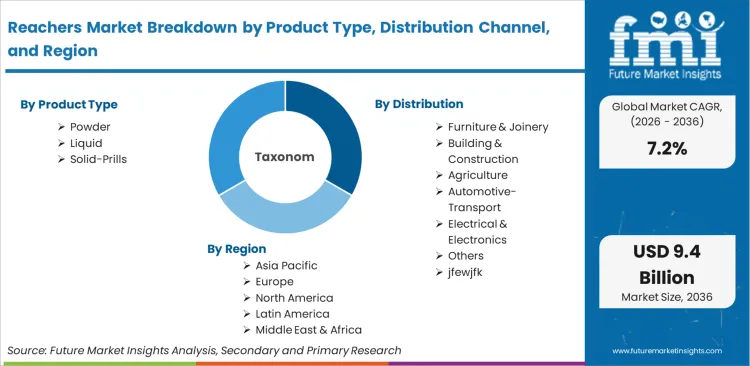
In 2025, the reachers market was valued at USD 4.4 billion. Demand for reachers is estimated to grow to USD 4.7 billion in 2026 and USD 9.5 billion by 2036. The market projects a CAGR of 7.2% during the forecast period.
Elderly users and individuals with mobility constraints increasingly favor lightweight structures and extended reach designs, with aluminum alloy constructions gaining traction for everyday functional support. Purchase decisions are shifting toward padded handle grips, pivoting jaw mechanisms, and higher load-bearing capabilities that enable safer task completion without reducing stability or control. Product innovation is aligning with these needs through diversified jaw coatings, enhanced handle ergonomics, and adjustable length formats, supporting object retrieval across residential settings while preserving durability requirements.
Summary of Reachers Market
- Reachers Market Definition
- The industry covers extended grip devices and reaching aid systems utilized for object retrieval including elderly assistance, disability support, and post-surgery recovery applications.
- Demand Drivers in the Market
- Aging population demographics drive equipment acquisition for independent living maintenance.
- Healthcare provider recommendations expand demand for specific mobility assistance capabilities.
- Product innovation in grip strength accommodation reduces physical strain while maintaining functional independence standards.
- Key Segments Analyzed in the Report
- Product Type: Standard Reachers (42%) versus Folding models and specialized retrieval devices.
- Distribution Channel: Online Retail (38%) versus medical supply stores and pharmacy retailers.
- Geography: High-growth Asia Pacific versus mature North American and European markets.
- Analyst Opinion at FMI
- Rahul Pandita, Senior Consultant for Consumer Products at Future Market Insights, opines, "In the updated version of the Reachers Market Report for 2026 to 2036, industry stakeholders will find insights into aging-in-place patterns that require reaching aids with ergonomic handle designs across various residential environment specifications. My findings indicate that grip strength accommodation requirements directly impact product development cycles and weight capacity positioning could restrict market entry for budget-focused manufacturers targeting elderly care facilities."
- Strategic Implications/Executive Takeaways
- Shift focus from general-purpose retrieval to ergonomic comfort enhancement tools.
- Treat healthcare provider partnerships as primary distribution strategy rather than supplementary channel.
- Prioritize lightweight material features to reduce user fatigue and support extended usage patterns.
- Methodology
- Validated through direct retail sales data and occupational therapist equipment surveys.
- Zero reliance on speculative assistive device trend forecasting.
- Based on verifiable brand performance metrics and verified distribution agreements.
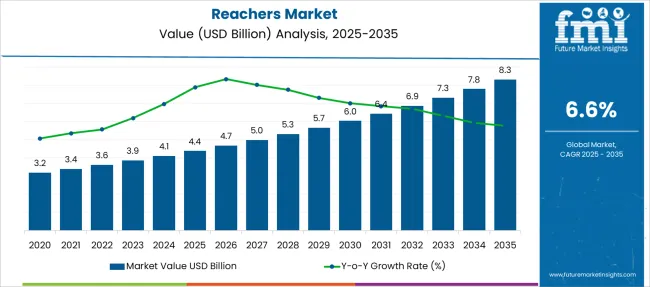
The market’s value proposition is progressively shaped by grip-assist systems that integrate wider jaw openings, anti-slip surface treatments, and telescopic handle designs. Reacher manufacturers are broadening omnichannel availability while strengthening performance positioning through clearly defined load ratings, reach distances, and jaw material specifications. Portfolio extensions featuring foldable compact designs, magnetic-tip variants, and rotating-head models across major medical supply retailers illustrate how reaching aids are shifting from niche medical devices toward everyday independent living tools associated with aging support and post-recovery assistance.
Drive Medical completed the acquisition of Compass Health Brands. “The acquisition of Compass confirms our clear growth strategy. Drive Medical invests specifically in strong companies and is consistently expanding its market position in Europe as well. We are very pleased and proud to welcome Compass to the Drive family,” explains Oliver Niemann, Managing Director of Drive Medical GmbH & Co. KG. [1]
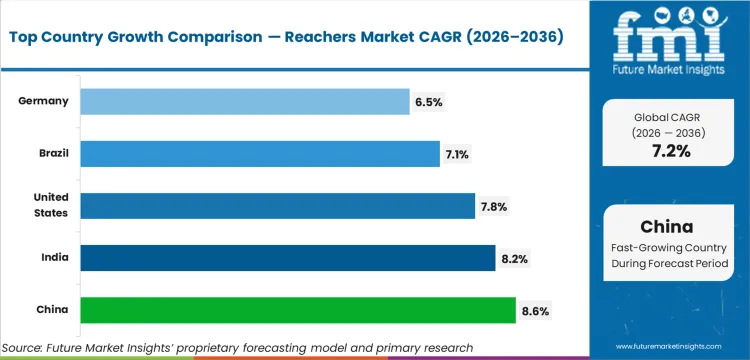
United States (7.8% CAGR) and Germany (6.5% CAGR) drive market expansion through established elderly care infrastructure and independent living support networks. Japan (7.4% CAGR) contributes through population aging trends and domestic manufacturing expertise. Emerging markets such as China (8.6%), India (8.2%), and Brazil (7.1%) generate growth through expanding elderly populations and increasing adoption of mobility assistance equipment as quality of life enhancement pathway, while volume expansion accelerates through online retail penetration and affordable product tier development.
Reachers Market Definition
Reachers serve as the primary assistive device category for object retrieval and manipulation, encompassing equipment designed for handheld operation across medical and consumer applications. The reachers market comprises the global development, production, and distribution of extended grip devices featuring mechanical jaw systems, handle grips, and reach extension technology for object handling in daily living contexts.
Reachers Market Inclusions
The report includes a comprehensive analysis of market dynamics, featuring Global and Regional Market Sizes (Volume and Value) and a 10-year Forecast (2026-2036). It covers segmental breakdowns by product type (Standard Reachers, Folding Reachers, Magnetic Reachers, Rotating Reachers), distribution channels (Medical Supply Stores, Online Retail, Pharmacies, Direct Sales), and applications (Elderly Assistance, Disability Support, Post-Surgery Recovery, General Household Use).
Reachers Market Exclusions
The scope excludes prosthetic limbs, wheelchair accessories, walker attachments, and comprehensive home modification systems. It also omits component manufacturing suppliers, grip material production machinery, and occupational therapy consultation services, focusing strictly on finished consumer-ready reaching devices designed for manual operation and their immediate retail applications. Report does not account for rental equipment services or used device marketplaces with negligible brand differentiation.
Reachers Market Research Methodology
- Primary Research: Interviews were conducted with mobility aid manufacturers, occupational therapist representatives, medical supply buyers, distribution channel managers, and elderly care facility administrators across major markets. Assistive device consultants clarified grip strength requirements and reach distance standard specifications.
- Desk Research: Consumer purchase data from medical supply retail analytics platforms, elderly care equipment preferences from facility surveys, and import/export statistics from trade organizations supported market benchmarking.
- Market-Sizing and Forecasting: A hybrid top-down and bottom-up model was developed. Demand was reconstructed from brand sales figures, retail store inventory turnover data, and medical facility procurement volumes, then validated against manufacturing output capacity and distribution network coverage.
- Data Validation and Update Cycle: Outputs undergo variance checks across retail and wholesale datasets, cross-verification with medical device industry associations, and structured expert review prior to release.
Segmental Analysis
Reachers Market Analysis by Product Type
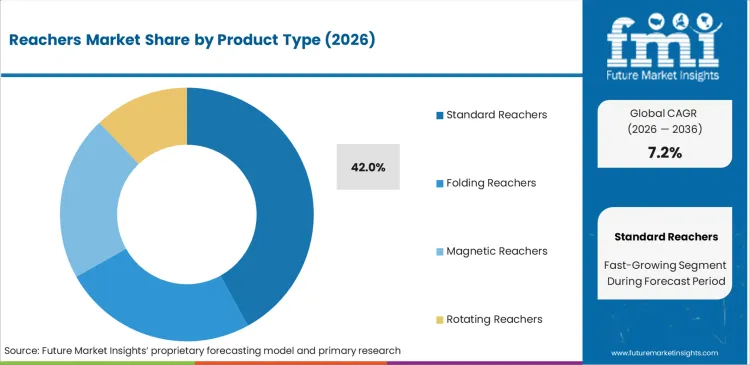
Demand for standard reachers is estimated to hold 42% share in 2026. Growth in demand for standard reachers comes from manufacturers leveraging accessible price points and simplified grip mechanisms to capture first-time mobility aid users entering elderly care support through entry-level equipment that balances functionality with affordability.
- Ergonomic Handle Design: Companies are adopting contoured grip surfaces with textured coating integration, reducing hand fatigue across extended usage contexts while addressing user comfort priorities that influence purchase decisions among target demographics in elderly assistance and general household market segments.
- Jaw Opening Width: The product format enables wide-span grip functionality that combines object size accommodation with secure holding pressure, reducing dropped item incidents while optimizing per-unit margins through mechanical simplicity that supports both retail and online direct sales channels.
Reachers Market Analysis by Distribution Channel
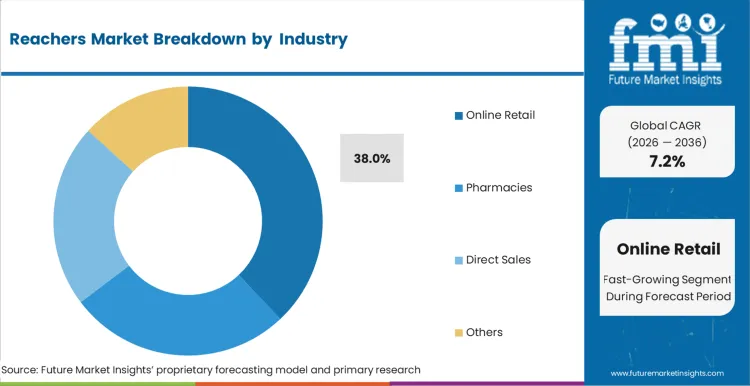
Online retail holds a 38% market share in 2026, driven by its role as primary research environment where elderly caregivers compare functional specifications and access user review content. This concentration creates market advantages through detailed product comparison tools and broader inventory selection that address caregiver purchase preferences for mobility assistance equipment. The segment's integration with healthcare product platforms and assistive device recommendation forums maintains digital retail dominance, while video demonstration content offers competitive advantages against physical stores without extensive product testing facilities.
- Specification Comparison Access: The segment leverages detailed functional data presentation and side-by-side feature analysis to maintain consumer confidence, particularly for specification-conscious buyers evaluating grip strength and reach distance capabilities.
- Caregiver Discount Programs: Retailers utilize healthcare provider partnership arrangements and facility procurement codes to capture elderly care equipment purchasing, enabling consistent revenue streams through equipment replacement cycles and accessory attachment sales.
Reachers Market Drivers, Restraints, and Opportunities
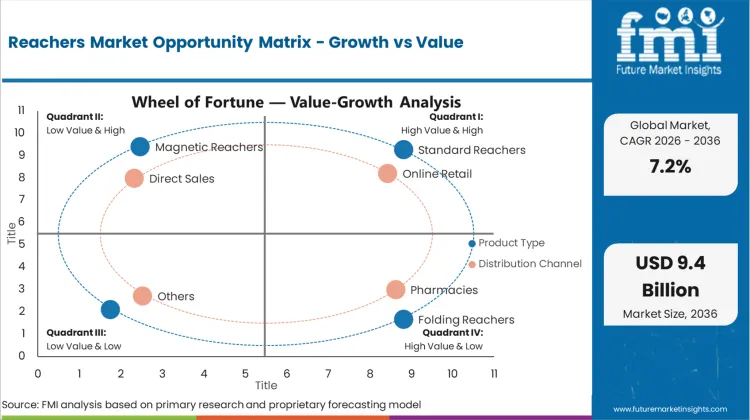
Analysis indicates historical patterns point to an evolving healthcare equipment category where reachers transition from medical specialty tools to essential equipment for independent living maintenance. Estimated valuation in 2026 represents the market's response to increased aging population participation as individuals prioritize mobility independence, daily task completion, and functional autonomy rather than caregiver-dependent activities. The surging accident cases are further boosting product demand. As per WHO, road traffic crashes result in 1.19 million mortalities annually. [2]
While demand for traditional pickup sticks faces competition from home modification integration (market cannibalization), the ergonomic advantages and grip strength accommodation consumers assign to dedicated reaching systems command continued purchasing (equipment specialization behavior), resulting in stable revenue growth across product categories. The forecast accounts for the market reaching maturity in developed regions while emerging markets drive volume expansion through first-time elderly care adopters.
- Length Adjustment Systems: Growth shifts from fixed-length configurations toward telescoping extension mechanisms, using slide-lock features and compact storage accommodation to maintain competitive advantages against single-length device categorization.
- Weight Capacity Standards: Requirements for multi-pound lifting capability and secure grip retention establish equipment performance baselines rather than optional features, forcing design modifications from lightweight constructions to reinforced structural alternatives.
- Component Cost Management: To maintain margin structures with increasing material engineering costs, manufacturers optimize supply chain relationships with aluminum suppliers to achieve per-unit economics that support retail price expectations and distributor margin requirements.
Regional Analysis
Based on regional analysis, the reachers market is segmented into North America, Latin America, Europe, East Asia, South Asia, Oceania and Middle East & Africa across 40 countries. The full report also offers market attractiveness analysis based on regional trends.
.webp "Top Country Growth Comparison Reachers Market Cagr (2026 2036)")
| Country | CAGR (2026 to 2036) |
|---|---|
| United States | 7.8% |
| Germany | 6.5% |
| China | 8.6% |
| India | 8.2% |
| Brazil | 7.1% |
Source: Market analysis based on proprietary forecasting model and primary research
North America Reachers Market Analysis
North America's reachers market is growing as elderly populations expand, healthcare providers increase mobility aid recommendations, and individuals prioritize independent living equipment to address daily task completion needs. Higher household healthcare spending supports frequent equipment upgrades, while aging-in-place preferences for functional independence continue to bolster assisted walking devices demand.
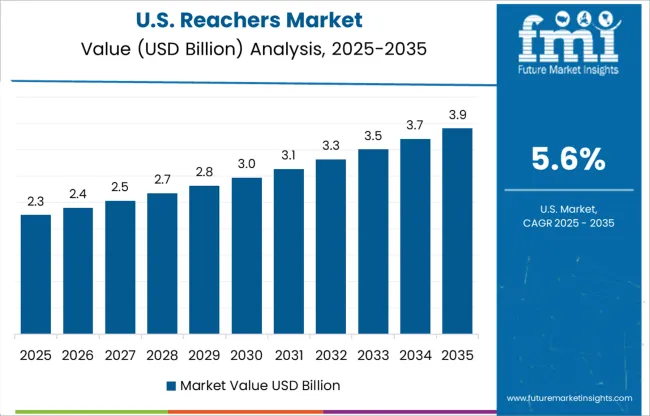
- United States: Demand for reachers in the United States is projected to rise at 7.8% CAGR through 2036. Growth is driven by home healthcare expansion and increased equipment specialization requirements across elderly assistance categories.
The report includes detailed analysis of growth in the North American region, along with country-wise assessment that includes the USA and Canada. Readers can find aging population trends, retail channel evolution, and market development based on different product categories and distribution strategies.
Asia Pacific Reachers Market Analysis
Asia Pacific represents the fastest-growing regional market, leveraging expanding elderly populations and healthcare infrastructure development to achieve growth rates that exceed mature markets. Drive DeVilbiss Healthcare and Etac AB lead in mobility aid technology development, while regional manufacturers drive affordable product tier expansion. China is a major manufacturer of assistive devices including aluminum tubing, grip materials, and mechanical components.
- China: Leading with an 8.6% CAGR, the market benefits from aging population growth and elderly care facility investment, enabling equipment standardization and local brand development across urban centers.
- India: Domestic demand accelerates at 8.2% CAGR, supported by healthcare infrastructure expansion patterns creating foundation for mobility assistance adoption and local manufacturing using cost-effective production methods. A total number of 4,61,312 road accidents have been reported by States and Union Territories (UTs) during the calendar year 2022, as per the Ministry of Road Transport and Highways. [3]
The full report analyzes the reachers market across East and South Asia from 2021-2036, covering elderly care participation patterns, distribution channel development, and product specification trends in China, Japan, South Korea, India, Singapore, and Australia. The assessment highlights price point strategies that drive regional market penetration.
Europe Reachers Market Analysis
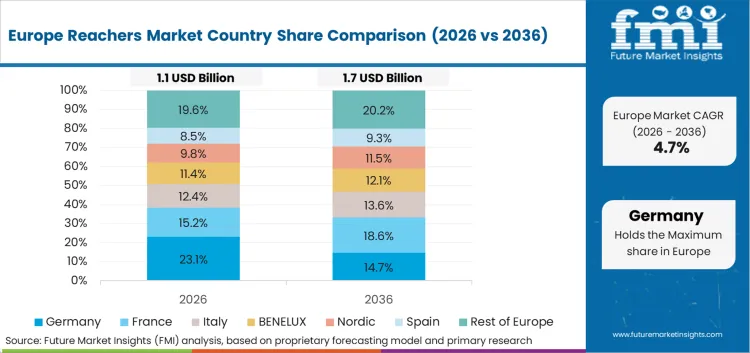
Europe functions as the established elderly care market, where market development is driven by aging population networks and healthcare provider recommendation maturity across Germany, United Kingdom, and France. This factor is also creating growth opportunities for assistive listening devices. Leading players include Etac AB and Homecraft driving medical-grade equipment category growth.
- Germany: Demand for reachers in Germany rises at 6.5% CAGR through 2036, driven by technical specification preferences and medical equipment standards adoption. The market is also driven by growing introduction of sophisticated technologies for patient safety and convenience.
Analysis of the European reachers market includes country-specific assessment covering United Kingdom, Germany, France, Italy, Spain, Netherlands, and Scandinavia. Readers can access detailed elderly care community analysis and medical equipment procurement trends across the European region.
Competitive Landscape for Market Players
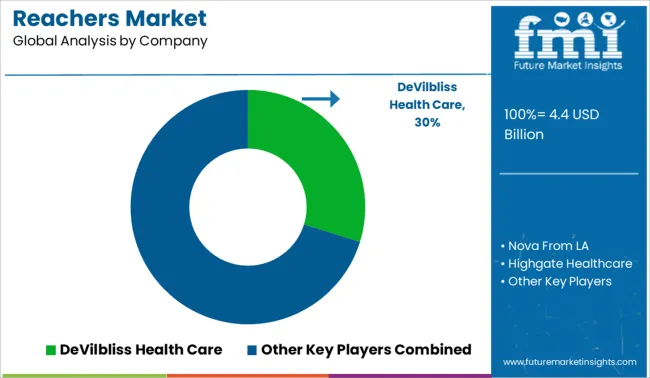
Market structure remains divided between established medical device manufacturers with extensive mobility aid portfolios and emerging consumer-focused brands with limited distribution networks. Primary competitive variables include grip strength accommodation, reach distance capability, and weight capacity integration rather than traditional material specifications or mechanical complexity depth.
Companies with direct relationships with healthcare provider communities and established medical supply partnerships demonstrate superior ability to maintain market share while controlling pricing strategies. Facility procurement agreements provide market access for mainstream manufacturers while premium brands leverage medical specification positioning to access rehabilitation center segments.
Product portfolio breadth creates distinct competitive advantages. Companies with multiple price tier offerings across grip mechanism categories command broader market coverage, while single-application specialist manufacturers compete primarily on ergonomic performance positioning and elderly care integration messaging.
Recent Developments
The report includes comprehensive coverage of key industry developments and competitive positioning:
- In October 2025, Kingswood Capital Management, LP signed a definitive agreement to acquire Drive DeVilbiss Healthcare. Kingswood will leverage its extensive network, industry expertise, and capital base to support Drive’s continued growth.[4]
- In January 2025, Etac reported it now owns 80% of HoverTech International, a US patient handling company, strengthening its patient handling and transfer equipment presence. [5]
- In June 2024, Etac, a world-leading developer of innovative assistive devices and patient handling equipment, acquired Klaxon Mobility GmbH in Austria. The acquisition complements Etac’s manual wheelchair portfolio with state-of-the-art power assist solutions and enables Etac to offer a complete mobility portfolio for wheelchair users. [6]
Key Players in Reachers Market
- Drive DeVilbiss Healthcare
- Etac AB
- Carex Health Brands
- Vive Health
- RMS Royal Medical Solutions
- Homecraft
- Able Life
- Duro-Med Industries
- North Coast Medical
- Patterson Medical
Scope of the Report
| Metric | Value |
|---|---|
| Quantitative Units | USD 4.7 billion (2026) to USD 9.5 billion (2036), at a CAGR of 7.2% |
| Market Definition | The reachers market comprises the global development, production, and distribution of extended grip devices including standard reachers, folding models, and specialized retrieval equipment designed for mobility assistance across elderly care and disability support applications. |
| Product Type Segmentation | Standard Reachers, Folding Reachers, Magnetic Reachers, Rotating Reachers |
| Distribution Channel Coverage | Medical Supply Stores, Online Retail, Pharmacies, Direct Sales |
| Application Segmentation | Elderly Assistance, Disability Support, Post-Surgery Recovery, General Household Use |
| Regions Covered | North America, Latin America, Europe, East Asia, South Asia, Oceania, Middle East and Africa |
| Countries Covered | United States, Canada, United Kingdom, Germany, France, China, Japan, India, Brazil, UAE and 40 countries |
| Key Companies Profiled | Drive DeVilbiss Healthcare, Etac AB, Carex Health Brands, Vive Health, RMS Royal Medical Solutions, Homecraft, Able Life, Duro-Med Industries, North Coast Medical, Patterson Medical |
| Forecast Period | 2026 to 2036 |
| Approach | Hybrid top down and bottom up market modeling validated through retail sales tracking and occupational therapist equipment surveys, supported by distribution network verification and elderly care pattern analysis |
Reachers Market Analysis by Segments
Product Type
- Standard Reachers
- Folding Reachers
- Magnetic Reachers
- Rotating Reachers
Distribution Channel
- Medical Supply Stores
- Online Retail
- Pharmacies
- Direct Sales
- Others (healthcare facility programs, home health agencies)
Application
- Elderly Assistance
- Disability Support
- Post-Surgery Recovery
- General Household Use
Region
- Asia Pacific
- China
- Japan
- South Korea
- India
- Australia
- Singapore
- Thailand
- Rest of Asia Pacific
- Europe
- United Kingdom
- Germany
- France
- Italy
- Spain
- Netherlands
- Scandinavia
- Switzerland
- Rest of Europe
- North America
- United States
- Canada
- Latin America
- Brazil
- Mexico
- Argentina
- Rest of Latin America
- Middle East & Africa
- United Arab Emirates
- Saudi Arabia
- South Africa
- Israel
- Rest of Middle East & Africa
Bibliography
- [1] Drive Medical GmbH & Co. KG. (2026). Drive Medical acquires Compass Health Brands [Press release]. DriveDeVilbiss International.
- [2] World Health Organization. (2023, December 13). Road traffic injuries [Fact sheet].
- [3] Ministry of Road Transport and Highways, Government of India. (2023). Road accidents in India 2022 [Annual report].
- [4] Kingswood Capital Management, L.P. (2025, October 15). Kingswood Capital Management enters into a definitive agreement to acquire Drive DeVilbiss Healthcare, a leading global manufacturer and supplier of essential medical products [Press release].
- [5] Etac AB. (2025). End of year summary 2024 [Corporate news].
- [6] Etac AB. (2024, June 28). Etac completes acquisition of Klaxon [News article].
This bibliography is provided for reader reference and is not exhaustive. The full report contains the complete reference list and detailed citations.
This Report Addresses
- Market intelligence to enable strategic decision making across established and emerging elderly care markets
- Market size estimation and 10-year revenue forecasts from 2026 to 2036, supported by validated retail sales data and occupational therapist equipment surveys
- Growth opportunity mapping across product types and application segments with emphasis on distribution optimization
- Segment and regional revenue forecasts covering standard reachers, folding equipment, specialized retrieval devices, and retail distribution networks
- Competition strategy assessment including brand portfolio management, healthcare provider partnership requirements, and functional specification positioning
- Product development tracking including ergonomic design innovations, material engineering trends, and grip mechanism standard adoption
- Market access analysis covering distribution agreements, healthcare facility partnership strategies, and elderly care community engagement programs
- Market report delivery in PDF, Excel, PPT, and interactive dashboard formats for executive and operational use
Frequently Asked Questions
How large is the demand for Reachers in the global market in 2026?
Demand for Reachers in the global market is estimated to be valued at USD 4.7 billion in 2026.
What will be the market size of Reachers in the global market by 2036?
Market size for Reachers is projected to reach USD 9.5 billion by 2036.
What is the expected demand growth for Reachers in the global market between 2026 and 2036?
Demand for Reachers in the global market is expected to grow at a CAGR of 7.2% between 2026 and 2036.
Which Product Type is poised to lead global sales by 2026?
Standard Reachers is expected to be the dominant product type, capturing approximately 42.0% of global market share in 2026 due to accessible price points and simplified grip operation interfaces.
How significant is the role of Online Retail in driving Reacher adoption in 2026?
Online retail represents a primary distribution channel, projected to hold approximately 38% share of the total market in 2026 as specification comparison tools and broader product selection maintain digital channel relevance.
What is Driving Reacher Demand in the United States?
Home healthcare expansion and increased equipment specialization requirements across elderly assistance categories are driving growth.
What Consumer Trends are Referenced for the United States?
Aging-in-place patterns and healthcare provider recommendation increases are referenced as key consumer behavior shifts.
What is the United States Growth Outlook in this Report?
The United States is projected to grow at a CAGR of 7.8% during 2026 to 2036.
Why is Europe described as Important for Reacher Development in this Report?
Growth is driven by aging population networks and healthcare provider recommendation maturity that establish standardized equipment requirements.
What Type of Product Development Dominates in Europe?
Medical-grade reaching equipment with ergonomic grip interfaces and weight capacity support dominates regional market segments.
What is Germany Growth Outlook in this Report?
Germany is projected to expand at a CAGR of 6.5% during 2026 to 2036.
Does the Report Cover China in its Regional Analysis?
China is included within East Asia under the regional scope of analysis.
What are the Sources referred to for analyzing the Market in China?
Elderly care participation data, healthcare facility statistics, and domestic brand performance tracking covering purchase patterns, price sensitivity analysis, and equipment preference evolution are cited as primary reference sources.
What is the Main Development Theme Linked to China in Asia Coverage?
Asia Pacific development is associated with aging population growth enabling equipment standardization across urban centers.
Does the Report Cover India in its Regional Analysis?
India is included within South Asia under the regional coverage framework.
What is the Main India Related Development Theme in Asia Coverage?
Healthcare infrastructure expansion patterns creating foundation for mobility assistance adoption and local manufacturing using cost-effective production methods is emphasized.
Which Distribution Strategies are Strategically Important for Asia Pacific Market Entry?
Healthcare facility partnership models and elderly care community programs are prioritized for cost-effective brand building across regional markets.
What is Reacher and What is It Mainly Used For?
Reachers involve extended grip devices primarily used for object retrieval including elderly assistance, disability support, and post-surgery recovery applications.
What does Reachers Market Mean in this Report?
Reachers market refers to global development, manufacturing, and retail distribution of mobility assistance equipment across various application categories and user segments.
What is Included in the Scope of this Reachers Market Report?
Scope covers reachers by product type, key distribution channels such as medical supply stores and online platforms, and application segments including elderly assistance, disability support, and general household use.
What is Excluded from the Scope of this Report?
Prosthetic limbs, wheelchair accessories, walker attachments, and comprehensive home modification systems are excluded unless part of reaching aid product offerings.
What does Market Forecast Mean on this Page?
Market forecast represents model-based projections built on retail sales trends and elderly care participation assumptions for strategic planning purposes.
How is the Reachers Market Forecast Built and Validated?
Forecast is developed using hybrid modeling validated through retail point-of-sale data, occupational therapist equipment surveys, and distribution network verification.
What does Zero Reliance on Speculative Third Party Market Research Mean Here?
Market analysis is based on verifiable sales figures, elderly care community data, and equipment adoption patterns rather than speculative assistive device trend predictions.
Preview the report firsthand - request a free sample
Get SampleGet the brochure for pricing and purchase details.
Get PDFTable of Content
- Executive Summary
- Global Market Outlook
- Demand-side Trends
- Supply-side Trends
- Technology Roadmap Analysis
- Analysis and Recommendations
- Market Overview
- Market Coverage / Taxonomy
- Market Definition / Scope / Limitations
- Research Methodology
- Chapter Orientation
- Analytical Lens and Working Hypotheses
- Market Structure, Signals, and Trend Drivers
- Benchmarking and Cross-market Comparability
- Market Sizing, Forecasting, and Opportunity Mapping
- Research Design and Evidence Framework
- Desk Research Programme (Secondary Evidence)
- Company Annual and Sustainability Reports
- Peer-reviewed Journals and Academic Literature
- Corporate Websites, Product Literature, and Technical Notes
- Earnings Decks and Investor Briefings
- Statutory Filings and Regulatory Disclosures
- Technical White Papers and Standards Notes
- Trade Journals, Industry Magazines, and Analyst Briefs
- Conference Proceedings, Webinars, and Seminar Materials
- Government Statistics Portals and Public Data Releases
- Press Releases and Reputable Media Coverage
- Specialist Newsletters and Curated Briefings
- Sector Databases and Reference Repositories
- FMI Internal Proprietary Databases and Historical Market Datasets
- Subscription Datasets and Paid Sources
- Social Channels, Communities, and Digital Listening Inputs
- Additional Desk Sources
- Expert Input and Fieldwork (Primary Evidence)
- Primary Modes
- Qualitative Interviews and Expert Elicitation
- Quantitative Surveys and Structured Data Capture
- Blended Approach
- Why Primary Evidence is Used
- Field Techniques
- Interviews
- Surveys
- Focus Groups
- Observational and In-context Research
- Social and Community Interactions
- Stakeholder Universe Engaged
- C-suite Leaders
- Board Members
- Presidents and Vice Presidents
- R&D and Innovation Heads
- Technical Specialists
- Domain Subject-matter Experts
- Scientists
- Physicians and Other Healthcare Professionals
- Governance, Ethics, and Data Stewardship
- Research Ethics
- Data Integrity and Handling
- Primary Modes
- Tooling, Models, and Reference Databases
- Desk Research Programme (Secondary Evidence)
- Data Engineering and Model Build
- Data Acquisition and Ingestion
- Cleaning, Normalisation, and Verification
- Synthesis, Triangulation, and Analysis
- Quality Assurance and Audit Trail
- Market Background
- Market Dynamics
- Drivers
- Restraints
- Opportunity
- Trends
- Scenario Forecast
- Demand in Optimistic Scenario
- Demand in Likely Scenario
- Demand in Conservative Scenario
- Opportunity Map Analysis
- Product Life Cycle Analysis
- Supply Chain Analysis
- Investment Feasibility Matrix
- Value Chain Analysis
- PESTLE and Porter’s Analysis
- Regulatory Landscape
- Regional Parent Market Outlook
- Production and Consumption Statistics
- Import and Export Statistics
- Market Dynamics
- Global Market Analysis 2021 to 2025 and Forecast, 2026 to 2036
- Historical Market Size Value (USD Million) Analysis, 2021 to 2025
- Current and Future Market Size Value (USD Million) Projections, 2026 to 2036
- Y-o-Y Growth Trend Analysis
- Absolute $ Opportunity Analysis
- Global Market Pricing Analysis 2021 to 2025 and Forecast 2026 to 2036
- Global Market Analysis 2021 to 2025 and Forecast 2026 to 2036, By Product Type
- Introduction / Key Findings
- Historical Market Size Value (USD Million) Analysis By Product Type , 2021 to 2025
- Current and Future Market Size Value (USD Million) Analysis and Forecast By Product Type , 2026 to 2036
- Standard Reachers
- Folding Reachers
- Magnetic Reachers
- Rotating Reachers
- Standard Reachers
- Y-o-Y Growth Trend Analysis By Product Type , 2021 to 2025
- Absolute $ Opportunity Analysis By Product Type , 2026 to 2036
- Global Market Analysis 2021 to 2025 and Forecast 2026 to 2036, By Distribution Channel
- Introduction / Key Findings
- Historical Market Size Value (USD Million) Analysis By Distribution Channel, 2021 to 2025
- Current and Future Market Size Value (USD Million) Analysis and Forecast By Distribution Channel, 2026 to 2036
- Online Retail
- Pharmacies
- Direct Sales
- Others
- Online Retail
- Y-o-Y Growth Trend Analysis By Distribution Channel, 2021 to 2025
- Absolute $ Opportunity Analysis By Distribution Channel, 2026 to 2036
- Global Market Analysis 2021 to 2025 and Forecast 2026 to 2036, By Region
- Introduction
- Historical Market Size Value (USD Million) Analysis By Region, 2021 to 2025
- Current Market Size Value (USD Million) Analysis and Forecast By Region, 2026 to 2036
- North America
- Latin America
- Western Europe
- Eastern Europe
- East Asia
- South Asia and Pacific
- Middle East & Africa
- Market Attractiveness Analysis By Region
- North America Market Analysis 2021 to 2025 and Forecast 2026 to 2036, By Country
- Historical Market Size Value (USD Million) Trend Analysis By Market Taxonomy, 2021 to 2025
- Market Size Value (USD Million) Forecast By Market Taxonomy, 2026 to 2036
- By Country
- USA
- Canada
- Mexico
- By Product Type
- By Distribution Channel
- By Country
- Market Attractiveness Analysis
- By Country
- By Product Type
- By Distribution Channel
- Key Takeaways
- Latin America Market Analysis 2021 to 2025 and Forecast 2026 to 2036, By Country
- Historical Market Size Value (USD Million) Trend Analysis By Market Taxonomy, 2021 to 2025
- Market Size Value (USD Million) Forecast By Market Taxonomy, 2026 to 2036
- By Country
- Brazil
- Chile
- Rest of Latin America
- By Product Type
- By Distribution Channel
- By Country
- Market Attractiveness Analysis
- By Country
- By Product Type
- By Distribution Channel
- Key Takeaways
- Western Europe Market Analysis 2021 to 2025 and Forecast 2026 to 2036, By Country
- Historical Market Size Value (USD Million) Trend Analysis By Market Taxonomy, 2021 to 2025
- Market Size Value (USD Million) Forecast By Market Taxonomy, 2026 to 2036
- By Country
- Germany
- UK
- Italy
- Spain
- France
- Nordic
- BENELUX
- Rest of Western Europe
- By Product Type
- By Distribution Channel
- By Country
- Market Attractiveness Analysis
- By Country
- By Product Type
- By Distribution Channel
- Key Takeaways
- Eastern Europe Market Analysis 2021 to 2025 and Forecast 2026 to 2036, By Country
- Historical Market Size Value (USD Million) Trend Analysis By Market Taxonomy, 2021 to 2025
- Market Size Value (USD Million) Forecast By Market Taxonomy, 2026 to 2036
- By Country
- Russia
- Poland
- Hungary
- Balkan & Baltic
- Rest of Eastern Europe
- By Product Type
- By Distribution Channel
- By Country
- Market Attractiveness Analysis
- By Country
- By Product Type
- By Distribution Channel
- Key Takeaways
- East Asia Market Analysis 2021 to 2025 and Forecast 2026 to 2036, By Country
- Historical Market Size Value (USD Million) Trend Analysis By Market Taxonomy, 2021 to 2025
- Market Size Value (USD Million) Forecast By Market Taxonomy, 2026 to 2036
- By Country
- China
- Japan
- South Korea
- By Product Type
- By Distribution Channel
- By Country
- Market Attractiveness Analysis
- By Country
- By Product Type
- By Distribution Channel
- Key Takeaways
- South Asia and Pacific Market Analysis 2021 to 2025 and Forecast 2026 to 2036, By Country
- Historical Market Size Value (USD Million) Trend Analysis By Market Taxonomy, 2021 to 2025
- Market Size Value (USD Million) Forecast By Market Taxonomy, 2026 to 2036
- By Country
- India
- ASEAN
- Australia & New Zealand
- Rest of South Asia and Pacific
- By Product Type
- By Distribution Channel
- By Country
- Market Attractiveness Analysis
- By Country
- By Product Type
- By Distribution Channel
- Key Takeaways
- Middle East & Africa Market Analysis 2021 to 2025 and Forecast 2026 to 2036, By Country
- Historical Market Size Value (USD Million) Trend Analysis By Market Taxonomy, 2021 to 2025
- Market Size Value (USD Million) Forecast By Market Taxonomy, 2026 to 2036
- By Country
- Kingdom of Saudi Arabia
- Other GCC Countries
- Turkiye
- South Africa
- Other African Union
- Rest of Middle East & Africa
- By Product Type
- By Distribution Channel
- By Country
- Market Attractiveness Analysis
- By Country
- By Product Type
- By Distribution Channel
- Key Takeaways
- Key Countries Market Analysis
- USA
- Pricing Analysis
- Market Share Analysis, 2025
- By Product Type
- By Distribution Channel
- Canada
- Pricing Analysis
- Market Share Analysis, 2025
- By Product Type
- By Distribution Channel
- Mexico
- Pricing Analysis
- Market Share Analysis, 2025
- By Product Type
- By Distribution Channel
- Brazil
- Pricing Analysis
- Market Share Analysis, 2025
- By Product Type
- By Distribution Channel
- Chile
- Pricing Analysis
- Market Share Analysis, 2025
- By Product Type
- By Distribution Channel
- Germany
- Pricing Analysis
- Market Share Analysis, 2025
- By Product Type
- By Distribution Channel
- UK
- Pricing Analysis
- Market Share Analysis, 2025
- By Product Type
- By Distribution Channel
- Italy
- Pricing Analysis
- Market Share Analysis, 2025
- By Product Type
- By Distribution Channel
- Spain
- Pricing Analysis
- Market Share Analysis, 2025
- By Product Type
- By Distribution Channel
- France
- Pricing Analysis
- Market Share Analysis, 2025
- By Product Type
- By Distribution Channel
- India
- Pricing Analysis
- Market Share Analysis, 2025
- By Product Type
- By Distribution Channel
- ASEAN
- Pricing Analysis
- Market Share Analysis, 2025
- By Product Type
- By Distribution Channel
- Australia & New Zealand
- Pricing Analysis
- Market Share Analysis, 2025
- By Product Type
- By Distribution Channel
- China
- Pricing Analysis
- Market Share Analysis, 2025
- By Product Type
- By Distribution Channel
- Japan
- Pricing Analysis
- Market Share Analysis, 2025
- By Product Type
- By Distribution Channel
- South Korea
- Pricing Analysis
- Market Share Analysis, 2025
- By Product Type
- By Distribution Channel
- Russia
- Pricing Analysis
- Market Share Analysis, 2025
- By Product Type
- By Distribution Channel
- Poland
- Pricing Analysis
- Market Share Analysis, 2025
- By Product Type
- By Distribution Channel
- Hungary
- Pricing Analysis
- Market Share Analysis, 2025
- By Product Type
- By Distribution Channel
- Kingdom of Saudi Arabia
- Pricing Analysis
- Market Share Analysis, 2025
- By Product Type
- By Distribution Channel
- Turkiye
- Pricing Analysis
- Market Share Analysis, 2025
- By Product Type
- By Distribution Channel
- South Africa
- Pricing Analysis
- Market Share Analysis, 2025
- By Product Type
- By Distribution Channel
- USA
- Market Structure Analysis
- Competition Dashboard
- Competition Benchmarking
- Market Share Analysis of Top Players
- By Regional
- By Product Type
- By Distribution Channel
- Competition Analysis
- Competition Deep Dive
- Drive DeVilbiss Healthcare
- Overview
- Product Portfolio
- Profitability by Market Segments (Product/Age /Sales Channel/Region)
- Sales Footprint
- Strategy Overview
- Marketing Strategy
- Product Strategy
- Channel Strategy
- Etac AB
- Carex Health Brands
- Vive Health
- RMS Royal Medical Solutions
- Homecraft
- Able Life
- Drive DeVilbiss Healthcare
- Competition Deep Dive
- Assumptions & Acronyms Used


