

- Market Size (2026)
- USD 200 Mn
- Forecast (2036)
- USD 1100 Mn
- CAGR (2026 to 2036)
- 17.0%
Period Panties Market Size, Market Forecast and Outlook By FMI
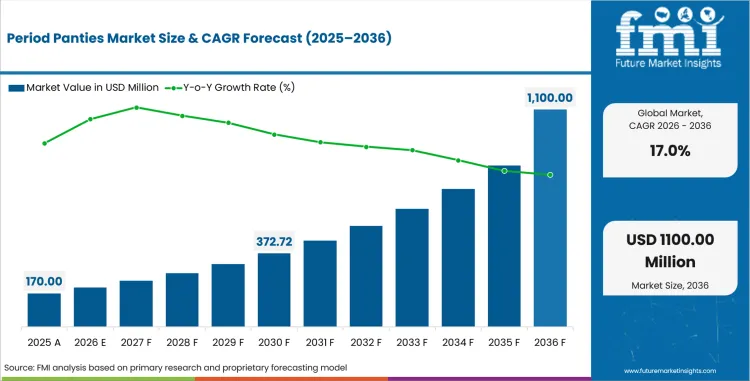
Period panties market was valued at USD 170 million in 2025 and is expected to reach USD 200 million in 2026. Revenue is forecast to rise to USD 1,100 million by 2036 at 17.0% CAGR during the forecast period. Reusable period panties are anticipated to hold 69.0% share of product type demand in 2026. Online retailers are expected to account for 38.0% share of sales channel demand in 2026.
Key Takeaways, Market Size, and Forecast
| Metric | Value |
|---|---|
| Market Size (2025) | USD 170 Million |
| Market Size (2036) | USD 1,100 Million |
| CAGR | 17.0% |
| Incremental Opportunity (2026–2036) | USD 900 Million |
| Leading Product Type (2026) | Reusable Period Panties |
| Reusable Period Panties Share (2026) | 69.0% |
| Leading Sales Channel (2026) | Online Retailers |
| Online Retailers Share (2026) | 38.0% |
| Leading Absorbency (2026) | Heavy Flow And Overnight Formats |
| Heavy Flow And Overnight Formats Share (2026) | 41.0% |
| Fastest-Growing Country | India |
| India CAGR | 24.9% |
| 2nd Fastest-Growing Country | United States |
| United States CAGR | 16.4% |
Summary of the Period Panties Market
- Demand and Growth Drivers
- Period panties demand is expected to rise as shoppers compare lifetime cost with repeated disposable pad and tampon purchases.
- Public access programs are expected to improve familiarity as schools and community channels normalize menstrual product choice.
- Fit education is projected to improve trial conversion where online stores explain absorbency levels and washing steps before checkout.
- Chemical safety rules are expected to change supplier behavior because brands need clearer PFAS and materials disclosure.
- Product and Segment View
- Reusable period panties are projected to account for 69.0% share in 2026 because repeat use improves the value case.
- Disposable period panties remain useful for travel and first trials though repeat sales face waste and cost concerns.
- Heavy flow and overnight formats are gaining shelf space as brands position period underwear as primary protection.
- Reusable sanitary pads and menstrual cups create adjacent comparison points for shoppers testing reusable care.
- Geography and Competitive Outlook
- India and the United States are expected to record faster expansion as health education and direct online selling widen trial.
- The United Kingdom is forecast to benefit from tax relief that improved visible pricing for period pants.
- Canada and France are supported by public access programs that introduce reusable products beyond retail aisles.
- Thinx and Knix compete with Modibodi and Saalt through absorbency proof and online education.
- Analyst Opinion
- Rahul Pandita Principal Consultant at FMI, says “The period panties opportunity for companies is about trust as much as pad replacement. Brands that explain absorbency and washing in plain terms are expected to convert cautious buyers first. The next phase is expected to reward suppliers that make reusable care feel predictable during school and sleep.”
- Period Panties Market Value Analysis
- Absorbency proof and leak barrier design are expected to lift unit value by supporting longer wear during sleep and heavy flow days.
- Teen and postpartum lines are expected to widen the buyer base as brands move beyond adult daily protection.
- Overnight and heavy flow formats are projected to add application volume through use during sleep and longer school days.
- Online fit tools are expected to reduce trial barriers by explaining absorbency levels and washing steps before checkout.
- Upfront price and washing effort are expected to restrain conversion when buyers compare reusable pairs with familiar disposable packs.
Safety concerns and first-use hesitation are the main barriers in period panties adoption. The August 2025 ACS research update screened 59 reusable period and hygiene products, with one-third of period underwear showing fluorine levels linked to intentional PFAS addition. Brands that publish test results and explain supplier controls gain an advantage because consumers need proof before shifting from disposable products.
Price access is improving in the United Kingdom. HM Treasury removed VAT from period pants in January 2024, saving shoppers up to £2 on a £12 pair. Retailers can use that saving to support trial packs and entry-level ranges. Performance depth is becoming the next clear selling point. WUKA lists super heavy flow pants with up to 60 ml absorption, equal to 12 tampons. That fact supports a simpler shelf structure where light-flow, day-use and overnight products are separated by real absorbency need.
Period Panties Market Definition
The period panties market covers absorbent underwear designed to collect menstrual flow and reduce leaks during daily use. Scope includes reusable and disposable period panties sold through online retailers and modern trade. Revenue includes adult and teen formats when the product is marketed for menstrual use.
Period Panties Market Inclusions
Market inclusions cover reusable period panties and disposable period panties. Leakproof teen underwear and overnight period underwear are included when menstrual protection is the main purpose. Product coverage includes cotton blends and synthetic blends. Sales coverage includes brand websites and marketplaces. Pharmacy chains and supermarkets are included where period panties are sold as menstrual care products.
Period Panties Market Exclusions
Scope excludes regular underwear without absorbent menstrual layers. Adult incontinence underwear is excluded when sold only for bladder leakage. Sanitary pads and tampons are excluded as separate product categories. Menstrual cups and cloth pads are excluded unless they are sold in a bundled period panties pack.
Period Panties Market Research Methodology
- Primary Research: Interviews were conducted with manufacturers, distributors, retailers, and industry experts across key regions to assess product positioning, pricing trends, and channel performance.
- Desk Research: Secondary information was gathered from government publications, public health agencies, trade associations, company annual reports, investor presentations, and verified product listings.
- Market Sizing and Forecasting: Market estimates were developed using bottom‑up and top‑down approaches, incorporating historical demand trends, penetration of reusable menstrual products, pricing analysis, and region‑wise adoption patterns.
- Data Validation: Findings were validated through triangulation of primary insights, secondary sources, and internal analytical models to ensure consistency across country‑level and segment‑level forecasts.
Why is the Period Panties Market Growing?
- Reusable underwear is expected to reduce monthly disposable purchases and improve the value case for repeat users.
- Online stores are making first purchase easier by explaining absorbency levels and washing steps.
- Public access programs are expected to make menstrual products easier to discuss in schools and community channels.
The demand for streamlined and dual-purpose hygiene solutions that integrate standard underwear comfort with built-in menstrual protection accelerates the market growth. The Centers for Disease Control and Prevention said in May 2024 that reusable period underwear should be washed based on product directions. Public health framing is expected to help retailers explain care steps in simple terms. Menstrual care brands are using that simplicity to sell repeat bundles instead of one trial pair.
Cost and trust are expected to limit faster conversion during the forecast period. A reusable pair costs more upfront than one pack of disposable pads. Washing after use adds a routine step before repeat adoption. Brands that show plain product claims and third party safety checks are expected to reduce hesitation at first purchase. Reusable sanitary pads remain an alternative for shoppers who want washable protection.
Market Segmentation Analysis
- Reusable period panties are projected to reach 69.0% share in 2026 because repeat use supports better lifetime value.
- Online retailers are expected to represent 38.0% share in 2026 as first time buyers need privacy and product education.
- Heavy flow and overnight formats are forecast to account for 41.0% share in 2026 because leakage control drives brand choice.
- Cotton blends are estimated to account for 45.0% share in 2026 as skin contact comfort shapes fabric preference.
- Adult consumers are projected to capture 56.0% share in 2026 since they buy across daily and sleep needs.
- Multipacks are expected to account for 48.0% share in 2026 where repeat users build full cycle wardrobes.
The market is divided into six primary segment groups based on product type and sales channel. Absorbency level and material type explain product trust. Consumer group and pack format explain repeat purchase behavior. Related menstrual cups demand gives a reusable care comparison because buyers often combine products during heavy days.
Insights into Period Panties Market by Product Type
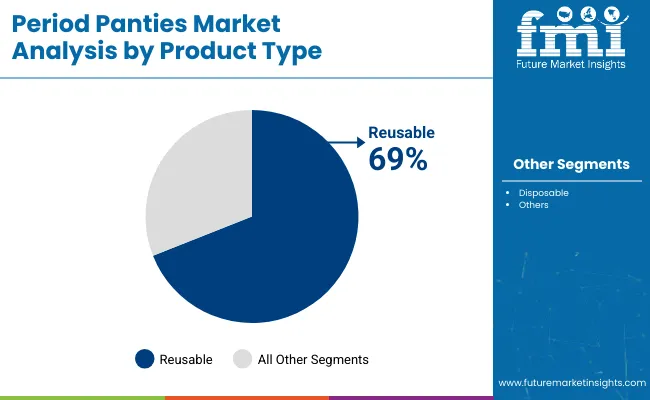
- With an estimated 69.0% share of product type revenue in 2026, reusable period panties are anticipated to lead as repeat use gives buyers a clearer value case after trial.
- Disposable period panties serve travel and emergency needs. Reusable formats hold a larger share because brands can sell multipacks and build repeat routines.
Insights into Period Panties Market by Sales Channel
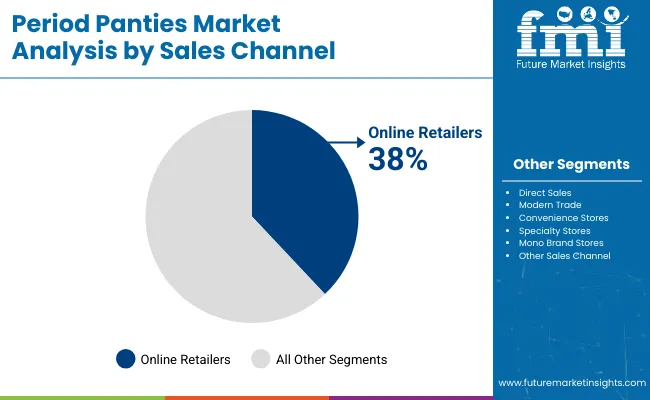
- By sales channel, online retailers are expected to dominate with 38.0% share in 2026 as product pages explain absorbency and fit before purchase.
- Modern trade gives visibility across store aisles. Online channels handle education because direct brand websites and marketplaces can explain wash care in detail.
Insights into Period Panties Market by Absorbency Level
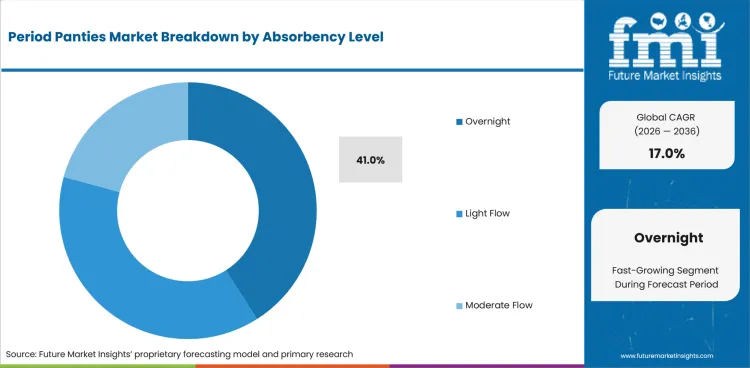
- By absorbency level, overnight products are forecast to hold 41.0% of absorbency volume in 2026.
- Light flow products support daily backup use. Heavier formats create a clearer replacement case when absorbency proof helps buyers reduce pad pairing.
Insights into Period Panties Market by Material Type
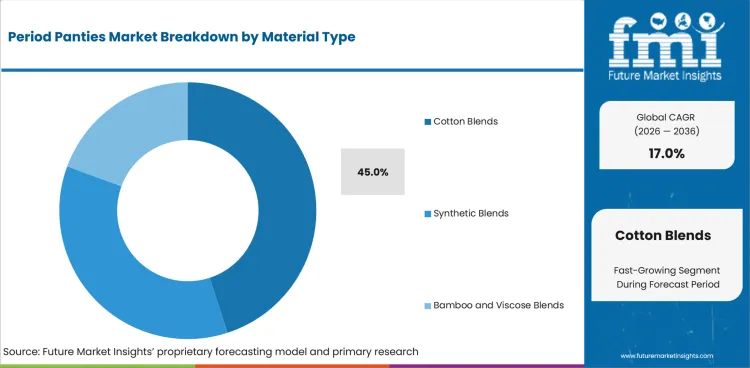
- Skin contact comfort is projected to push cotton blends to a 45.0% share across material categories in 2026.
- Synthetic layers remain useful for moisture control and leak barriers. Brands must explain each layer without using unclear materials claims.
Insights into Period Panties Market by Consumer Group
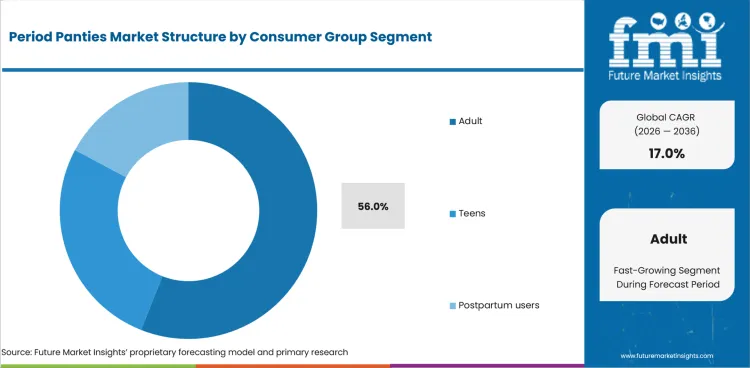
- Adult consumers account for 56.0% of consumer group revenue in 2026 because adults buy across workdays and overnight use.
- Teen lines are expanding as brands simplify fit and absorbency choices. Early category entry can create longer repeat purchase cycles for suppliers.
Insights into Period Panties Market by Pack Format
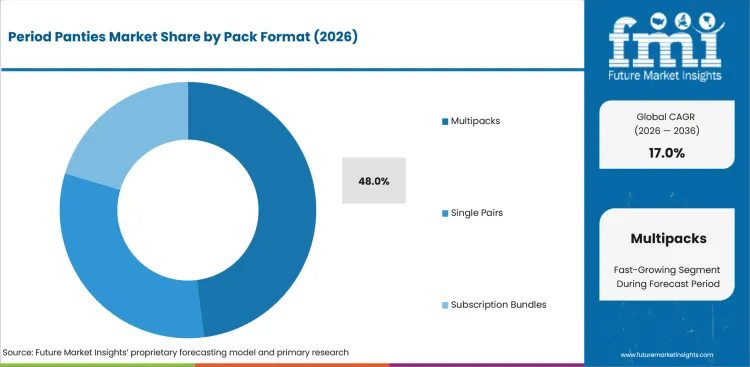
- Multipacks are estimated to lead pack format with 48.0% in 2026 since a full cycle usually needs several pairs.
- Single pairs remain the entry point for trial. Subscription bundles can expand where brands link reorder prompts with care guidance and size history.
Period Panties Market Drivers, Restraints, and Opportunities
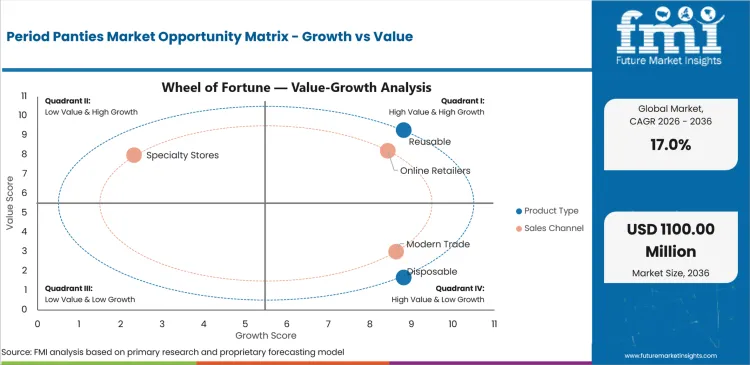
- Product page education is expected to raise trial because buyers can compare absorbency and wash care before checkout.
- Higher upfront price is expected to slow first purchase as reusable pairs cost more than one disposable pack.
- Chemical safety documentation is projected to create opportunity as PFAS rules push brands toward clearer testing disclosure.
Product Pages Improve Trial Confidence
One of the significant growth drivers is the shift from product discovery to routine building. Knix stated in November 2024 that its leakproof underwear can absorb from about one pantyliner to nine super tampons depending on style. Quantified claims help buyers match products to flow level and reduce failed first purchases. Women hygiene care products are following the same path toward clearer user guidance and channel education.
Price and Washing Slow First Trial
A notable restraint to market growth is the effort needed before the first purchase feels safe. The Government of the United Kingdom said in January 2024 that removing VAT from period pants could save shoppers up to GBP 2 on a GBP 12 pair. That reference price shows why first purchase cost stays visible. Buyers must choose the right size and accept a washing routine. Retailers that explain care and flow selection are expected to reduce returns.
Safety Proof Creates Brand Value
The primary opportunity is concentrated in transparent product proof. Minnesota listed menstruation products among categories covered by its 2025 PFAS prohibitions. California is enforcing a similar restriction on menstrual products from January 2025. Brands that publish material details and testing claims are expected to turn safety documentation into a channel advantage. The rule direction is expected to move the market toward clearer fabric and finish claims. Menstrual care portfolios increasingly need evidence that is easy to read at retail.
Analysis of Period Panties Market by Key Countries
.webp "Top Country Growth Comparison Period Panties Market Cagr (2026 2036)")
| Country | CAGR |
|---|---|
| India | 24.9% CAGR |
| United States | 16.4% CAGR |
| United Kingdom | 15.2% CAGR |
| Canada | 13.8% CAGR |
| France | 12.1% CAGR |
| Germany | 11.2% CAGR |
| Japan | 10.2% CAGR |
Source: Future Market Insights. Canada and France are FMI analyst estimates aligned to public access and channel signals.
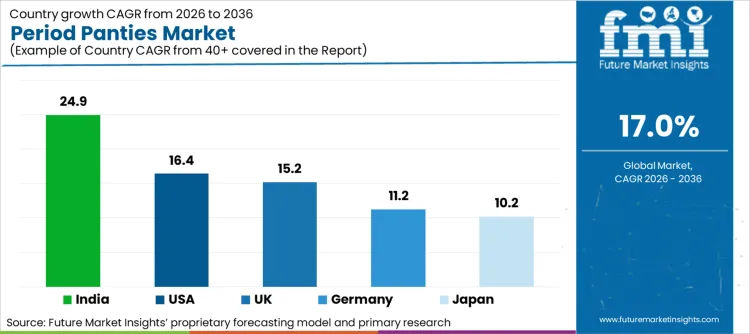
Period Panties Market CAGR Analysis by Country
- India is expected to post 24.9% CAGR by 2036 as menstrual health outreach and online commerce expand the trial base.
- The United States is projected to record 16.4% CAGR by 2036 with direct brands using education led selling and teen lines.
- The United Kingdom is forecast at 15.2% CAGR by 2036 after VAT relief lowered the visible price of period pants.
- Canada is expected to record 13.8% CAGR by 2036 where access programs introduce reusable product choice.
- France is forecast at 12.1% CAGR by 2036 reflecting reusable product awareness and pharmacy linked education.
- Germany is anticipated to advance at 11.2% CAGR by 2036 given that buyers need more proof on safety and fit.
- Japan is projected to register 10.2% CAGR by 2036 supported by urban trial through online and specialty channels.
Demand for period panties is forecast to rise at 17.0% CAGR from 2026 to 2036. Country level analysis covers markets where menstrual access policy and reusable care acceptance shape conversion.
Demand Outlook for Period Panties Market in India
India's menstrual health outreach is expected to widen trial for reusable products through schools and online channels. India is forecast to post 24.9% CAGR through 2036. The Demographic and Health Surveys Program noted in May 2024 that India's 2019 to 2021 National Family Health Survey found 77.3% of women aged 15 to 24 used hygienic methods during menstrual cycles. This gives brands a large base already familiar with formal products. Faster online commerce then creates a private route for trial beyond pharmacies and supermarkets. India period panties adoption is expected to benefit from private online education.
- School health programs can introduce reusable options after disposable product familiarity is established.
- Urban online buyers compare absorbency and washing guidance before trying multipacks.
- Local brands can win when they price starter packs for first time reusable users.
Demand Analysis of Period Panties Market in the United States
Direct to consumer brands in the United States are expected to reduce first purchase hesitation through fit tools and teen education. The country is projected to record 16.4% CAGR through 2036. The Centers for Disease Control and Prevention included period underwear in its May 2024 menstrual hygiene guidance. Public health language makes the format easier for schools and parents to discuss. Demand for period panties in the United States is tied to direct brand education and privacy led checkout.
- California and Minnesota chemical rules raise pressure for clear PFAS and materials statements.
- Direct websites can use reviews and fit tools to reduce size related returns.
- Teen product lines give brands an earlier entry point into repeat use.
Sales Outlook for Period Panties Market in the United Kingdom
The United Kingdom tax change is expected to improve price visibility for reusable underwear. Demand is expected to expand at 15.2% CAGR through 2036. The government said VAT removal from January 2024 could save shoppers up to GBP 2 on a GBP 12 pair of period pants. That 16% saving narrows the gap between reusable underwear and disposable products. Retailers that passed through the saving gained a clearer shelf price argument.
- High street chains can pair tax relief with multipack offers for entry buyers.
- School access programs help normalize menstrual product choice across younger users.
- Reusable products can gain share where shoppers compare lifetime cost with monthly pad spend.
Opportunity Analysis of Period Panties Market in Canada
Community distribution in Canada is expected to add reusable product choice outside standard retail channels. The market is forecast to rise at 13.8% CAGR through 2036. Women and Gender Equality Canada stated in October 2025 that nearly 400 pilot sites and over 2,000 distribution locations had participated in the Menstrual Equity Fund. The same program includes disposable and reusable products. This creates institutional familiarity beyond retail advertising.
- Community distribution can introduce reusable underwear to users facing period product costs.
- Canadian brands can support access programs with simple washing and fit education.
- Online retail remains useful because rural users need private product comparison and delivery.
Demand Outlook for Period Panties Market in France
France's retail and pharmacy channels are expected to support gradual reusable care trial. The country is forecast at 12.1% CAGR through 2036. Public debate around menstrual equity and waste reduction supports broader product discussion. Suppliers can gain share by linking comfort and test proof in one product page. France period panties demand also depends on pharmacy education and careful material wording.
- Pharmacy linked education can help buyers compare reusable underwear with cups and pads.
- Multipacks fit urban consumers who want full cycle use without daily disposable purchases.
- Material transparency is expected to matter as European buyers scrutinize skin contact textiles.
Sales Analysis of Period Panties Market in Germany
German consumers are expected to evaluate material proof and wash life before changing hygiene routines. Germany is expected to advance at 11.2% CAGR through 2036. World Bank data show Germany had 52.5 million people aged 15 to 64 in 2024. That base is sizable though conversion depends on trust in fabric performance and chemical claims.
- Retailers should explain absorbent layers and wash life before asking buyers to switch.
- Specialty stores can convert cautious users through fit guidance and return clarity.
- PFAS free and skin contact claims need third party proof to support repeat purchase.
Future Outlook for Period Panties Market in Japan
Japan's urban shoppers are expected to test period panties through discreet specialty and online channels. Japan is forecast at 10.2% CAGR through 2036. The country has strong retail discipline and high expectations for comfort and packaging. Period panties must fit daily wardrobe habits before they replace pads. Japan period panties demand favors compact formats and discreet retail pages.
- Tokyo and Osaka buyers can test thinner styles through online and specialty channels.
- Retail packaging must show absorbency and washing steps without crowding the label.
- Local partnerships can reduce trial risk where shoppers prefer familiar retail names.
Competitive Landscape and Strategic Positioning
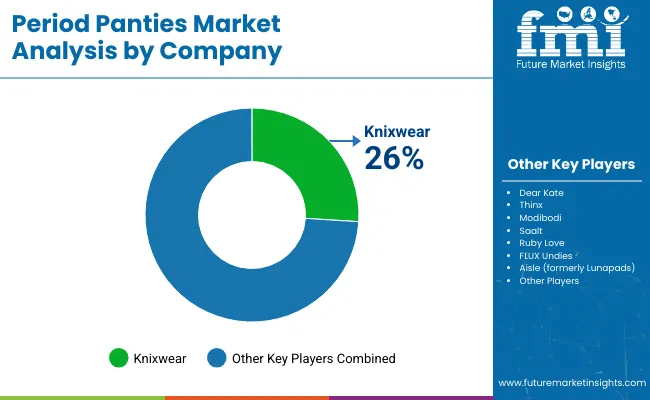
- Competition is centered on absorbency proof and material disclosure.
- DTC brands shape first trial by turning product pages into flow guides and wash care explainers.
- Retail expansion works best when shelf displays support flow level and size selection clearly.
- Entry barriers include leakproof layer design and repeat purchase trust.
Some of the leading companies in the industry such as Thinx and Knix have built North American education engines because their product pages speak directly to flow level and wear time. Knix said its leakproof range spans about one pantyliner to nine super tampons by style. Thinx says its teen product line can provide up to 12 hours of leakproof protection. These claims make reusable period panties easier to compare against pads and tampons. Feminine hygiene products remain the retail benchmark for period underwear claims.
Modibodi and Saalt compete with WUKA and Aisle through focused product stories. Modibodi uses use context segmentation across underwear and swimwear. Saalt has strengthened teen positioning with a line that absorbs up to four pads. WUKA emphasizes PFAS and silver free positioning. Aisle points to a 2024 transition away from polyester in on body fabrics.
Lowest price alone is not expected to decide supplier position. Shoppers want proof that the product stays leak resistant at work or sleep. Suppliers that pair absorbency claims with plain washing instructions and safety disclosures are expected to hold a stronger position as regulation becomes stricter.
Key Companies in the Period Panties Market
Competition is best read by role because product proof and channel education differ sharply.
- DTC Education Leaders: Thinx and Knix hold strong positions through direct selling and flow level guidance.
- Reusable Care Specialists: Modibodi and Saalt compete alongside WUKA and Aisle through absorbency ranges and material stories.
- Retail and Access Partners: Pharmacies and supermarkets influence how quickly reusable underwear becomes a normal product choice.
Competitive Benchmarking: Period Panties Market
| Company | Absorbency Proof Depth | Materials Disclosure Depth | DTC Education Reach | Reusable Portfolio Breadth | Geographic Footprint |
|---|---|---|---|---|---|
| Thinx | High | Medium | High | Strong | North America with wider online reach |
| Knix | High | Medium | High | Strong | North America centered with online scale |
| Modibodi | High | Strong | Strong | High | Australia origin with global retail exposure |
| Saalt | Strong | Strong | Strong | Medium | United States centered with online reach |
| WUKA | Strong | High | Strong | Strong | United Kingdom centered with online reach |
| Aisle | Medium | High | Medium | Strong | Canada centered with impact led positioning |
| Proof | Medium | Medium | Medium | Medium | United States centered with online reach |
Source: Future Market Insights competitive analysis, 2026. Ratings reflect relative positioning based on public product information and online education depth.
Key Developments in Period Panties Market
- In March 2025, Saalt introduced Saalt Wear Teen Sport Short as leakproof period shorts designed for school, sports and sleepover use.
- In June 2025, WUKA refreshed its period care identity and introduced next generation period pants, including leakproof teen styles.
- In November 2025, Aisle added a limited AWWA leakproof underwear drop with four new styles and five new colors.
Key Players in the Period Panties Market
Major Global and DTC Players
- Thinx
- Knix
- Modibodi
- Saalt
- WUKA
- Aisle
- Proof
Specialist and Regional Players
- Bambody
- Dear Kate
- Ruby Love
- Flux Undies
- Neione
Report Scope and Coverage
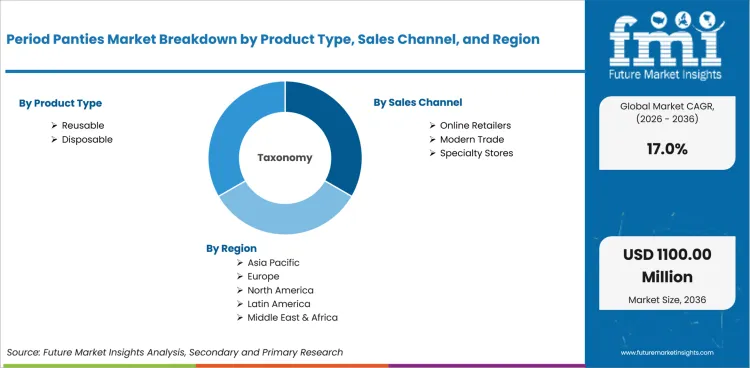
| Item | Value |
|---|---|
| Quantitative Units | USD million and CAGR |
| Market Definition | Absorbent underwear designed for menstrual flow protection |
| Product Type Segments | Reusable period panties and disposable period panties |
| Sales Channel Segments | Online retailers, modern trade, convenience stores, specialty stores, mono brand stores, direct sales, and other channels |
| Absorbency Segments | Light flow, moderate flow, heavy flow, and overnight |
| Material Segments | Cotton blends, synthetic blends, bamboo and viscose blends, and other materials |
| Regions Covered | North America, Latin America, Western Europe, Eastern Europe, East Asia, South Asia and Pacific, Middle East and Africa |
| Countries Covered | United States, Canada, Mexico, Brazil, Germany, United Kingdom, France, Japan, India, and other key countries |
| Forecast Period | 2026 to 2036 |
Source: Future Market Insights.
Period Panties Market Breakdown by Product Type, Sales Channel, Absorbency Level, Material Type, Consumer Group, Pack Format, and Region
Period Panties Market Segmented by Product Type
- Reusable period panties
- Disposable period panties
Period Panties Market Segmented by Sales Channel
- Online retailers
- Modern trade
- Convenience stores
- Specialty stores
- Mono brand stores
- Direct sales
- Other sales channels
Period Panties Market Segmented by Absorbency Level
- Light flow
- Moderate flow
- Heavy flow
- Overnight
Period Panties Market Segmented by Material Type
- Cotton blends
- Synthetic blends
- Bamboo and viscose blends
- Other materials
Period Panties Market Segmented by Consumer Group
- Adults
- Teens
- Postpartum users
Period Panties Market Segmented by Pack Format
- Single pairs
- Multipacks
- Subscription bundles
Period Panties Market by Region
- North America
- United States
- Canada
- Europe
- Germany
- United Kingdom
- France
- Italy
- Spain
- Asia Pacific
- China
- Japan
- South Korea
- Taiwan
- Singapore
- Latin America
- Brazil
- Mexico
- Argentina
- Middle East & Africa
- GCC Countries
- South Africa
- Israel
Research Sources and Bibliography
- Government of the United Kingdom. (2024, January 1). VAT on period pants scrapped.
- Centers for Disease Control and Prevention. (2024, May 7). Healthy habits: Menstrual hygiene.
- Minnesota Pollution Control Agency. (2025). 2025 PFAS prohibitions.
- Government of Canada. (2025, October 31). Menstrual Equity Fund.
- Government of Catalonia. (2024, March 4). The universal and free distribution of reusable menstrual products begins in all pharmacies in Catalonia.
- The Demographic and Health Surveys Program. (2024, May 28). New menstruation data for International Menstrual Hygiene Day.
- World Bank. (2024). Population ages 15 to 64 total in Germany.
- Saalt. (2024, August 13). Why I felt inspired to design period underwear for girls.
- WUKA. (2024, April 23). Why WUKA period pants contain no silver.
- Saalt. (2025, March 18). Meet the Saalt Wear Teen Sport Short: The leakproof shorts designed for movement. Saalt.
- WUKA. (2025, June 27). Fresh look. Same energy. Same mission. WUKA.
- Aisle. (2025, November 7). Aisle welcomes NZ’s fave leakproof underwear brand. Aisle.
The bibliography is provided for reader reference and uses government, public health, and official company sources relevant to period panties and reusable menstrual care demand signals.
This Report Answers
- What is the current and future size of the period panties market?
- How fast is the period panties market expected to expand between 2026 and 2036?
- Which product type is expected to lead period panties demand by 2026?
- Which sales channel is projected to account for the largest period panties share in 2026?
- Why do reusable products and online retailers shape this market?
- How do price and washing routines affect period panties adoption?
- Which countries are projected to record faster expansion during the forecast period?
- Who are the main companies active in period panties and related reusable menstrual care?
- How does FMI define the period panties market scope?
- How does FMI estimate and validate the period panties forecast?
Frequently Asked Questions
What is the global market demand for Period Panties in 2026?
In 2026, the global period panties market is projected to be worth USD 200 million as reusable care enters routine purchases.
What size is the Period Panties Market forecast to reach by 2036?
By 2036, the period panties market is projected to reach USD 1,100 million as online education and reusable routines expand.
How much is demand for Period Panties expected to expand between 2026 and 2036?
Demand for period panties is projected to expand at 17.0% CAGR from 2026 to 2036 based on FMI forecast analysis.
Which product type leads the Period Panties Market?
Reusable period panties lead the market with 69.0% share in 2026 because repeated use supports a clear lifetime value case.
Which sales channel leads the Period Panties Market?
Online retailers lead with 38.0% share in 2026 because shoppers need privacy plus absorbency guidance and size support before buying.
Why does India shape the Period Panties Market outlook?
India shapes the outlook because menstrual health outreach and online commerce support faster trial, giving the country a 24.9% CAGR outlook.
What limits wider Period Panties Market adoption?
Wider adoption is limited by upfront price and washing effort since sizing uncertainty and chemical safety questions slow first purchase confidence.
Which companies are active in the Period Panties Market?
Active companies include Thinx and Knix with Modibodi and Saalt plus WUKA and Aisle alongside Proof and regional labels such as Ruby Love.
Preview the report firsthand - request a free sample
Get SampleGet the brochure for pricing and purchase details.
Get PDFTable of Content
- Executive Summary
- Global Market Outlook
- Demand-side Trends
- Supply-side Trends
- Technology Roadmap Analysis
- Analysis and Recommendations
- Market Overview
- Market Coverage / Taxonomy
- Market Definition / Scope / Limitations
- Research Methodology
- Chapter Orientation
- Analytical Lens and Working Hypotheses
- Market Structure, Signals, and Trend Drivers
- Benchmarking and Cross-market Comparability
- Market Sizing, Forecasting, and Opportunity Mapping
- Research Design and Evidence Framework
- Desk Research Programme (Secondary Evidence)
- Company Annual and Sustainability Reports
- Peer-reviewed Journals and Academic Literature
- Corporate Websites, Product Literature, and Technical Notes
- Earnings Decks and Investor Briefings
- Statutory Filings and Regulatory Disclosures
- Technical White Papers and Standards Notes
- Trade Journals, Industry Magazines, and Analyst Briefs
- Conference Proceedings, Webinars, and Seminar Materials
- Government Statistics Portals and Public Data Releases
- Press Releases and Reputable Media Coverage
- Specialist Newsletters and Curated Briefings
- Sector Databases and Reference Repositories
- FMI Internal Proprietary Databases and Historical Market Datasets
- Subscription Datasets and Paid Sources
- Social Channels, Communities, and Digital Listening Inputs
- Additional Desk Sources
- Expert Input and Fieldwork (Primary Evidence)
- Primary Modes
- Qualitative Interviews and Expert Elicitation
- Quantitative Surveys and Structured Data Capture
- Blended Approach
- Why Primary Evidence is Used
- Field Techniques
- Interviews
- Surveys
- Focus Groups
- Observational and In-context Research
- Social and Community Interactions
- Stakeholder Universe Engaged
- C-suite Leaders
- Board Members
- Presidents and Vice Presidents
- R&D and Innovation Heads
- Technical Specialists
- Domain Subject-matter Experts
- Scientists
- Physicians and Other Healthcare Professionals
- Governance, Ethics, and Data Stewardship
- Research Ethics
- Data Integrity and Handling
- Primary Modes
- Tooling, Models, and Reference Databases
- Desk Research Programme (Secondary Evidence)
- Data Engineering and Model Build
- Data Acquisition and Ingestion
- Cleaning, Normalisation, and Verification
- Synthesis, Triangulation, and Analysis
- Quality Assurance and Audit Trail
- Market Background
- Market Dynamics
- Drivers
- Restraints
- Opportunity
- Trends
- Scenario Forecast
- Demand in Optimistic Scenario
- Demand in Likely Scenario
- Demand in Conservative Scenario
- Opportunity Map Analysis
- Product Life Cycle Analysis
- Supply Chain Analysis
- Investment Feasibility Matrix
- Value Chain Analysis
- PESTLE and Porter’s Analysis
- Regulatory Landscape
- Regional Parent Market Outlook
- Production and Consumption Statistics
- Import and Export Statistics
- Market Dynamics
- Global Market Analysis 2021 to 2025 and Forecast, 2026 to 2036
- Historical Market Size Value (USD Million) Analysis, 2021 to 2025
- Current and Future Market Size Value (USD Million) Projections, 2026 to 2036
- Y-o-Y Growth Trend Analysis
- Absolute $ Opportunity Analysis
- Global Market Pricing Analysis 2021 to 2025 and Forecast 2026 to 2036
- Global Market Analysis 2021 to 2025 and Forecast 2026 to 2036, By Product Type
- Introduction / Key Findings
- Historical Market Size Value (USD Million) Analysis By Product Type , 2021 to 2025
- Current and Future Market Size Value (USD Million) Analysis and Forecast By Product Type , 2026 to 2036
- Reusable
- Disposable
- Reusable
- Y-o-Y Growth Trend Analysis By Product Type , 2021 to 2025
- Absolute $ Opportunity Analysis By Product Type , 2026 to 2036
- Global Market Analysis 2021 to 2025 and Forecast 2026 to 2036, By Sales Channel
- Introduction / Key Findings
- Historical Market Size Value (USD Million) Analysis By Sales Channel, 2021 to 2025
- Current and Future Market Size Value (USD Million) Analysis and Forecast By Sales Channel, 2026 to 2036
- Online Retailers
- Modern Trade
- Specialty Stores
- Online Retailers
- Y-o-Y Growth Trend Analysis By Sales Channel, 2021 to 2025
- Absolute $ Opportunity Analysis By Sales Channel, 2026 to 2036
- Global Market Analysis 2021 to 2025 and Forecast 2026 to 2036, By Absorbency Level
- Introduction / Key Findings
- Historical Market Size Value (USD Million) Analysis By Absorbency Level, 2021 to 2025
- Current and Future Market Size Value (USD Million) Analysis and Forecast By Absorbency Level, 2026 to 2036
- Overnight
- Light Flow
- Moderate Flow
- Overnight
- Y-o-Y Growth Trend Analysis By Absorbency Level, 2021 to 2025
- Absolute $ Opportunity Analysis By Absorbency Level, 2026 to 2036
- Global Market Analysis 2021 to 2025 and Forecast 2026 to 2036, By Material Type
- Introduction / Key Findings
- Historical Market Size Value (USD Million) Analysis By Material Type, 2021 to 2025
- Current and Future Market Size Value (USD Million) Analysis and Forecast By Material Type, 2026 to 2036
- Cotton Blends
- Synthetic Blends
- Bamboo and Viscose Blends
- Cotton Blends
- Y-o-Y Growth Trend Analysis By Material Type, 2021 to 2025
- Absolute $ Opportunity Analysis By Material Type, 2026 to 2036
- Global Market Analysis 2021 to 2025 and Forecast 2026 to 2036, By Consumer Group
- Introduction / Key Findings
- Historical Market Size Value (USD Million) Analysis By Consumer Group, 2021 to 2025
- Current and Future Market Size Value (USD Million) Analysis and Forecast By Consumer Group, 2026 to 2036
- Adult
- Teens
- Postpartum users
- Adult
- Y-o-Y Growth Trend Analysis By Consumer Group, 2021 to 2025
- Absolute $ Opportunity Analysis By Consumer Group, 2026 to 2036
- Global Market Analysis 2021 to 2025 and Forecast 2026 to 2036, By Pack Format
- Introduction / Key Findings
- Historical Market Size Value (USD Million) Analysis By Pack Format, 2021 to 2025
- Current and Future Market Size Value (USD Million) Analysis and Forecast By Pack Format, 2026 to 2036
- Multipacks
- Single Pairs
- Subscription Bundles
- Multipacks
- Y-o-Y Growth Trend Analysis By Pack Format, 2021 to 2025
- Absolute $ Opportunity Analysis By Pack Format, 2026 to 2036
- Global Market Analysis 2021 to 2025 and Forecast 2026 to 2036, By Region
- Introduction
- Historical Market Size Value (USD Million) Analysis By Region, 2021 to 2025
- Current Market Size Value (USD Million) Analysis and Forecast By Region, 2026 to 2036
- North America
- Latin America
- Western Europe
- Eastern Europe
- East Asia
- South Asia and Pacific
- Middle East & Africa
- Market Attractiveness Analysis By Region
- North America Market Analysis 2021 to 2025 and Forecast 2026 to 2036, By Country
- Historical Market Size Value (USD Million) Trend Analysis By Market Taxonomy, 2021 to 2025
- Market Size Value (USD Million) Forecast By Market Taxonomy, 2026 to 2036
- By Country
- USA
- Canada
- Mexico
- By Product Type
- By Sales Channel
- By Absorbency Level
- By Material Type
- By Consumer Group
- By Pack Format
- By Country
- Market Attractiveness Analysis
- By Country
- By Product Type
- By Sales Channel
- By Absorbency Level
- By Material Type
- By Consumer Group
- By Pack Format
- Key Takeaways
- Latin America Market Analysis 2021 to 2025 and Forecast 2026 to 2036, By Country
- Historical Market Size Value (USD Million) Trend Analysis By Market Taxonomy, 2021 to 2025
- Market Size Value (USD Million) Forecast By Market Taxonomy, 2026 to 2036
- By Country
- Brazil
- Chile
- Rest of Latin America
- By Product Type
- By Sales Channel
- By Absorbency Level
- By Material Type
- By Consumer Group
- By Pack Format
- By Country
- Market Attractiveness Analysis
- By Country
- By Product Type
- By Sales Channel
- By Absorbency Level
- By Material Type
- By Consumer Group
- By Pack Format
- Key Takeaways
- Western Europe Market Analysis 2021 to 2025 and Forecast 2026 to 2036, By Country
- Historical Market Size Value (USD Million) Trend Analysis By Market Taxonomy, 2021 to 2025
- Market Size Value (USD Million) Forecast By Market Taxonomy, 2026 to 2036
- By Country
- Germany
- UK
- Italy
- Spain
- France
- Nordic
- BENELUX
- Rest of Western Europe
- By Product Type
- By Sales Channel
- By Absorbency Level
- By Material Type
- By Consumer Group
- By Pack Format
- By Country
- Market Attractiveness Analysis
- By Country
- By Product Type
- By Sales Channel
- By Absorbency Level
- By Material Type
- By Consumer Group
- By Pack Format
- Key Takeaways
- Eastern Europe Market Analysis 2021 to 2025 and Forecast 2026 to 2036, By Country
- Historical Market Size Value (USD Million) Trend Analysis By Market Taxonomy, 2021 to 2025
- Market Size Value (USD Million) Forecast By Market Taxonomy, 2026 to 2036
- By Country
- Russia
- Poland
- Hungary
- Balkan & Baltic
- Rest of Eastern Europe
- By Product Type
- By Sales Channel
- By Absorbency Level
- By Material Type
- By Consumer Group
- By Pack Format
- By Country
- Market Attractiveness Analysis
- By Country
- By Product Type
- By Sales Channel
- By Absorbency Level
- By Material Type
- By Consumer Group
- By Pack Format
- Key Takeaways
- East Asia Market Analysis 2021 to 2025 and Forecast 2026 to 2036, By Country
- Historical Market Size Value (USD Million) Trend Analysis By Market Taxonomy, 2021 to 2025
- Market Size Value (USD Million) Forecast By Market Taxonomy, 2026 to 2036
- By Country
- China
- Japan
- South Korea
- By Product Type
- By Sales Channel
- By Absorbency Level
- By Material Type
- By Consumer Group
- By Pack Format
- By Country
- Market Attractiveness Analysis
- By Country
- By Product Type
- By Sales Channel
- By Absorbency Level
- By Material Type
- By Consumer Group
- By Pack Format
- Key Takeaways
- South Asia and Pacific Market Analysis 2021 to 2025 and Forecast 2026 to 2036, By Country
- Historical Market Size Value (USD Million) Trend Analysis By Market Taxonomy, 2021 to 2025
- Market Size Value (USD Million) Forecast By Market Taxonomy, 2026 to 2036
- By Country
- India
- ASEAN
- Australia & New Zealand
- Rest of South Asia and Pacific
- By Product Type
- By Sales Channel
- By Absorbency Level
- By Material Type
- By Consumer Group
- By Pack Format
- By Country
- Market Attractiveness Analysis
- By Country
- By Product Type
- By Sales Channel
- By Absorbency Level
- By Material Type
- By Consumer Group
- By Pack Format
- Key Takeaways
- Middle East & Africa Market Analysis 2021 to 2025 and Forecast 2026 to 2036, By Country
- Historical Market Size Value (USD Million) Trend Analysis By Market Taxonomy, 2021 to 2025
- Market Size Value (USD Million) Forecast By Market Taxonomy, 2026 to 2036
- By Country
- Kingdom of Saudi Arabia
- Other GCC Countries
- Turkiye
- South Africa
- Other African Union
- Rest of Middle East & Africa
- By Product Type
- By Sales Channel
- By Absorbency Level
- By Material Type
- By Consumer Group
- By Pack Format
- By Country
- Market Attractiveness Analysis
- By Country
- By Product Type
- By Sales Channel
- By Absorbency Level
- By Material Type
- By Consumer Group
- By Pack Format
- Key Takeaways
- Key Countries Market Analysis
- USA
- Pricing Analysis
- Market Share Analysis, 2025
- By Product Type
- By Sales Channel
- By Absorbency Level
- By Material Type
- By Consumer Group
- By Pack Format
- Canada
- Pricing Analysis
- Market Share Analysis, 2025
- By Product Type
- By Sales Channel
- By Absorbency Level
- By Material Type
- By Consumer Group
- By Pack Format
- Mexico
- Pricing Analysis
- Market Share Analysis, 2025
- By Product Type
- By Sales Channel
- By Absorbency Level
- By Material Type
- By Consumer Group
- By Pack Format
- Brazil
- Pricing Analysis
- Market Share Analysis, 2025
- By Product Type
- By Sales Channel
- By Absorbency Level
- By Material Type
- By Consumer Group
- By Pack Format
- Chile
- Pricing Analysis
- Market Share Analysis, 2025
- By Product Type
- By Sales Channel
- By Absorbency Level
- By Material Type
- By Consumer Group
- By Pack Format
- Germany
- Pricing Analysis
- Market Share Analysis, 2025
- By Product Type
- By Sales Channel
- By Absorbency Level
- By Material Type
- By Consumer Group
- By Pack Format
- UK
- Pricing Analysis
- Market Share Analysis, 2025
- By Product Type
- By Sales Channel
- By Absorbency Level
- By Material Type
- By Consumer Group
- By Pack Format
- Italy
- Pricing Analysis
- Market Share Analysis, 2025
- By Product Type
- By Sales Channel
- By Absorbency Level
- By Material Type
- By Consumer Group
- By Pack Format
- Spain
- Pricing Analysis
- Market Share Analysis, 2025
- By Product Type
- By Sales Channel
- By Absorbency Level
- By Material Type
- By Consumer Group
- By Pack Format
- France
- Pricing Analysis
- Market Share Analysis, 2025
- By Product Type
- By Sales Channel
- By Absorbency Level
- By Material Type
- By Consumer Group
- By Pack Format
- India
- Pricing Analysis
- Market Share Analysis, 2025
- By Product Type
- By Sales Channel
- By Absorbency Level
- By Material Type
- By Consumer Group
- By Pack Format
- ASEAN
- Pricing Analysis
- Market Share Analysis, 2025
- By Product Type
- By Sales Channel
- By Absorbency Level
- By Material Type
- By Consumer Group
- By Pack Format
- Australia & New Zealand
- Pricing Analysis
- Market Share Analysis, 2025
- By Product Type
- By Sales Channel
- By Absorbency Level
- By Material Type
- By Consumer Group
- By Pack Format
- China
- Pricing Analysis
- Market Share Analysis, 2025
- By Product Type
- By Sales Channel
- By Absorbency Level
- By Material Type
- By Consumer Group
- By Pack Format
- Japan
- Pricing Analysis
- Market Share Analysis, 2025
- By Product Type
- By Sales Channel
- By Absorbency Level
- By Material Type
- By Consumer Group
- By Pack Format
- South Korea
- Pricing Analysis
- Market Share Analysis, 2025
- By Product Type
- By Sales Channel
- By Absorbency Level
- By Material Type
- By Consumer Group
- By Pack Format
- Russia
- Pricing Analysis
- Market Share Analysis, 2025
- By Product Type
- By Sales Channel
- By Absorbency Level
- By Material Type
- By Consumer Group
- By Pack Format
- Poland
- Pricing Analysis
- Market Share Analysis, 2025
- By Product Type
- By Sales Channel
- By Absorbency Level
- By Material Type
- By Consumer Group
- By Pack Format
- Hungary
- Pricing Analysis
- Market Share Analysis, 2025
- By Product Type
- By Sales Channel
- By Absorbency Level
- By Material Type
- By Consumer Group
- By Pack Format
- Kingdom of Saudi Arabia
- Pricing Analysis
- Market Share Analysis, 2025
- By Product Type
- By Sales Channel
- By Absorbency Level
- By Material Type
- By Consumer Group
- By Pack Format
- Turkiye
- Pricing Analysis
- Market Share Analysis, 2025
- By Product Type
- By Sales Channel
- By Absorbency Level
- By Material Type
- By Consumer Group
- By Pack Format
- South Africa
- Pricing Analysis
- Market Share Analysis, 2025
- By Product Type
- By Sales Channel
- By Absorbency Level
- By Material Type
- By Consumer Group
- By Pack Format
- USA
- Market Structure Analysis
- Competition Dashboard
- Competition Benchmarking
- Market Share Analysis of Top Players
- By Regional
- By Product Type
- By Sales Channel
- By Absorbency Level
- By Material Type
- By Consumer Group
- By Pack Format
- Competition Analysis
- Competition Deep Dive
- Thinx
- Overview
- Product Portfolio
- Profitability by Market Segments (Product/Age /Sales Channel/Region)
- Sales Footprint
- Strategy Overview
- Marketing Strategy
- Product Strategy
- Channel Strategy
- Knix
- Modibodi
- Saalt
- WUKA
- Aisle
- Proof
- Thinx
- Competition Deep Dive
- Assumptions & Acronyms Used


