This report covers the Manual Bottle Opener market through analysis of market size, revenue forecast, competitive landscape, demand outlook, growth drivers, restraints, product type trends, material developments, price range trends, end-use analysis, distribution channel analysis, supply chain developments, strategic growth opportunities.

Methodology

Manual Bottle Opener Market Size, Market Forecast and Outlook By FMI

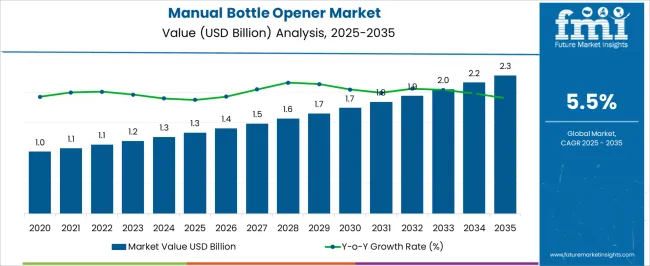
Manual Bottle Opener Market Market Value Analysis

The manual bottle opener market was valued at USD 1.30 Billion in 2025, projected to reach USD 1.37 Billion in 2026, and is forecast to expand to USD 2.34 Billion by 2036 at a 5.5% CAGR. Craft beverage culture expansion globally has sustained demand for bottle openers across household, hospitality, and outdoor recreation channels.

Summary of Manual Bottle Opener Market

  • Market Snapshot
    • The manual bottle opener market is valued at USD Billion 1.30 billion in 2025 and is projected to reach USD Billion 2.34 billion by 2036.
    • The industry is expected to grow at a 5.5% CAGR from 2026 to 2036, creating an incremental opportunity of USD Billion 0.97 billion.
    • The market is a consumer housewares category where material quality, design differentiation, and retail channel distribution breadth define competitive positioning among branded and private-label producers.
  • Demand and Growth Drivers
    • Demand is sustained by expanding craft beverage culture globally, driving household and hospitality channel purchases of quality manual bottle openers.
    • Premiumization is accelerating as consumers shift from commodity plastic openers toward stainless steel and designer variants combining functionality with aesthetic appeal.
    • Growth is supported by the hospitality sector investing in durable, branded bar tools as part of overall venue experience enhancement.
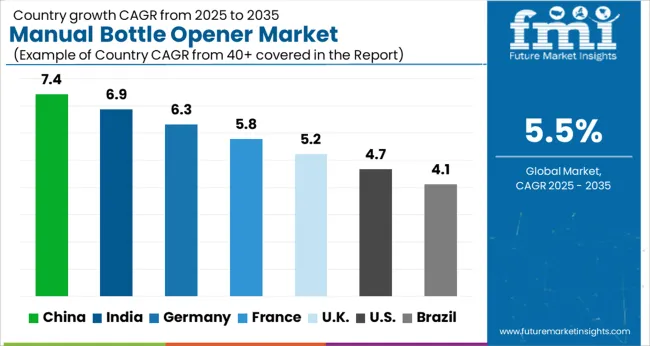
    • Among key countries, China at 7.4%, India at 6.9%, Germany at 6.3%, France at 5.8%, UK at 5.2%, USA at 4.7%, Brazil at 4.1%.
  • Product and Segment View
    • The Manual Bottle Opener Market covers handheld, wall-mounted, and keychain bottle opening devices manufactured from stainless steel, aluminum, plastic, and other materials. These products serve households, bars and restaurants, outdoor enthusiasts, and promotional merchandise applications across low, mid, and high price tiers..
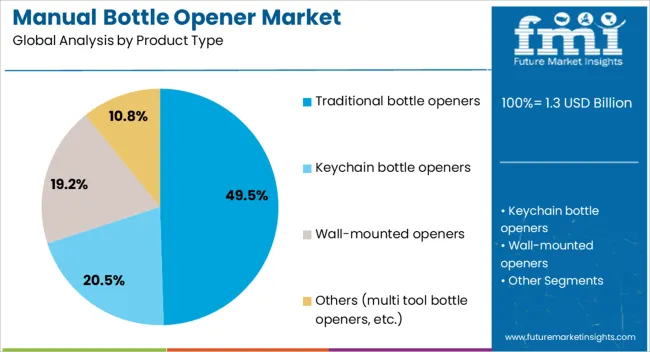
    • Traditional bottle openers leads by Product Type with 49.5% share in 2026.
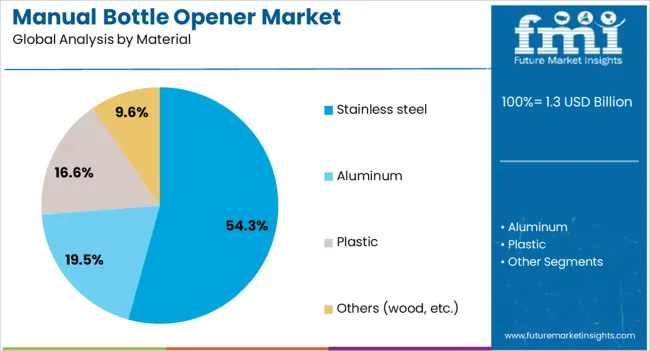
    • Stainless steel leads by Material with 54.3% share in 2026.
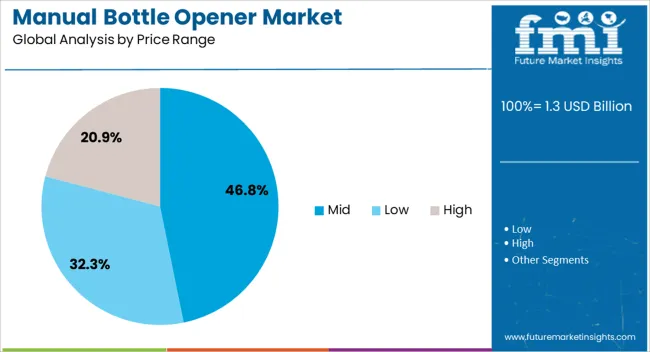
    • Mid leads by Price Range with 46.8% share in 2026.
    • Market scope covers traditional bottle openers, keychain openers, wall-mounted openers, and specialty designs.
    • The scope excludes electric and automatic bottle openers, wine corkscrews, can openers, and multi-tool devices where the bottle opener is a secondary function.
  • Geography and Competitive Outlook
    • China and India are the fastest-growing markets, while USA and Brazil represent mature demand bases.
    • Competition is shaped by a fragmented vendor landscape, with key players including Joseph Joseph, BarCraft, Boker, Corkcicle, Godinger, Kohler, Le Creuset.
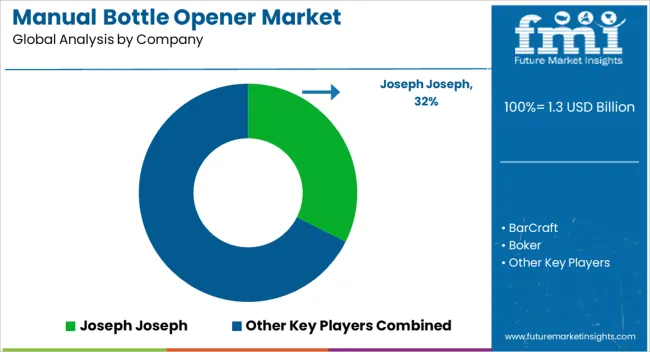
    • Joseph Joseph holds approximately 32% market share, positioning it as the category leader.
  • Analyst Opinion at FMI
    • Rahul Pandita, Principal Consultant, opines: 'In my analysis, I have observed that the competitive differentiator in the manual bottle opener category is not manufacturing cost but retail shelf placement and brand visibility. Consumer purchasing decisions in this category are heavily influenced by point-of-sale display positioning and brand recognition. Manufacturers unable to secure endcap or checkout-adjacent placement in major retail chains face margin compression from private-label competition that dominates undifferentiated shelf space.'
  • Strategic Implications / Executive Takeaways
    • Branded opener manufacturers must invest in retail merchandising programs that secure point-of-sale display positions in major housewares and kitchenware retail channels.
    • Hospitality supply distributors should develop customizable wall-mounted opener programs for bars and restaurants seeking branded barware solutions.
    • Product designers must focus on ergonomic differentiation and premium material finishes to justify mid-to-high price positioning against commodity alternatives.

FMI analysts observe a premiumization trend within the category, where consumers are shifting from commodity plastic openers toward stainless steel and designer variants that combine functionality with aesthetic appeal. The mid-price segment holds 46.8% share, reflecting buyer preference for quality materials without luxury pricing. Wall-mounted and branded openers are gaining traction in the hospitality sector as bars invest in durable, branded bar tools.

All major markets reflect differentiated growth trajectories. China at 7.4% CAGR, India at 6.9% CAGR, Germany at 6.3% CAGR, France at 5.8% CAGR, UK at 5.2% CAGR, USA at 4.7% CAGR, Brazil at 4.1% CAGR. Each country path is shaped by local regulatory frameworks, infrastructure maturity, and industry-specific demand patterns.

Manual Bottle Opener Market Key Takeaways

Metric Details
Industry Size (2026) USD 1.37 Billion
Industry Value (2036) USD 2.34 Billion
CAGR (2026-2036) 5.5%

Source: Future Market Insights, 2026

Manual Bottle Opener Market Definition

The Manual Bottle Opener Market covers handheld, wall-mounted, and keychain bottle opening devices manufactured from stainless steel, aluminum, plastic, and other materials. These products serve households, bars and restaurants, outdoor enthusiasts, and promotional merchandise applications across low, mid, and high price tiers.

Manual Bottle Opener Market Inclusions

Market scope covers traditional bottle openers, keychain openers, wall-mounted openers, and specialty designs. Global and regional market sizes for the forecast period 2026 to 2036 are covered, segmented by product type, material, price range, and end-use.

Manual Bottle Opener Market Exclusions

The scope excludes electric and automatic bottle openers, wine corkscrews, can openers, and multi-tool devices where the bottle opener is a secondary function. Promotional merchandise openers distributed free of charge are excluded from revenue calculations.

Manual Bottle Opener Market Research Methodology

  • Primary Research: Analysts engaged with housewares category buyers at major retail chains, bar and restaurant supply procurement managers, and promotional merchandise distributors.
  • Desk Research: Data collection included consumer housewares retail sales databases, hospitality equipment procurement records, and material cost index publications from metals and plastics industry associations.
  • Market-Sizing and Forecasting: Baseline values derive from a bottom-up aggregation of retail sales data by channel type, applying product mix and average selling price trends to project consumer spending on manual bottle openers through 2036.
  • Data Validation and Update Cycle: Projections are cross-validated against consumer housewares market surveys and retail point-of-sale data from major distribution channels.

Why is the Manual Bottle Opener Market Growing?

The market in 2026 is characterized by a preference for durable, ergonomically designed products that combine functionality with aesthetic appeal. Rising disposable incomes, increased dining and hospitality activities, and the expansion of the food and beverage service sector are driving growth.

The market is also benefiting from the growing popularity of home bars and casual entertaining, encouraging consumers to invest in reliable and stylish openers. Manufacturers are focusing on design innovations and premium materials to enhance product longevity and user experience.

Additionally, the shift towards eco-friendly and reusable kitchen tools is further supporting adoption. As retail and e-commerce platforms expand their reach, accessibility to a wide range of manual bottle openers is increasing, positioning the market for continued growth in both developed and emerging regions.

Segmental Analysis

The manual bottle opener market is segmented by product type, material, price range, end-use, distribution channel, and geographic regions. By product type, manual bottle opener market is divided into traditional bottle openers, keychain bottle openers, wall-mounted openers, and others (multi tool bottle openers, etc.). In terms of material, manual bottle opener market is classified into stainless steel, aluminum, plastic, and others (wood, etc.).

Based on price range, manual bottle opener market is segmented into mid, low, and high. By end-use, manual bottle opener market is segmented into households, bars and restaurants, outdoor enthusiasts, and others (collectors and hobbyists, etc.). By distribution channel, manual bottle opener market is segmented into online and offline. Regionally, the manual bottle opener industry is classified into North America, Latin America, Western Europe, Eastern Europe, Balkan & Baltic Countries, Russia & Belarus, Central Asia, East Asia, South Asia & Pacific, and the Middle East & Africa.
Insights into the Traditional Bottle Openers Segment

Manual Bottle Opener Market Analysis By Product Type

The traditional bottle openers segment is projected to hold 49.5% of the manual bottle opener market revenue in 2026, making it the leading product type. This dominance is being attributed to their simple design, ease of use, and long-standing consumer familiarity.

Traditional openers have maintained strong demand across both domestic and commercial environments due to their affordability and minimal maintenance requirements. Their durability and ability to perform effectively without mechanical components have made them a preferred choice in high-usage settings.

The growth of this segment is further supported by the wide availability of these openers across retail outlets and online channels, ensuring consistent market penetration. The segment also benefits from its compatibility with various bottle types, making it a versatile choice for consumers seeking practicality and reliability in everyday use.
Insights into the Stainless Steel Segment

Manual Bottle Opener Market Analysis By Material

The stainless steel material segment is expected to account for 54.3% of the market revenue in 2026, emerging as the leading material choice. This leadership is being driven by the material’s strength, corrosion resistance, and ability to maintain a polished appearance over time.

Stainless steel openers are preferred in both home and professional environments where hygiene, durability, and aesthetic appeal are valued. The material’s non-reactive properties ensure safety when in contact with beverages, while its resilience to wear supports long-term usage.

Growing consumer preference for premium, long-lasting kitchen tools has further elevated demand for stainless steel variants. Additionally, the segment’s growth is reinforced by the availability of a wide variety of stainless steel designs, ranging from minimalist utility-focused models to decorative and gift-oriented products, catering to a broad spectrum of buyers.
Insights into the Mid Price Range Segment

Manual Bottle Opener Market Analysis By Price Range

The mid price range segment is anticipated to capture 46.8% of the market revenue in 2026, positioning it as the leading price category. This segment’s prominence is being supported by its balance of affordability and quality, making it accessible to a broad consumer base while delivering durable and aesthetically pleasing products.

Buyers in this range often seek openers that combine robust materials with ergonomic designs without the premium cost associated with luxury items. Retailers and manufacturers have targeted this segment with a wide assortment of designs and styles, ensuring appeal to both practical users and gift buyers.

The growth of e-commerce has also amplified the segment’s reach, enabling competitive pricing and variety. With value-conscious consumers continuing to prioritize products that offer long-term utility and appealing design, the mid price range is expected to sustain its leading position.

What are the Drivers, Restraints, and Key Trends of the Manual Bottle Opener Market?

The market has been shaped by its strong connection to consumer lifestyle, hospitality, and food service trends. Despite the presence of electric and automated alternatives, manual openers remain widely used because of their portability, reliability, and affordability. They are popular across households, restaurants, bars, and recreational settings, where convenience and tradition hold value. Product innovation in terms of ergonomics, design, and material durability has strengthened consumer interest. The gifting trends, branding opportunities, and collectible editions have supported demand growth.

Consumer Preferences and Lifestyle Influence

Consumer lifestyle patterns have significantly impacted the demand for manual bottle openers. These products are often associated with home gatherings, casual dining, and outdoor recreational activities, where convenience and tradition influence purchasing behavior. Unlike automated alternatives, manual openers require no power source, making them ideal for travel and outdoor use. Their simplicity and effectiveness reinforce consumer trust, ensuring their continued presence in households worldwide. Beyond functionality, openers are increasingly viewed as lifestyle accessories, available in customized shapes, premium finishes, and creative designs that appeal to collectors and enthusiasts. This blending of utility and personalization demonstrates how manual bottle openers meet both practical and emotional needs, thereby maintaining relevance across diverse consumer groups.

Hospitality and Food Service Sector Demand

The hospitality and food service industries have been key drivers in sustaining the manual bottle opener market. Bars, restaurants, hotels, and catering services rely on these tools for efficiency and reliability in beverage service. Manual openers are preferred for their low maintenance requirements and speed of operation compared to electric alternatives. The durability of stainless steel and alloy-based designs makes them suitable for high-frequency usage, ensuring long-term cost effectiveness. Additionally, branding opportunities within hospitality settings, such as customized openers featuring logos, have further strengthened market adoption. The continued growth of global dining establishments and social drinking culture ensures that manual bottle openers remain indispensable within professional service environments.

Material Innovations and Product Differentiation

Advancements in material selection and ergonomic design have played a crucial role in enhancing manual bottle openers. Traditional steel-based models are now supplemented with openers made from zinc alloys, aluminum, wood, and even biodegradable composites. Ergonomic grips, lightweight structures, and safety features have improved consumer usability, particularly among elderly users or individuals with reduced hand strength. Premium finishes such as chrome plating, matte steel, and decorative designs have transformed bottle openers into lifestyle accessories rather than purely functional items. The limited edition and souvenir collections have created niche opportunities for manufacturers. Such product differentiation not only drives consumer interest but also allows companies to target multiple price points within the global market.

Retail Distribution and E-commerce Expansion

The distribution landscape for manual bottle openers has undergone a significant transformation with the rise of e-commerce platforms. Online marketplaces provide customers access to a wide variety of designs, materials, and price ranges, often accompanied by peer reviews that influence purchasing decisions.

Specialty stores, supermarkets, and hospitality suppliers continue to serve traditional buyers, but online retail channels are increasingly dominating sales due to convenience and global reach. Customization options, subscription-based gift services, and cross-selling with kitchenware products further support sales momentum. The ability of manufacturers to leverage both physical retail and digital channels ensures expanded consumer outreach. This omnichannel approach has been critical in driving growth and in sustaining the relevance of manual bottle openers worldwide.

Analysis of Manual Bottle Opener Market By Key Countries

Top Country Growth Comparison Manual Bottle Opener Market Cagr (2026 2036)

Country CAGR
China 7.4%
India 6.9%
Germany 6.3%
France 5.8%
UK 5.2%
USA 4.7%
Brazil 4.1%

Manual Bottle Opener Market Cagr Analysis By Country

The market is showing consistent development, supported by consumer demand across both household and commercial segments. India grows at 6.9%, driven by increasing use in restaurants, cafes, and hospitality sectors. Germany records 6.3%, with growth influenced by the popularity of premium kitchen tools and bar accessories. China leads with 7.4%, backed by large-scale manufacturing and high domestic consumption. The United Kingdom stands at 5.2%, reflecting steady demand in lifestyle and leisure markets. The United States follows at 4.7%, where consumer preferences for both traditional and modern opener designs shape the market. This growth outlook indicates a steady expansion in both developed and emerging regions. This report includes insights on 40+ countries; the top markets are shown here for reference.

Market Outlook on Manual Bottle Opener Demand in China

The market in China is projected to increase at a CAGR of 7.4%, supported by strong beverage industry growth and wide consumer base. The expanding consumption of beer and carbonated drinks has been a primary factor in driving demand for openers in both residential and commercial settings. It is observed that gifting culture and household dining patterns have also favored sales of decorative and functional opener designs. Local manufacturers are actively innovating with stainless steel, aluminum, and bamboo-based materials to capture diverse preferences. Export oriented production has provided Chinese suppliers an advantage, as they meet overseas demand through mass manufacturing capabilities. The combination of cultural consumption trends and industrial efficiency ensures that China continues to lead the manual bottle opener market.

Growth Potential of Manual Bottle Opener Usage in India

The market in India is expected to register a CAGR of 6.9%, influenced by beverage sector expansion and lifestyle changes in urban and semi-urban regions. Rising popularity of craft breweries and packaged drinks has stimulated demand in both hospitality and home consumption categories. Traditional use of openers in household gatherings continues to support steady sales volumes. Indian manufacturers are focusing on affordable stainless steel models while international suppliers are introducing ergonomic designs for premium segments. It is considered that growth is further supported by rising gifting preferences during festivals, where bar accessories are included in packaged offerings. India is positioned to become a fast growing market where functional and decorative openers find equal acceptance.
Demand Assessment of Manual Bottle Opener Market in Germany

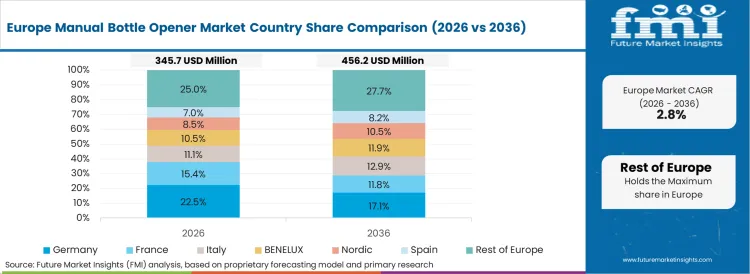
Manual Bottle Opener Market Europe Country Market Share Analysis, 2026 & 2036

Germany is anticipated to expand at a CAGR of 6.3%, largely driven by cultural traditions associated with beer consumption. Germany has one of the highest per capita beer consumption rates globally, which translates into steady household and bar level use of openers. Collectible and branded openers associated with breweries have also contributed to market diversity. German manufacturers emphasize durability and design aesthetics, often producing openers integrated with multifunctional tools. The hospitality sector continues to purchase bulk openers, particularly for traditional beer gardens and local breweries. The market in Germany is considered highly competitive, with both domestic producers and imports from Asian suppliers serving consumers.

Market Insights on Manual Bottle Opener Sales in the United Kingdom

The market in the United Kingdom is forecasted to expand at a CAGR of 5.2%, supported by steady alcohol consumption trends and popularity of premium bar accessories. British consumers have shown interest in both traditional openers and modern multipurpose variants. Hospitality businesses such as pubs and restaurants remain leading buyers, ensuring recurrent demand. Collectible openers themed around sports clubs and entertainment franchises have further diversified sales channels. Manufacturers and distributors have emphasized online sales platforms, where kitchen accessories including openers are sold extensively. It is judged that design oriented offerings, often marketed as gifts, have secured an important share of market growth in the United Kingdom.
Growth Evaluation of Manual Bottle Opener Market in the United States

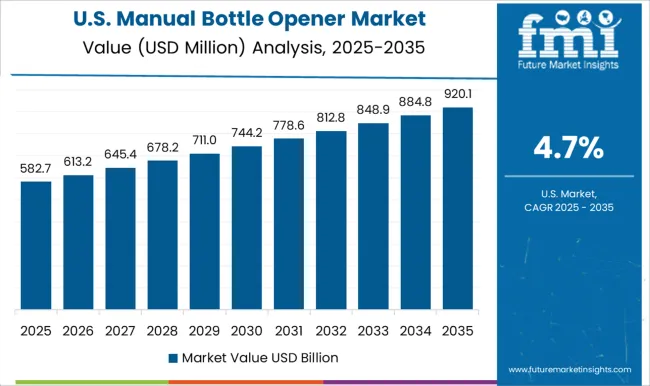
Manual Bottle Opener Market Country Value Analysis

The market in the United States is anticipated to grow at a CAGR of 4.7%, influenced by changing beverage consumption patterns and consumer preference for personalized accessories. Although canned drinks have increased in popularity, bottles still account for a major share in beer and specialty beverage sales, sustaining demand for openers. USA consumers show high interest in novelty and branded openers, often linked with sports teams, breweries, or tourist destinations. Hospitality establishments, including restaurants and bars, remain consistent buyers of durable opener designs. Domestic companies as well as overseas suppliers compete in this market, ensuring a wide range of pricing and style options. The USA market is considered mature, but continues to present opportunities through customization and branding.
Competitive Landscape of Manual Bottle Opener Market

Manual Bottle Opener Market Analysis By Company

The market features a blend of established kitchenware brands, lifestyle product innovators, and specialized manufacturers offering both functional and design focused solutions. OXO International, Joseph Joseph, and Le Creuset are notable for premium quality openers that combine ergonomic design with durability, appealing to modern households. Oster and Kohler extend the category with products that integrate style and practicality, targeting everyday consumer use. BarCraft, True Fabrications, and The Bottle Opener Company emphasize novelty and gifting solutions, strengthening their presence in hospitality and retail.

Corkcicle and Zoku enhance the lifestyle element by offering contemporary designs that align with modern beverage culture. Motta and Boker, with European craftsmanship, bring professional grade openers to bartenders and collectors. The market is increasingly shaped by consumer preference for aesthetically appealing, long lasting, and easy to use designs, with brands competing on innovation, functionality, and brand heritage. This diverse competitive landscape highlights both global leaders and niche specialists in manual bottle opening solutions.
Key Players in the Manual Bottle Opener Market

  • Joseph Joseph
  • BarCraft
  • Boker
  • Corkcicle
  • Godinger
  • Kohler
  • Le Creuset
  • Le Creuset Group
  • Motta
  • Oster
  • OXO International
  • The Bottle Opener Company
  • Tovolo
  • True Fabrications
  • Zoku

Scope of the Report

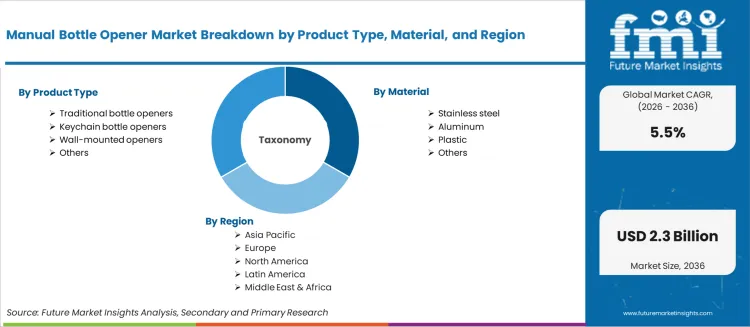
Manual Bottle Opener Market Breakdown By Product Type, Material, And Region

Metric Value
Quantitative Units USD Billion 1.37 to USD Billion 2.34, at a CAGR of 5.5%
Market Definition The Manual Bottle Opener Market covers handheld, wall-mounted, and keychain bottle opening devices manufactured from stainless steel, aluminum, plastic, and other materials. These products serve households, bars and restaurants, outdoor enthusiasts, and promotional merchandise applications across low, mid, and high price tiers..
Segmentation Product Type: Traditional bottle openers, Keychain bottle openers, Wall-mounted openers, Others; Material: Stainless steel, Aluminum, Plastic, Others; Price Range: Mid, Low, High; End-use: Households, Bars and restaurants, Outdoor enthusiasts, Others
Regions Covered North America, Latin America, Europe, East Asia, South Asia, Oceania, Middle East & Africa
Countries Covered China, India, Germany, France, UK, USA, Brazil, and 40 plus countries
Key Companies Profiled Joseph Joseph, BarCraft, Boker, Corkcicle, Godinger, Kohler, Le Creuset, Motta
Forecast Period 2026 to 2036
Approach Baseline values derive from a bottom-up aggregation of retail sales data by channel type, applying product mix and average selling price trends to project consumer spending on manual bottle openers through 2036.

Manual Bottle Opener Market by Segments

Product Type:

  • Traditional bottle openers
  • Keychain bottle openers
  • Wall-mounted openers
  • Others (multi tool bottle openers, etc.)

Material:

  • Stainless steel
  • Aluminum
  • Plastic
  • Others (wood, etc.)

Price Range:

  • Mid
  • Low
  • High

End-use:

  • Households
  • Bars and restaurants
  • Outdoor enthusiasts
  • Others (collectors and hobbyists, etc.)

Distribution Channel:

  • Online
  • Offline

Region:

  • North America
    • USA
    • Canada
    • Mexico
  • Latin America
    • Brazil
    • Chile
    • Rest of Latin America
  • Western Europe
    • Germany
    • UK
    • Italy
    • Spain
    • France
    • Nordic
    • BENELUX
    • Rest of Western Europe
  • Eastern Europe
    • Russia
    • Poland
    • Hungary
    • Balkan & Baltic
    • Rest of Eastern Europe
  • East Asia
    • China
    • Japan
    • South Korea
  • South Asia and Pacific
    • India
    • ASEAN
    • Australia & New Zealand
    • Rest of South Asia and Pacific
  • Middle East & Africa
    • Kingdom of Saudi Arabia
    • Other GCC Countries
    • Turkiye
    • South Africa
    • Other African Union
    • Rest of Middle East & Africa

Bibliography

  • 1. International Housewares Association. (2024). Global housewares market report. IHA.
  • 2. Organisation for Economic Co-operation and Development. (2024). Consumer goods production and trade statistics. OECD.
  • 3. Joseph Joseph Ltd. (2025). 2024 annual report. Joseph Joseph.
  • 4. National Restaurant Association. (2024). Restaurant industry equipment and supply trends. NRA.
  • 5. International Organization for Standardization. (2024). ISO 8442 stainless steel kitchenware standards. ISO.

This bibliography is provided for reader reference. The full Future Market Insights report contains the complete reference list with primary research documentation.

Frequently Asked Questions

How large is the demand for Manual Bottle Opener Market in the global market in 2026?

Demand for the manual bottle opener market in the global market is estimated to be valued at USD Billion 1.37 billion in 2026.

What will be the market size of Manual Bottle Opener Market by 2036?

Market size for the manual bottle opener market is projected to reach USD Billion 2.34 billion by 2036.

What is the expected demand growth for Manual Bottle Opener Market between 2026 and 2036?

Demand for the manual bottle opener market is expected to grow at a CAGR of 5.5% between 2026 and 2036.

Which Product Type segment is poised to lead by 2026?

Traditional bottle openers accounts for 49.5% of product type share in 2026.

Which Material segment is poised to lead by 2026?

Stainless steel accounts for 54.3% of material share in 2026.

Which Price Range segment is poised to lead by 2026?

Mid accounts for 46.8% of price range share in 2026.

What is driving demand in China?

China is projected to grow at a CAGR of 7.4% during 2026 to 2036, supported by local industry expansion and regulatory developments.

What is Manual Bottle Opener Market and what is it mainly used for?

The Manual Bottle Opener Market covers handheld, wall-mounted, and keychain bottle opening devices manufactured from stainless steel, aluminum, plastic, and other materials. These products serve households, bars and restaurants, outdoor enthusiasts, and promotional merchandise applications across low, mid, and high price tiers..

How does FMI build and validate the Manual Bottle Opener Market forecast?

Baseline values derive from a bottom-up aggregation of retail sales data by channel type, applying product mix and average selling price trends to project consumer spending on manual bottle openers through 2036. Projections are cross-validated against consumer housewares market surveys and retail point-of-sale data from major distribution channels.

Table of Content

  1. Executive Summary
    • Global Market Outlook
    • Demand to side Trends
    • Supply to side Trends
    • Technology Roadmap Analysis
    • Analysis and Recommendations
  2. Market Overview
    • Market Coverage / Taxonomy
    • Market Definition / Scope / Limitations
  3. Research Methodology
    • Chapter Orientation
    • Analytical Lens and Working Hypotheses
      • Market Structure, Signals, and Trend Drivers
      • Benchmarking and Cross-market Comparability
      • Market Sizing, Forecasting, and Opportunity Mapping
    • Research Design and Evidence Framework
      • Desk Research Programme (Secondary Evidence)
        • Company Annual and Sustainability Reports
        • Peer-reviewed Journals and Academic Literature
        • Corporate Websites, Product Literature, and Technical Notes
        • Earnings Decks and Investor Briefings
        • Statutory Filings and Regulatory Disclosures
        • Technical White Papers and Standards Notes
        • Trade Journals, Industry Magazines, and Analyst Briefs
        • Conference Proceedings, Webinars, and Seminar Materials
        • Government Statistics Portals and Public Data Releases
        • Press Releases and Reputable Media Coverage
        • Specialist Newsletters and Curated Briefings
        • Sector Databases and Reference Repositories
        • FMI Internal Proprietary Databases and Historical Market Datasets
        • Subscription Datasets and Paid Sources
        • Social Channels, Communities, and Digital Listening Inputs
        • Additional Desk Sources
      • Expert Input and Fieldwork (Primary Evidence)
        • Primary Modes
          • Qualitative Interviews and Expert Elicitation
          • Quantitative Surveys and Structured Data Capture
          • Blended Approach
        • Why Primary Evidence is Used
        • Field Techniques
          • Interviews
          • Surveys
          • Focus Groups
          • Observational and In-context Research
          • Social and Community Interactions
        • Stakeholder Universe Engaged
          • C-suite Leaders
          • Board Members
          • Presidents and Vice Presidents
          • R&D and Innovation Heads
          • Technical Specialists
          • Domain Subject-matter Experts
          • Scientists
          • Physicians and Other Healthcare Professionals
        • Governance, Ethics, and Data Stewardship
          • Research Ethics
          • Data Integrity and Handling
      • Tooling, Models, and Reference Databases
    • Data Engineering and Model Build
      • Data Acquisition and Ingestion
      • Cleaning, Normalisation, and Verification
      • Synthesis, Triangulation, and Analysis
    • Quality Assurance and Audit Trail
  4. Market Background
    • Market Dynamics
      • Drivers
      • Restraints
      • Opportunity
      • Trends
    • Scenario Forecast
      • Demand in Optimistic Scenario
      • Demand in Likely Scenario
      • Demand in Conservative Scenario
    • Opportunity Map Analysis
    • Product Life Cycle Analysis
    • Supply Chain Analysis
    • Investment Feasibility Matrix
    • Value Chain Analysis
    • PESTLE and Porter’s Analysis
    • Regulatory Landscape
    • Regional Parent Market Outlook
    • Production and Consumption Statistics
    • Import and Export Statistics
  5. Global Market Analysis 2021 to 2025 and Forecast, 2026 to 2036
    • Historical Market Size Value (USD Million) Analysis, 2021 to 2025
    • Current and Future Market Size Value (USD Million) Projections, 2026 to 2036
      • Y to o to Y Growth Trend Analysis
      • Absolute $ Opportunity Analysis
  6. Global Market Pricing Analysis 2021 to 2025 and Forecast 2026 to 2036
  7. Global Market Analysis 2021 to 2025 and Forecast 2026 to 2036, By Product Type
    • Introduction / Key Findings
    • Historical Market Size Value (USD Million) Analysis By Product Type , 2021 to 2025
    • Current and Future Market Size Value (USD Million) Analysis and Forecast By Product Type , 2026 to 2036
      • Traditional bottle openers
      • Keychain bottle openers
      • Wall-mounted openers
      • Others
    • Y to o to Y Growth Trend Analysis By Product Type , 2021 to 2025
    • Absolute $ Opportunity Analysis By Product Type , 2026 to 2036
  8. Global Market Analysis 2021 to 2025 and Forecast 2026 to 2036, By Material
    • Introduction / Key Findings
    • Historical Market Size Value (USD Million) Analysis By Material, 2021 to 2025
    • Current and Future Market Size Value (USD Million) Analysis and Forecast By Material, 2026 to 2036
      • Stainless steel
      • Aluminum
      • Plastic
      • Others
    • Y to o to Y Growth Trend Analysis By Material, 2021 to 2025
    • Absolute $ Opportunity Analysis By Material, 2026 to 2036
  9. Global Market Analysis 2021 to 2025 and Forecast 2026 to 2036, By Price Range
    • Introduction / Key Findings
    • Historical Market Size Value (USD Million) Analysis By Price Range, 2021 to 2025
    • Current and Future Market Size Value (USD Million) Analysis and Forecast By Price Range, 2026 to 2036
      • Mid
      • Low
      • High
    • Y to o to Y Growth Trend Analysis By Price Range, 2021 to 2025
    • Absolute $ Opportunity Analysis By Price Range, 2026 to 2036
  10. Global Market Analysis 2021 to 2025 and Forecast 2026 to 2036, By End-use
    • Introduction / Key Findings
    • Historical Market Size Value (USD Million) Analysis By End-use, 2021 to 2025
    • Current and Future Market Size Value (USD Million) Analysis and Forecast By End-use, 2026 to 2036
      • Households
      • Bars and restaurants
      • Outdoor enthusiasts
      • Others
    • Y to o to Y Growth Trend Analysis By End-use, 2021 to 2025
    • Absolute $ Opportunity Analysis By End-use, 2026 to 2036
  11. Global Market Analysis 2021 to 2025 and Forecast 2026 to 2036, By Distribution Channel
    • Introduction / Key Findings
    • Historical Market Size Value (USD Million) Analysis By Distribution Channel, 2021 to 2025
    • Current and Future Market Size Value (USD Million) Analysis and Forecast By Distribution Channel, 2026 to 2036
      • Online
      • Offline
    • Y to o to Y Growth Trend Analysis By Distribution Channel, 2021 to 2025
    • Absolute $ Opportunity Analysis By Distribution Channel, 2026 to 2036
  12. Global Market Analysis 2021 to 2025 and Forecast 2026 to 2036, By Region
    • Introduction
    • Historical Market Size Value (USD Million) Analysis By Region, 2021 to 2025
    • Current Market Size Value (USD Million) Analysis and Forecast By Region, 2026 to 2036
      • North America
      • Latin America
      • Western Europe
      • Eastern Europe
      • East Asia
      • South Asia and Pacific
      • Middle East & Africa
    • Market Attractiveness Analysis By Region
  13. North America Market Analysis 2021 to 2025 and Forecast 2026 to 2036, By Country
    • Historical Market Size Value (USD Million) Trend Analysis By Market Taxonomy, 2021 to 2025
    • Market Size Value (USD Million) Forecast By Market Taxonomy, 2026 to 2036
      • By Country
        • USA
        • Canada
        • Mexico
      • By Product Type
      • By Material
      • By Price Range
      • By End-use
      • By Distribution Channel
    • Market Attractiveness Analysis
      • By Country
      • By Product Type
      • By Material
      • By Price Range
      • By End-use
      • By Distribution Channel
    • Key Takeaways
  14. Latin America Market Analysis 2021 to 2025 and Forecast 2026 to 2036, By Country
    • Historical Market Size Value (USD Million) Trend Analysis By Market Taxonomy, 2021 to 2025
    • Market Size Value (USD Million) Forecast By Market Taxonomy, 2026 to 2036
      • By Country
        • Brazil
        • Chile
        • Rest of Latin America
      • By Product Type
      • By Material
      • By Price Range
      • By End-use
      • By Distribution Channel
    • Market Attractiveness Analysis
      • By Country
      • By Product Type
      • By Material
      • By Price Range
      • By End-use
      • By Distribution Channel
    • Key Takeaways
  15. Western Europe Market Analysis 2021 to 2025 and Forecast 2026 to 2036, By Country
    • Historical Market Size Value (USD Million) Trend Analysis By Market Taxonomy, 2021 to 2025
    • Market Size Value (USD Million) Forecast By Market Taxonomy, 2026 to 2036
      • By Country
        • Germany
        • UK
        • Italy
        • Spain
        • France
        • Nordic
        • BENELUX
        • Rest of Western Europe
      • By Product Type
      • By Material
      • By Price Range
      • By End-use
      • By Distribution Channel
    • Market Attractiveness Analysis
      • By Country
      • By Product Type
      • By Material
      • By Price Range
      • By End-use
      • By Distribution Channel
    • Key Takeaways
  16. Eastern Europe Market Analysis 2021 to 2025 and Forecast 2026 to 2036, By Country
    • Historical Market Size Value (USD Million) Trend Analysis By Market Taxonomy, 2021 to 2025
    • Market Size Value (USD Million) Forecast By Market Taxonomy, 2026 to 2036
      • By Country
        • Russia
        • Poland
        • Hungary
        • Balkan & Baltic
        • Rest of Eastern Europe
      • By Product Type
      • By Material
      • By Price Range
      • By End-use
      • By Distribution Channel
    • Market Attractiveness Analysis
      • By Country
      • By Product Type
      • By Material
      • By Price Range
      • By End-use
      • By Distribution Channel
    • Key Takeaways
  17. East Asia Market Analysis 2021 to 2025 and Forecast 2026 to 2036, By Country
    • Historical Market Size Value (USD Million) Trend Analysis By Market Taxonomy, 2021 to 2025
    • Market Size Value (USD Million) Forecast By Market Taxonomy, 2026 to 2036
      • By Country
        • China
        • Japan
        • South Korea
      • By Product Type
      • By Material
      • By Price Range
      • By End-use
      • By Distribution Channel
    • Market Attractiveness Analysis
      • By Country
      • By Product Type
      • By Material
      • By Price Range
      • By End-use
      • By Distribution Channel
    • Key Takeaways
  18. South Asia and Pacific Market Analysis 2021 to 2025 and Forecast 2026 to 2036, By Country
    • Historical Market Size Value (USD Million) Trend Analysis By Market Taxonomy, 2021 to 2025
    • Market Size Value (USD Million) Forecast By Market Taxonomy, 2026 to 2036
      • By Country
        • India
        • ASEAN
        • Australia & New Zealand
        • Rest of South Asia and Pacific
      • By Product Type
      • By Material
      • By Price Range
      • By End-use
      • By Distribution Channel
    • Market Attractiveness Analysis
      • By Country
      • By Product Type
      • By Material
      • By Price Range
      • By End-use
      • By Distribution Channel
    • Key Takeaways
  19. Middle East & Africa Market Analysis 2021 to 2025 and Forecast 2026 to 2036, By Country
    • Historical Market Size Value (USD Million) Trend Analysis By Market Taxonomy, 2021 to 2025
    • Market Size Value (USD Million) Forecast By Market Taxonomy, 2026 to 2036
      • By Country
        • Kingdom of Saudi Arabia
        • Other GCC Countries
        • Turkiye
        • South Africa
        • Other African Union
        • Rest of Middle East & Africa
      • By Product Type
      • By Material
      • By Price Range
      • By End-use
      • By Distribution Channel
    • Market Attractiveness Analysis
      • By Country
      • By Product Type
      • By Material
      • By Price Range
      • By End-use
      • By Distribution Channel
    • Key Takeaways
  20. Key Countries Market Analysis
    • USA
      • Pricing Analysis
      • Market Share Analysis, 2025
        • By Product Type
        • By Material
        • By Price Range
        • By End-use
        • By Distribution Channel
    • Canada
      • Pricing Analysis
      • Market Share Analysis, 2025
        • By Product Type
        • By Material
        • By Price Range
        • By End-use
        • By Distribution Channel
    • Mexico
      • Pricing Analysis
      • Market Share Analysis, 2025
        • By Product Type
        • By Material
        • By Price Range
        • By End-use
        • By Distribution Channel
    • Brazil
      • Pricing Analysis
      • Market Share Analysis, 2025
        • By Product Type
        • By Material
        • By Price Range
        • By End-use
        • By Distribution Channel
    • Chile
      • Pricing Analysis
      • Market Share Analysis, 2025
        • By Product Type
        • By Material
        • By Price Range
        • By End-use
        • By Distribution Channel
    • Germany
      • Pricing Analysis
      • Market Share Analysis, 2025
        • By Product Type
        • By Material
        • By Price Range
        • By End-use
        • By Distribution Channel
    • UK
      • Pricing Analysis
      • Market Share Analysis, 2025
        • By Product Type
        • By Material
        • By Price Range
        • By End-use
        • By Distribution Channel
    • Italy
      • Pricing Analysis
      • Market Share Analysis, 2025
        • By Product Type
        • By Material
        • By Price Range
        • By End-use
        • By Distribution Channel
    • Spain
      • Pricing Analysis
      • Market Share Analysis, 2025
        • By Product Type
        • By Material
        • By Price Range
        • By End-use
        • By Distribution Channel
    • France
      • Pricing Analysis
      • Market Share Analysis, 2025
        • By Product Type
        • By Material
        • By Price Range
        • By End-use
        • By Distribution Channel
    • India
      • Pricing Analysis
      • Market Share Analysis, 2025
        • By Product Type
        • By Material
        • By Price Range
        • By End-use
        • By Distribution Channel
    • ASEAN
      • Pricing Analysis
      • Market Share Analysis, 2025
        • By Product Type
        • By Material
        • By Price Range
        • By End-use
        • By Distribution Channel
    • Australia & New Zealand
      • Pricing Analysis
      • Market Share Analysis, 2025
        • By Product Type
        • By Material
        • By Price Range
        • By End-use
        • By Distribution Channel
    • China
      • Pricing Analysis
      • Market Share Analysis, 2025
        • By Product Type
        • By Material
        • By Price Range
        • By End-use
        • By Distribution Channel
    • Japan
      • Pricing Analysis
      • Market Share Analysis, 2025
        • By Product Type
        • By Material
        • By Price Range
        • By End-use
        • By Distribution Channel
    • South Korea
      • Pricing Analysis
      • Market Share Analysis, 2025
        • By Product Type
        • By Material
        • By Price Range
        • By End-use
        • By Distribution Channel
    • Russia
      • Pricing Analysis
      • Market Share Analysis, 2025
        • By Product Type
        • By Material
        • By Price Range
        • By End-use
        • By Distribution Channel
    • Poland
      • Pricing Analysis
      • Market Share Analysis, 2025
        • By Product Type
        • By Material
        • By Price Range
        • By End-use
        • By Distribution Channel
    • Hungary
      • Pricing Analysis
      • Market Share Analysis, 2025
        • By Product Type
        • By Material
        • By Price Range
        • By End-use
        • By Distribution Channel
    • Kingdom of Saudi Arabia
      • Pricing Analysis
      • Market Share Analysis, 2025
        • By Product Type
        • By Material
        • By Price Range
        • By End-use
        • By Distribution Channel
    • Turkiye
      • Pricing Analysis
      • Market Share Analysis, 2025
        • By Product Type
        • By Material
        • By Price Range
        • By End-use
        • By Distribution Channel
    • South Africa
      • Pricing Analysis
      • Market Share Analysis, 2025
        • By Product Type
        • By Material
        • By Price Range
        • By End-use
        • By Distribution Channel
  21. Market Structure Analysis
    • Competition Dashboard
    • Competition Benchmarking
    • Market Share Analysis of Top Players
      • By Regional
      • By Product Type
      • By Material
      • By Price Range
      • By End-use
      • By Distribution Channel
  22. Competition Analysis
    • Competition Deep Dive
      • Joseph Joseph
        • Overview
        • Product Portfolio
        • Profitability by Market Segments (Product/Age /Sales Channel/Region)
        • Sales Footprint
        • Strategy Overview
          • Marketing Strategy
          • Product Strategy
          • Channel Strategy
      • BarCraft
      • Boker
      • Corkcicle
      • Godinger
      • Kohler
      • Le Creuset
      • Le Creuset Group
      • Motta
      • Oster
      • OXO International
      • The Bottle Opener Company
      • Tovolo
      • True Fabrications
      • Zoku
  23. Assumptions & Acronyms Used

List of Tables

  • Table 1: Global Market Value (USD Million) Forecast by Region, 2021 to 2036
  • Table 2: Global Market Value (USD Million) Forecast by Product Type , 2021 to 2036
  • Table 3: Global Market Value (USD Million) Forecast by Material, 2021 to 2036
  • Table 4: Global Market Value (USD Million) Forecast by Price Range, 2021 to 2036
  • Table 5: Global Market Value (USD Million) Forecast by End-use, 2021 to 2036
  • Table 6: Global Market Value (USD Million) Forecast by Distribution Channel, 2021 to 2036
  • Table 7: North America Market Value (USD Million) Forecast by Country, 2021 to 2036
  • Table 8: North America Market Value (USD Million) Forecast by Product Type , 2021 to 2036
  • Table 9: North America Market Value (USD Million) Forecast by Material, 2021 to 2036
  • Table 10: North America Market Value (USD Million) Forecast by Price Range, 2021 to 2036
  • Table 11: North America Market Value (USD Million) Forecast by End-use, 2021 to 2036
  • Table 12: North America Market Value (USD Million) Forecast by Distribution Channel, 2021 to 2036
  • Table 13: Latin America Market Value (USD Million) Forecast by Country, 2021 to 2036
  • Table 14: Latin America Market Value (USD Million) Forecast by Product Type , 2021 to 2036
  • Table 15: Latin America Market Value (USD Million) Forecast by Material, 2021 to 2036
  • Table 16: Latin America Market Value (USD Million) Forecast by Price Range, 2021 to 2036
  • Table 17: Latin America Market Value (USD Million) Forecast by End-use, 2021 to 2036
  • Table 18: Latin America Market Value (USD Million) Forecast by Distribution Channel, 2021 to 2036
  • Table 19: Western Europe Market Value (USD Million) Forecast by Country, 2021 to 2036
  • Table 20: Western Europe Market Value (USD Million) Forecast by Product Type , 2021 to 2036
  • Table 21: Western Europe Market Value (USD Million) Forecast by Material, 2021 to 2036
  • Table 22: Western Europe Market Value (USD Million) Forecast by Price Range, 2021 to 2036
  • Table 23: Western Europe Market Value (USD Million) Forecast by End-use, 2021 to 2036
  • Table 24: Western Europe Market Value (USD Million) Forecast by Distribution Channel, 2021 to 2036
  • Table 25: Eastern Europe Market Value (USD Million) Forecast by Country, 2021 to 2036
  • Table 26: Eastern Europe Market Value (USD Million) Forecast by Product Type , 2021 to 2036
  • Table 27: Eastern Europe Market Value (USD Million) Forecast by Material, 2021 to 2036
  • Table 28: Eastern Europe Market Value (USD Million) Forecast by Price Range, 2021 to 2036
  • Table 29: Eastern Europe Market Value (USD Million) Forecast by End-use, 2021 to 2036
  • Table 30: Eastern Europe Market Value (USD Million) Forecast by Distribution Channel, 2021 to 2036
  • Table 31: East Asia Market Value (USD Million) Forecast by Country, 2021 to 2036
  • Table 32: East Asia Market Value (USD Million) Forecast by Product Type , 2021 to 2036
  • Table 33: East Asia Market Value (USD Million) Forecast by Material, 2021 to 2036
  • Table 34: East Asia Market Value (USD Million) Forecast by Price Range, 2021 to 2036
  • Table 35: East Asia Market Value (USD Million) Forecast by End-use, 2021 to 2036
  • Table 36: East Asia Market Value (USD Million) Forecast by Distribution Channel, 2021 to 2036
  • Table 37: South Asia and Pacific Market Value (USD Million) Forecast by Country, 2021 to 2036
  • Table 38: South Asia and Pacific Market Value (USD Million) Forecast by Product Type , 2021 to 2036
  • Table 39: South Asia and Pacific Market Value (USD Million) Forecast by Material, 2021 to 2036
  • Table 40: South Asia and Pacific Market Value (USD Million) Forecast by Price Range, 2021 to 2036
  • Table 41: South Asia and Pacific Market Value (USD Million) Forecast by End-use, 2021 to 2036
  • Table 42: South Asia and Pacific Market Value (USD Million) Forecast by Distribution Channel, 2021 to 2036
  • Table 43: Middle East & Africa Market Value (USD Million) Forecast by Country, 2021 to 2036
  • Table 44: Middle East & Africa Market Value (USD Million) Forecast by Product Type , 2021 to 2036
  • Table 45: Middle East & Africa Market Value (USD Million) Forecast by Material, 2021 to 2036
  • Table 46: Middle East & Africa Market Value (USD Million) Forecast by Price Range, 2021 to 2036
  • Table 47: Middle East & Africa Market Value (USD Million) Forecast by End-use, 2021 to 2036
  • Table 48: Middle East & Africa Market Value (USD Million) Forecast by Distribution Channel, 2021 to 2036

List of Figures

  • Figure 1: Global Market Pricing Analysis
  • Figure 2: Global Market Value (USD Million) Forecast 2021-2036
  • Figure 3: Global Market Value Share and BPS Analysis by Product Type , 2026 and 2036
  • Figure 4: Global Market Y-o-Y Growth Comparison by Product Type , 2026-2036
  • Figure 5: Global Market Attractiveness Analysis by Product Type
  • Figure 6: Global Market Value Share and BPS Analysis by Material, 2026 and 2036
  • Figure 7: Global Market Y-o-Y Growth Comparison by Material, 2026-2036
  • Figure 8: Global Market Attractiveness Analysis by Material
  • Figure 9: Global Market Value Share and BPS Analysis by Price Range, 2026 and 2036
  • Figure 10: Global Market Y-o-Y Growth Comparison by Price Range, 2026-2036
  • Figure 11: Global Market Attractiveness Analysis by Price Range
  • Figure 12: Global Market Value Share and BPS Analysis by End-use, 2026 and 2036
  • Figure 13: Global Market Y-o-Y Growth Comparison by End-use, 2026-2036
  • Figure 14: Global Market Attractiveness Analysis by End-use
  • Figure 15: Global Market Value Share and BPS Analysis by Distribution Channel, 2026 and 2036
  • Figure 16: Global Market Y-o-Y Growth Comparison by Distribution Channel, 2026-2036
  • Figure 17: Global Market Attractiveness Analysis by Distribution Channel
  • Figure 18: Global Market Value (USD Million) Share and BPS Analysis by Region, 2026 and 2036
  • Figure 19: Global Market Y-o-Y Growth Comparison by Region, 2026-2036
  • Figure 20: Global Market Attractiveness Analysis by Region
  • Figure 21: North America Market Incremental Dollar Opportunity, 2026-2036
  • Figure 22: Latin America Market Incremental Dollar Opportunity, 2026-2036
  • Figure 23: Western Europe Market Incremental Dollar Opportunity, 2026-2036
  • Figure 24: Eastern Europe Market Incremental Dollar Opportunity, 2026-2036
  • Figure 25: East Asia Market Incremental Dollar Opportunity, 2026-2036
  • Figure 26: South Asia and Pacific Market Incremental Dollar Opportunity, 2026-2036
  • Figure 27: Middle East & Africa Market Incremental Dollar Opportunity, 2026-2036
  • Figure 28: North America Market Value Share and BPS Analysis by Country, 2026 and 2036
  • Figure 29: North America Market Value Share and BPS Analysis by Product Type , 2026 and 2036
  • Figure 30: North America Market Y-o-Y Growth Comparison by Product Type , 2026-2036
  • Figure 31: North America Market Attractiveness Analysis by Product Type
  • Figure 32: North America Market Value Share and BPS Analysis by Material, 2026 and 2036
  • Figure 33: North America Market Y-o-Y Growth Comparison by Material, 2026-2036
  • Figure 34: North America Market Attractiveness Analysis by Material
  • Figure 35: North America Market Value Share and BPS Analysis by Price Range, 2026 and 2036
  • Figure 36: North America Market Y-o-Y Growth Comparison by Price Range, 2026-2036
  • Figure 37: North America Market Attractiveness Analysis by Price Range
  • Figure 38: North America Market Value Share and BPS Analysis by End-use, 2026 and 2036
  • Figure 39: North America Market Y-o-Y Growth Comparison by End-use, 2026-2036
  • Figure 40: North America Market Attractiveness Analysis by End-use
  • Figure 41: North America Market Value Share and BPS Analysis by Distribution Channel, 2026 and 2036
  • Figure 42: North America Market Y-o-Y Growth Comparison by Distribution Channel, 2026-2036
  • Figure 43: North America Market Attractiveness Analysis by Distribution Channel
  • Figure 44: Latin America Market Value Share and BPS Analysis by Country, 2026 and 2036
  • Figure 45: Latin America Market Value Share and BPS Analysis by Product Type , 2026 and 2036
  • Figure 46: Latin America Market Y-o-Y Growth Comparison by Product Type , 2026-2036
  • Figure 47: Latin America Market Attractiveness Analysis by Product Type
  • Figure 48: Latin America Market Value Share and BPS Analysis by Material, 2026 and 2036
  • Figure 49: Latin America Market Y-o-Y Growth Comparison by Material, 2026-2036
  • Figure 50: Latin America Market Attractiveness Analysis by Material
  • Figure 51: Latin America Market Value Share and BPS Analysis by Price Range, 2026 and 2036
  • Figure 52: Latin America Market Y-o-Y Growth Comparison by Price Range, 2026-2036
  • Figure 53: Latin America Market Attractiveness Analysis by Price Range
  • Figure 54: Latin America Market Value Share and BPS Analysis by End-use, 2026 and 2036
  • Figure 55: Latin America Market Y-o-Y Growth Comparison by End-use, 2026-2036
  • Figure 56: Latin America Market Attractiveness Analysis by End-use
  • Figure 57: Latin America Market Value Share and BPS Analysis by Distribution Channel, 2026 and 2036
  • Figure 58: Latin America Market Y-o-Y Growth Comparison by Distribution Channel, 2026-2036
  • Figure 59: Latin America Market Attractiveness Analysis by Distribution Channel
  • Figure 60: Western Europe Market Value Share and BPS Analysis by Country, 2026 and 2036
  • Figure 61: Western Europe Market Value Share and BPS Analysis by Product Type , 2026 and 2036
  • Figure 62: Western Europe Market Y-o-Y Growth Comparison by Product Type , 2026-2036
  • Figure 63: Western Europe Market Attractiveness Analysis by Product Type
  • Figure 64: Western Europe Market Value Share and BPS Analysis by Material, 2026 and 2036
  • Figure 65: Western Europe Market Y-o-Y Growth Comparison by Material, 2026-2036
  • Figure 66: Western Europe Market Attractiveness Analysis by Material
  • Figure 67: Western Europe Market Value Share and BPS Analysis by Price Range, 2026 and 2036
  • Figure 68: Western Europe Market Y-o-Y Growth Comparison by Price Range, 2026-2036
  • Figure 69: Western Europe Market Attractiveness Analysis by Price Range
  • Figure 70: Western Europe Market Value Share and BPS Analysis by End-use, 2026 and 2036
  • Figure 71: Western Europe Market Y-o-Y Growth Comparison by End-use, 2026-2036
  • Figure 72: Western Europe Market Attractiveness Analysis by End-use
  • Figure 73: Western Europe Market Value Share and BPS Analysis by Distribution Channel, 2026 and 2036
  • Figure 74: Western Europe Market Y-o-Y Growth Comparison by Distribution Channel, 2026-2036
  • Figure 75: Western Europe Market Attractiveness Analysis by Distribution Channel
  • Figure 76: Eastern Europe Market Value Share and BPS Analysis by Country, 2026 and 2036
  • Figure 77: Eastern Europe Market Value Share and BPS Analysis by Product Type , 2026 and 2036
  • Figure 78: Eastern Europe Market Y-o-Y Growth Comparison by Product Type , 2026-2036
  • Figure 79: Eastern Europe Market Attractiveness Analysis by Product Type
  • Figure 80: Eastern Europe Market Value Share and BPS Analysis by Material, 2026 and 2036
  • Figure 81: Eastern Europe Market Y-o-Y Growth Comparison by Material, 2026-2036
  • Figure 82: Eastern Europe Market Attractiveness Analysis by Material
  • Figure 83: Eastern Europe Market Value Share and BPS Analysis by Price Range, 2026 and 2036
  • Figure 84: Eastern Europe Market Y-o-Y Growth Comparison by Price Range, 2026-2036
  • Figure 85: Eastern Europe Market Attractiveness Analysis by Price Range
  • Figure 86: Eastern Europe Market Value Share and BPS Analysis by End-use, 2026 and 2036
  • Figure 87: Eastern Europe Market Y-o-Y Growth Comparison by End-use, 2026-2036
  • Figure 88: Eastern Europe Market Attractiveness Analysis by End-use
  • Figure 89: Eastern Europe Market Value Share and BPS Analysis by Distribution Channel, 2026 and 2036
  • Figure 90: Eastern Europe Market Y-o-Y Growth Comparison by Distribution Channel, 2026-2036
  • Figure 91: Eastern Europe Market Attractiveness Analysis by Distribution Channel
  • Figure 92: East Asia Market Value Share and BPS Analysis by Country, 2026 and 2036
  • Figure 93: East Asia Market Value Share and BPS Analysis by Product Type , 2026 and 2036
  • Figure 94: East Asia Market Y-o-Y Growth Comparison by Product Type , 2026-2036
  • Figure 95: East Asia Market Attractiveness Analysis by Product Type
  • Figure 96: East Asia Market Value Share and BPS Analysis by Material, 2026 and 2036
  • Figure 97: East Asia Market Y-o-Y Growth Comparison by Material, 2026-2036
  • Figure 98: East Asia Market Attractiveness Analysis by Material
  • Figure 99: East Asia Market Value Share and BPS Analysis by Price Range, 2026 and 2036
  • Figure 100: East Asia Market Y-o-Y Growth Comparison by Price Range, 2026-2036
  • Figure 101: East Asia Market Attractiveness Analysis by Price Range
  • Figure 102: East Asia Market Value Share and BPS Analysis by End-use, 2026 and 2036
  • Figure 103: East Asia Market Y-o-Y Growth Comparison by End-use, 2026-2036
  • Figure 104: East Asia Market Attractiveness Analysis by End-use
  • Figure 105: East Asia Market Value Share and BPS Analysis by Distribution Channel, 2026 and 2036
  • Figure 106: East Asia Market Y-o-Y Growth Comparison by Distribution Channel, 2026-2036
  • Figure 107: East Asia Market Attractiveness Analysis by Distribution Channel
  • Figure 108: South Asia and Pacific Market Value Share and BPS Analysis by Country, 2026 and 2036
  • Figure 109: South Asia and Pacific Market Value Share and BPS Analysis by Product Type , 2026 and 2036
  • Figure 110: South Asia and Pacific Market Y-o-Y Growth Comparison by Product Type , 2026-2036
  • Figure 111: South Asia and Pacific Market Attractiveness Analysis by Product Type
  • Figure 112: South Asia and Pacific Market Value Share and BPS Analysis by Material, 2026 and 2036
  • Figure 113: South Asia and Pacific Market Y-o-Y Growth Comparison by Material, 2026-2036
  • Figure 114: South Asia and Pacific Market Attractiveness Analysis by Material
  • Figure 115: South Asia and Pacific Market Value Share and BPS Analysis by Price Range, 2026 and 2036
  • Figure 116: South Asia and Pacific Market Y-o-Y Growth Comparison by Price Range, 2026-2036
  • Figure 117: South Asia and Pacific Market Attractiveness Analysis by Price Range
  • Figure 118: South Asia and Pacific Market Value Share and BPS Analysis by End-use, 2026 and 2036
  • Figure 119: South Asia and Pacific Market Y-o-Y Growth Comparison by End-use, 2026-2036
  • Figure 120: South Asia and Pacific Market Attractiveness Analysis by End-use
  • Figure 121: South Asia and Pacific Market Value Share and BPS Analysis by Distribution Channel, 2026 and 2036
  • Figure 122: South Asia and Pacific Market Y-o-Y Growth Comparison by Distribution Channel, 2026-2036
  • Figure 123: South Asia and Pacific Market Attractiveness Analysis by Distribution Channel
  • Figure 124: Middle East & Africa Market Value Share and BPS Analysis by Country, 2026 and 2036
  • Figure 125: Middle East & Africa Market Value Share and BPS Analysis by Product Type , 2026 and 2036
  • Figure 126: Middle East & Africa Market Y-o-Y Growth Comparison by Product Type , 2026-2036
  • Figure 127: Middle East & Africa Market Attractiveness Analysis by Product Type
  • Figure 128: Middle East & Africa Market Value Share and BPS Analysis by Material, 2026 and 2036
  • Figure 129: Middle East & Africa Market Y-o-Y Growth Comparison by Material, 2026-2036
  • Figure 130: Middle East & Africa Market Attractiveness Analysis by Material
  • Figure 131: Middle East & Africa Market Value Share and BPS Analysis by Price Range, 2026 and 2036
  • Figure 132: Middle East & Africa Market Y-o-Y Growth Comparison by Price Range, 2026-2036
  • Figure 133: Middle East & Africa Market Attractiveness Analysis by Price Range
  • Figure 134: Middle East & Africa Market Value Share and BPS Analysis by End-use, 2026 and 2036
  • Figure 135: Middle East & Africa Market Y-o-Y Growth Comparison by End-use, 2026-2036
  • Figure 136: Middle East & Africa Market Attractiveness Analysis by End-use
  • Figure 137: Middle East & Africa Market Value Share and BPS Analysis by Distribution Channel, 2026 and 2036
  • Figure 138: Middle East & Africa Market Y-o-Y Growth Comparison by Distribution Channel, 2026-2036
  • Figure 139: Middle East & Africa Market Attractiveness Analysis by Distribution Channel
  • Figure 140: Global Market - Tier Structure Analysis
  • Figure 141: Global Market - Company Share Analysis

Full Research Suite comprises of:

Market outlook & trends analysis

Market outlook & trends analysis

Interviews & case studies

Interviews & case studies

Strategic recommendations

Strategic recommendations

Vendor profiles & capabilities analysis

Vendor profiles & capabilities analysis

5-year forecasts

5-year forecasts

8 regions and 60+ country-level data splits

8 regions and 60+ country-level data splits

Market segment data splits

Market segment data splits

12 months of continuous data updates

12 months of continuous data updates

DELIVERED AS:

PDF EXCEL ONLINE

Full Research Suite


$5000

$7500

$10000

Buy Report Now
Similar Industry Reports

Similar Industry Reports

Future Market Insights

Manual Bottle Opener Market