


Body Scrub Market : Global Industry Analysis 2016 - 2025 and Opportunity Assessment 2026 - 2036
Body Scrub Market is segmented by Product (Cream Based Scrubs, Gel Based Scrubs, Oil Based Scrubs, Powder Based Scrubs), Application (Skin Exfoliation, Skin Care Treatment, Relaxation And Wellness), End Use (Women, Men, Unisex), and Region. Forecast for 2026 to 2036.
Historical Data Covered: 2016 - 2025 | Base Year: 2025 | Estimated Year: 2026 | Forecast Period: 2026 - 2036
Body Scrub Market Size, Market Forecast and Outlook By FMI
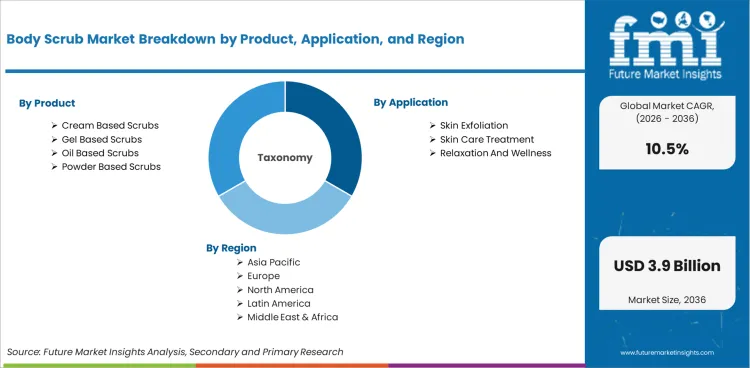
The body scrub market was valued at USD 1.3 billion in 2025. The market is set to reach USD 1.4 billion by 2026-end and grow at a CAGR of 10.5% between 2026-2036 to reach USD 3.9 billion by 2036. Cream Based Scrubs will dominate with a 45.0% share, while Skin Exfoliation will lead with a 55.0% share.
Summary of the Body Scrub Market
- Demand and Growth Drivers
- The expansion of facial skincare routines to include the entire body is driving the growth of body scrubs from occasional use products to weekly skincare essentials, with the adoption of multi-step body care routines.
- Premiumisation is being driven by the demand for natural and organic ingredients such as sugar, coffee and botanical formulations, as consumers seek clean-label exfoliation products with transparent ingredient lists.
- Post-pandemic self-care behaviors are driving spa-at-home trends that are increasing household penetration and purchase frequency, while social media content is encouraging consumers to discover products and learn how to use them.
- Product and Segment View
- Cream Based Scrubs is anticipated to continue its dominance with a 45% share, due to established demand and buying patterns.
- The application segment is reflective of buyers’ preferences and usage patterns with Skin Exfoliation likely to account for 55%.
- Women are projected to account for 60% of the end use segment during the forecast period.
- Geography and Competitive Outlook
- China is likely to remain a key market at 14.18% CAGR, supported by strong demand fundamentals and expanding adoption.
- India is likely to sustain growth at 13.13% CAGR owing to rising spending and expanding infrastructure.
- Companies with broad product portfolios and multi-channel distribution are likely to gain traction during the forecast period.
- Analyst Opinion
- The body scrub market is evolving into a more defined commercial category with clear segment leaders and established distribution patterns.
- Adoption is increasing due to rising awareness, expanding distribution infrastructure, and growing influence of specialized channels on procurement behavior.
- Demand is further supported by premiumization trends, where buyers trade up to higher-quality products with functional differentiation.
- Companies that can improve cost competitiveness while delivering consistent quality across key segments are likely to strengthen their position over the forecast period.
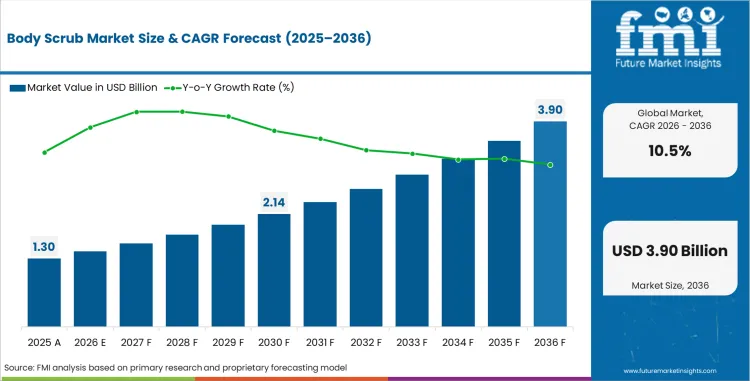
Body Scrub Market Definition
The body scrub market encompasses commercially traded exfoliation products designed for skin surface renewal, dead skin removal, and skin texture improvement. Product categories include cream-based scrubs, gel-based scrubs, powder-based scrubs, and oil-based scrubs formulated with sugar, salt, coffee, and other natural exfoliating ingredients.
Body Scrub Market Inclusions
Market scope covers all commercially traded body scrub products categorized by product (cream-based scrubs, gel-based scrubs, powder-based scrubs, oil-based scrubs), application (skin exfoliation, skin brightening, hydration, anti-aging), end use (women, men, unisex), distribution channel (online retail, offline retail), formulation (natural and organic, synthetic), ingredient type (sugar-based, salt-based, coffee-based, chemical exfoliants), and pricing tier (mid range, economy, premium). The revenue range spans from 2026 to 2036.
Body Scrub Market Exclusions
The scope does not include facial exfoliating products sold exclusively as face care, chemical peels used in clinical dermatology settings, or body washes with minor exfoliating properties.
Body Scrub Market Research Methodology
- Primary Research: FMI analysts interacted with personal care manufacturers, beauty retail buyers, spa operators, and e-commerce platform managers across key markets.
- Desk Research: Data combined personal care industry associations, retail sales databases and consumer trend analytics.
- Market sizing and forecasting: Bottom-up aggregation across product types, distribution channels and ingredient categories with regional adoption curves adjusted for penetration of skincare routines and clean beauty market share.
- Data validation: Cross-checked quarterly with retail data for personal care and manufacturer disclosures.
Why is the Body Scrub Market Growing?
- Adopting a multi-step body care routine, as the facial skincare ritual expands to full body use.
- Demand for natural and organic ingredients, including sugar and coffee.
- Fueled by post-pandemic self-care behaviors, spa-at-home trends are driving household penetration and purchase frequency with social media content leading to product discovery and tutorials on how to use them.
The body scrub market is expanding rapidly at a 10.5% CAGR, fueled by the increasing popularity of body care routines alongside facial skincare. Cream-based scrubs dominate the product segment with 45.0% and offer combined exfoliation and moisturizing benefits. The formulation segment is dominated by natural and organic formulations with a share of 65.0%. Sugar-based exfoliants dominate the ingredient type segment with a share of 50.0% owing to their gentle yet effective exfoliation properties.
Skin exfoliation is the primary application accounting for 55.0% demand, followed by brightening, hydration and anti-aging applications with increasing demand. 60.0% of the end-user demand is by women. However, men’s grooming and unisex products are expanding the addressable market. 55.0% of retail distribution is online retail, with e-commerce platforms and direct-to-consumer brands being the primary channels for purchase and discovery.
Market Segmentation Analysis
- Cream Based Scrubs accounts for 45% of the product segment, reflecting established demand patterns.
- Women leads the end use segment at 60% share.
The body scrub market is segmented by product, application, end use, distribution channel, formulation, ingredient type, pricing tier.
Insights into the Cream Based Scrubs Product Segment
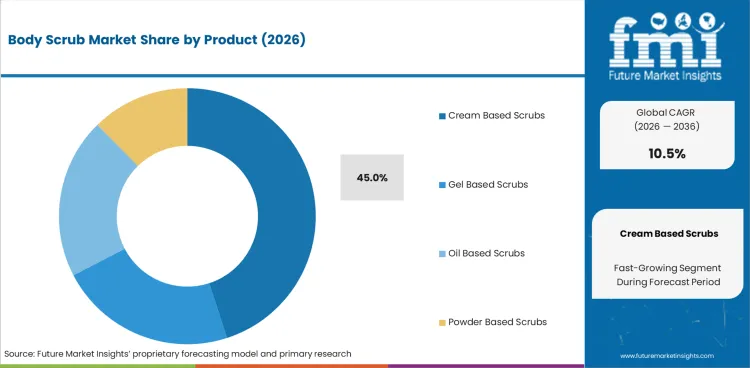
Cream based scrubs are expected to hold 45.0% share in 2026 in the product segment. Cream formats offer a dual action of exfoliation and moisturization in a single application step, appealing to consumers who want an efficient body care routine. Cream bases with suspended particles of sugar and salt offer a range of intensities. Premium cream scrubs from The Body Shop and L’Oreal command price premiums through ingredient quality and brand positioning.
Insights into the Online Retail Distribution Channel
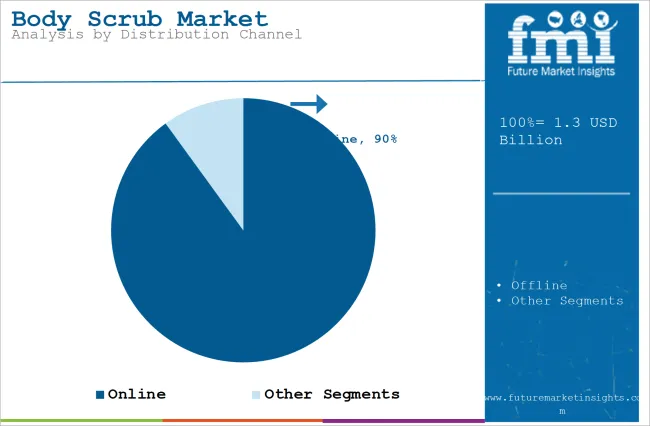
Online retail accounts for 55.0% of distribution. E On e-commerce platforms, product discovery is achieved via customer reviews, ingredient comparison, and social media integration. Brands that sell directly to consumers build relationships via subscription models and personalized product recommendations. Direct purchasing conversion from content to checkout is being fueled by social media beauty tutorials showing how to apply body scrub.
Body Scrub Market Drivers, Restraints, and Opportunities
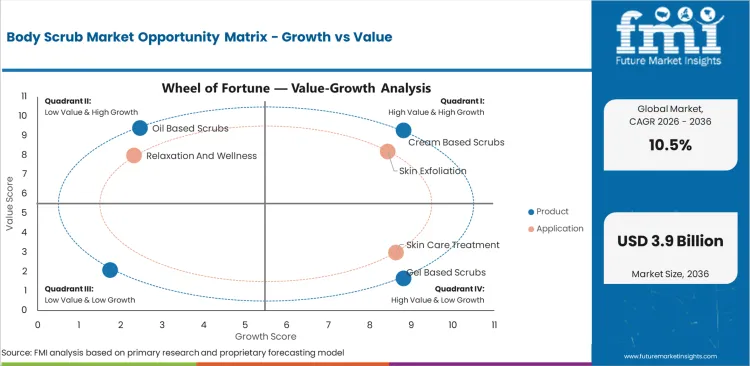
- Full-Body Skincare Routine Extension is creating structured demand across key segments.
- Low Switching Costs and is limiting adoption velocity in price-sensitive segments.
Across regions and price tiers, the body scrub market is molded by demand-side catalysts and supply-side constraints.
Full-Body Skincare Routine Extension
Demand is driven by the extension of multi-step facial skincare routines to full-body application. Now, the logic of facial exfoliation, serums and moisturisers is being applied to body care, with consumers demanding dedicated body scrub products as part of weekly skincare routines.
Natural and Organic Ingredient Premiumization
Growth reflects consumer preference for clean-label positioning in sugar, coffee, salt and botanical exfoliant formulations. Consumers of clean beauty prefer products that are certified organic and natural, and they pay significant premiums over synthetics.
Low Switching Costs and Brand Fragmentation
The body scrub category has low switching costs at brand-loyal levels limiting adoption. Consumers are often influenced by social media recommendations to try new products, leading to high trial rates but little repeat purchase loyalty for individual brands.
Spa-at-Home and Self-Care Behavior
The growth is driven by post-pandemic self-care behavior that is keeping spa-at-home product consumption elevated. Affordable products for scrubbing the body are part of a self-care ritual that is supported through social media content that promotes at-home pampering routines, with weekly usage occasions.
Analysis of Body Scrub Market By Key Countries
.webp "Top Country Growth Comparison Body Scrub Market Cagr (2026 2036)")
| Country | CAGR |
|---|---|
| China | 14.18% |
| India | 13.13% |
| Germany | 12.08% |
| Brazil | 11.03% |
| USA | 9.98% |
| UK | 8.93% |
| Japan | 7.88% |
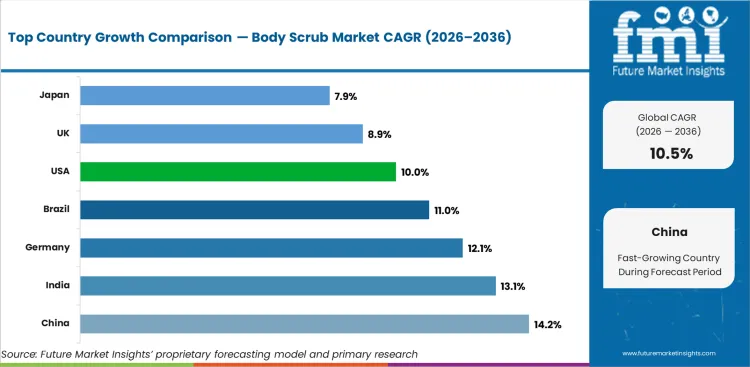
- China leads at 14.18% CAGR, supported by the largest demand base and expanding adoption.
- India at 13.13% shows strong demand supported by rising spending and distribution expansion.
- Germany (12.08%) and Brazil (11.03%) sustain growth through expanding market development.
The global body scrub market is projected to expand at 10.5% per year from 2026 to 2036. The study covers more than 30 countries.
Sales Analysis of Body Scrub Market in China
China is out front at 14.18% through 2036. Rapid growth in the market is due to the dominance of e-commerce platform and social media beauty culture. Product discovery and purchase at scale is powered by live-stream commerce and beauty influencer content.
- High product distribution volume because of Tmall and Douyin’s dominance in ecommerce.
- On the social media front, beauty influencers offer direct access to product discovery and purchase.
- Local C-beauty brands have competitive prices aimed at the mass market.
Demand Outlook for Body Scrub Market in India
India is growing at 13.13% through 2036. Growing urban skincare awareness, rising disposable incomes and traditional Ayurvedic exfoliation practices contribute to a conducive market environment. Online retail platforms are the major growth channel for branded body scrub products.
- The new adoption of body scrub products by consumers is driven by an increase in urban skincare awareness.
- Exfoliation in Ayurvedic traditions offers cultural congruence with natural scrub ingredient preferences.
- Online retail platforms are the primary means for new buyers to find and purchase goods.
In-depth Analysis of Body Scrub Market in Germany
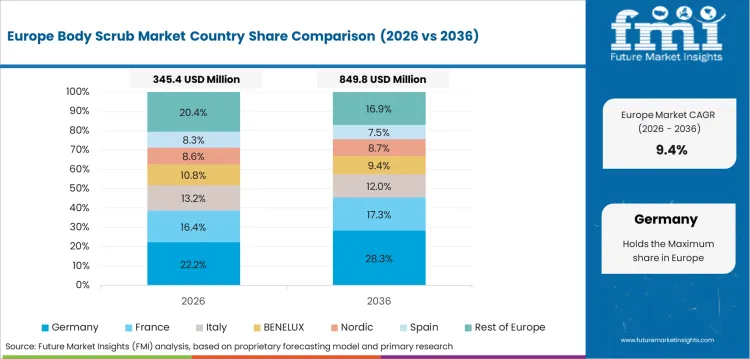
Germany is growing at 8.5% up to 2036. Structured market driven by EU cosmetics regulation and strong demand for natural products. German consumers prefer certified organic ingredients and sustainable packaging when shopping for body care products.
- EU cosmetics legislation guarantees product safety and ingredient quality.
- German skincare consumers are very keen on products that are certified organic.
- Requirements for sustainable packaging influence the design and procurement of body scrub products.
Opportunity Analysis of Body Scrub Market in Brazil
Brazil is growing 9.2% through 2036. Strong body care culture and heritage of natural cosmetics from Natura and Co support the market development in Brazil. Sourcing tropical ingredients such as acai, coconut and cupuacu provides formulation differentiation.
- High per capita consumption of body scrubs reflects a strong body care culture.
- Heritage tropical ingredients offer unique opportunities for product differentiation.
- Natura and Co, as a market leader, sets standards for sustainable sourcing.
Future Outlook for Body Scrub Market in the United States
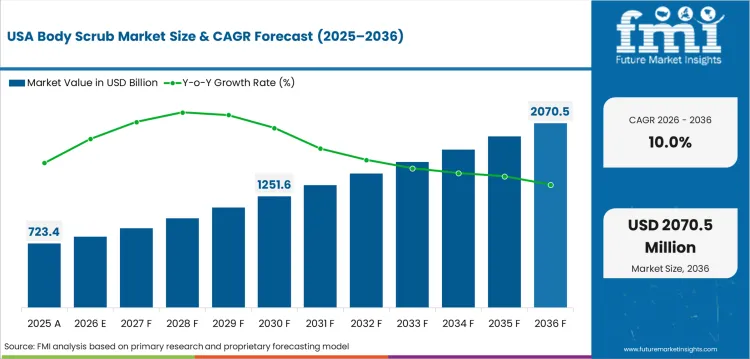
The USA will be growing at 7.8% till 2036. The demand is steady, fuelled by clean beauty preferences and the spa-at-home trend. Social media marketing is helping direct-to-consumer brands and subscription models take share.
- Consumers expect to find natural and organic body scrubs in clean beauty.
- The spa-at-home behaviours trends are sustaining the frequency of usage and purchase rates weekly.
- Direct-to-consumer brands are using influencer marketing and subscription models to gain share.
In-depth Analysis of Body Scrub Market in the United Kingdom
The UK is growing at 7.3% through to 2036. Sustainability awareness and plastic-free programs impact product and packaging development. UK consumers are very keen on vegan, cruelty-free and environmentally responsible body care products.
- Sustainability awareness drives product formulation and packaging requirements.
- UK body care consumers expect products to be vegan and cruelty-free certified as standard.
- Distribution channels are expanding with online retail and subscription services.
Demand Outlook for Body Scrub Market in Japan
Japan to Expand 6.8% Through 2036 Body scrub adoption is underpinned by Japanese skincare routine culture and focus on skin texture quality. Sugar-based and enzyme-based formulations are preferred for gentle exfoliation.
- The culture of skin care routine encourages using body scrub regularly as a part of weekly care.
- Choose sugar-based and enzyme formulations for a gentle exfoliation rather than abrasive alternatives.
- The premium product positioning signals Japanese consumers’ willingness to invest in quality body care.
Competitive Landscape and Strategic Positioning
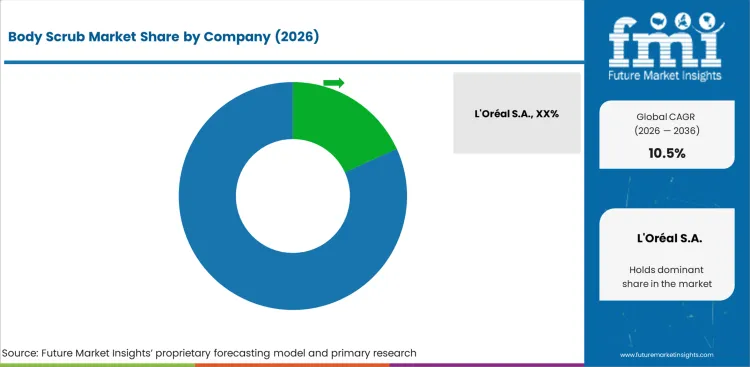
- L’Oréal S.A. Drives multi-brand portfolio strategy across mass, premium and professional body care segments with global distribution infrastructure to enable body scrub product availability across retail and e-commerce channels.
- The Body Shop and Natura and Co compete through ethical sourcing, natural ingredient positioning, and community trade programs that create brand differentiation and consumer loyalty in the clean beauty segment.
- Unilever and Procter and Gamble have mass market positions with extensive retail distribution, competitive pricing and established personal care brand portfolios that include lines of body scrub products.
The competitive landscape is shaped by global leaders with broad portfolios and regional specialists with niche capabilities.
Key Companies in the Body Scrub Market
Key global companies leading the body scrub market include:
- L'Oreal S.A. (France), The Body Shop (UK), and Unilever (UK) maintain leading positions through multi-brand portfolios, global retail distribution, and manufacturing scale across mass and premium body scrub segments.
- Procter and Gamble (USA), Estee Lauder Companies (USA), and Sephora (France) serve through established beauty retail relationships, diverse product ranges, and multi-channel distribution spanning department stores and e-commerce.
- Shiseido Company (Japan), Natura and Co (Brazil), and emerging direct-to-consumer brands are gaining share through regional market expertise, natural ingredient positioning, and social media-driven brand building.
Competitive Benchmarking: Body Scrub Market
| Company | Product Range | Natural Portfolio | Distribution Scale | Price Position |
|---|---|---|---|---|
| L'Oreal S.A. | Very High | High | Global | Mid to Premium |
| The Body Shop | High | Very High | Global | Mid to Premium |
| Unilever | High | Medium | Global | Value to Mid |
| Procter & Gamble | High | Medium | Global | Value to Mid |
| Estee Lauder | Medium | High | Global | Premium |
| Sephora | Medium | High | Global | Mid to Premium |
| Shiseido | Medium | High | Asia, Global | Premium |
| Natura & Co | High | Very High | Latin America | Mid to Premium |
Source: Future Market Insights competitive analysis, 2026.
Key Developments in Body Scrub Market
- In 2025, The Body Shop expanded its body care portfolio with body scrub products featuring recycled packaging materials and ethically sourced ingredients, aligning with sustainability-focused beauty purchasing trends.
- In 2025, L'Oreal broadened its exfoliating skincare offerings with natural ingredient-based body scrub products incorporating sugar and coffee formulations to address rising demand for clean-label and sensory skincare products.
Key Players in the Body Scrub Market
Major Global Players
- L'Oreal S.A.
- The Body Shop
- Unilever
- Procter & Gamble
- Estee Lauder Companies
Emerging Players/Startups
- Sephora
- Shiseido Company
- Natura & Co
- Frank Body
- Tree Hut
Report Scope and Coverage
| Parameter | Details |
|---|---|
| Quantitative Units | USD 1.4 billion to USD 3.9 billion, at a CAGR of 10.5% |
| Market Definition | The body scrub market encompasses commercially traded exfoliation products designed for skin surface renewal, dead skin removal, and skin texture improvement. Product categories include cream-based scrubs, gel-based scrubs, powder-based scrubs, and oil-based scrubs formulated with sugar, salt, coffee, and other natural exfoliating ingredients. |
| Regions Covered | North America, Latin America, Europe, East Asia, South Asia and Pacific, Middle East and Africa |
| Countries Covered | China, India, Germany, Brazil, USA, UK, Japan, 30 plus countries |
| Key Companies Profiled | L'Oreal S.A., The Body Shop, Unilever, Procter & Gamble, Estee Lauder Companies, Sephora, Shiseido Company, Natura & Co |
| Forecast Period | 2026 to 2036 |
| Approach | Hybrid bottom-up and top-down methodology starting with verified transaction data, projecting adoption velocity across segments and regions. |
Market Segmentation Analysis
Body Scrub Market Segmented by Product:
- Cream Based Scrubs
- Moisturizing Scrubs
- Hydrating Cream Scrubs
- Nourishing Formulations
- Exfoliating Cream Scrubs
- Micro Exfoliation
- Gentle Skin Renewal
- Moisturizing Scrubs
- Gel Based Scrubs
- Cooling Scrubs
- Aloe Vera Based
- Soothing Formulations
- Deep Cleansing Scrubs
- Oil Control Scrubs
- Pore Cleansing
- Cooling Scrubs
- Oil Based Scrubs
- Sugar Scrubs
- Fine Grain Sugar
- Brown Sugar Scrubs
- Salt Scrubs
- Sea Salt Scrubs
- Mineral Salt Scrubs
- Sugar Scrubs
- Powder Based Scrubs
- Dry Scrubs
- Herbal Powder Scrubs
- Ayurvedic Scrubs
- Dry Scrubs
Body Scrub Market Segmented by Application:
- Skin Exfoliation
- Dead Skin Removal
- Surface Exfoliation
- Deep Exfoliation
- Skin Brightening
- Glow Enhancement
- Tan Removal
- Dead Skin Removal
- Skin Care Treatment
- Acne And Blemish Care
- Oil Control
- Pore Minimizing
- Anti Aging Treatment
- Fine Line Reduction
- Skin Smoothing
- Acne And Blemish Care
- Relaxation And Wellness
- Spa Treatments
- Professional Spa Use
- Home Spa Kits
- Aromatherapy
- Essential Oil Infused
- Stress Relief Use
- Spa Treatments
Body Scrub Market Segmented by End Use:
- Women
- Young Adults
- Daily Skincare Users
- Beauty Focused Consumers
- Working Professionals
- Premium Product Users
- Time Efficient Solutions
- Young Adults
- Men
- Grooming Focused Users
- Beard And Body Care
- Oil Control Users
- Grooming Focused Users
- Unisex
- General Consumers
- Household Usage
- Family Use Products
- General Consumers
Body Scrub Market Segmented by Distribution Channel:
- Online Retail
- E Commerce Platforms
- Third Party Marketplaces
- Brand Owned Websites
- Subscription Services
- Auto Replenishment
- Bundle Offers
- E Commerce Platforms
- Offline Retail
- Supermarkets And Hypermarkets
- Large Format Stores
- Convenience Stores
- Beauty Specialty Stores
- Cosmetic Retail Chains
- Salon Retail
- Pharmacies
- Chain Pharmacies
- Independent Pharmacies
- Supermarkets And Hypermarkets
Body Scrub Market Segmented by Formulation:
- Natural And Organic
- Herbal Formulations
- Ayurvedic Ingredients
- Plant Based Extracts
- Organic Certified Products
- Eco Certified
- Chemical Free Products
- Herbal Formulations
- Synthetic Formulations
- Chemical Based Scrubs
- Microbeads Alternatives
- Dermatologically Tested
- Chemical Based Scrubs
Body Scrub Market Segmented by Ingredient Type:
- Sugar Based
- Fine Sugar
- Gentle Exfoliation
- Sensitive Skin Use
- Brown Sugar
- Moisturizing Effect
- Nourishing Scrubs
- Fine Sugar
- Salt Based
- Sea Salt
- Mineral Rich Scrubs
- Deep Exfoliation
- Epsom Salt
- Relaxation Use
- Muscle Relief
- Sea Salt
- Coffee Based
- Caffeine Infused
- Cellulite Reduction
- Skin Tightening
- Caffeine Infused
Body Scrub Market Segmented by Pricing Tier:
- Mid Range
- Branded Products
- Standard Quality Offerings
- Branded Products
- Economy
- Mass Market Products
- Private Label Brands
- Mass Market Products
- Premium
- Luxury And Spa Brands
- Organic Premium Products
- Dermatologist Recommended
- Luxury And Spa Brands
Body Scrub Market by Region:
- North America
- USA
- Canada
- Mexico
- Latin America
- Brazil
- Chile
- Rest of Latin America
- Western Europe
- Germany
- UK
- Italy
- Spain
- France
- Nordic
- BENELUX
- Rest of Western Europe
- Eastern Europe
- Russia
- Poland
- Hungary
- Balkan & Baltic
- Rest of Eastern Europe
- East Asia
- China
- Japan
- South Korea
- South Asia and Pacific
- India
- ASEAN
- Australia & New Zealand
- Rest of South Asia and Pacific
- Middle East & Africa
- Kingdom of Saudi Arabia
- Other GCC Countries
- Turkiye
- South Africa
- Other African Union
- Rest of Middle East & Africa
Research Sources and Bibliography
- 1. Cosmetics Europe. (2025). Annual Report: European Body Care Market. Cosmetics Europe.
- 2. Euromonitor International. (2025). Global Bath and Body Care Market Intelligence. Euromonitor.
- 3. USA Food and Drug Administration. (2024). FDA Cosmetics Product Safety Standards. FDA.
- 4. Natural Products Association. (2025). NPA Market Report: Natural Personal Care. NPA.
- 5. World Health Organization. (2024). WHO Dermatological Product Safety Guidelines. WHO.
This bibliography is provided for reader reference.
This Report Answers
- Estimating the market size and revenue generation from 2026 to 2036.
- Segmenting by product, application, end use, distribution channel, formulation, ingredient type, and pricing tier.
- Providing regional insights across more than 30 markets.
- Analyzing social media and influencer impact on body care adoption.
- Assessing the competitive landscape across natural and mass-market brands.
- Identifying investment opportunities in clean beauty and natural exfoliants.
- Tracking ingredient innovation and sustainable packaging trends.
- Delivering data in PDF and Excel formats.
Frequently Asked Questions
How big is the body scrub market in 2026?
The global body scrub market is estimated to be valued at USD 1.4 billion in 2026.
What will be the size of body scrub market in 2036?
The market size for the body scrub market is projected to reach USD 3.9 billion by 2036.
How much will be the body scrub market growth between 2026 and 2036?
The body scrub market is expected to grow at a 10.5% CAGR between 2026 and 2036.
What are the key product types in the body scrub market?
The key product types in body scrub market are cream based scrubs, gel based scrubs, oil based scrubs and powder based scrubs.
Which application segment is expected to contribute significant share in the body scrub market in 2026?
In terms of application, skin exfoliation segment is expected to command 55.0% share in the body scrub market in 2026.
Table of Content
- Executive Summary
- Global Market Outlook
- Demand-side Trends
- Supply-side Trends
- Technology Roadmap Analysis
- Analysis and Recommendations
- Market Overview
- Market Coverage / Taxonomy
- Market Definition / Scope / Limitations
- Research Methodology
- Chapter Orientation
- Analytical Lens and Working Hypotheses
- Market Structure, Signals, and Trend Drivers
- Benchmarking and Cross-market Comparability
- Market Sizing, Forecasting, and Opportunity Mapping
- Research Design and Evidence Framework
- Desk Research Programme (Secondary Evidence)
- Company Annual and Sustainability Reports
- Peer-reviewed Journals and Academic Literature
- Corporate Websites, Product Literature, and Technical Notes
- Earnings Decks and Investor Briefings
- Statutory Filings and Regulatory Disclosures
- Technical White Papers and Standards Notes
- Trade Journals, Industry Magazines, and Analyst Briefs
- Conference Proceedings, Webinars, and Seminar Materials
- Government Statistics Portals and Public Data Releases
- Press Releases and Reputable Media Coverage
- Specialist Newsletters and Curated Briefings
- Sector Databases and Reference Repositories
- FMI Internal Proprietary Databases and Historical Market Datasets
- Subscription Datasets and Paid Sources
- Social Channels, Communities, and Digital Listening Inputs
- Additional Desk Sources
- Expert Input and Fieldwork (Primary Evidence)
- Primary Modes
- Qualitative Interviews and Expert Elicitation
- Quantitative Surveys and Structured Data Capture
- Blended Approach
- Why Primary Evidence is Used
- Field Techniques
- Interviews
- Surveys
- Focus Groups
- Observational and In-context Research
- Social and Community Interactions
- Stakeholder Universe Engaged
- C-suite Leaders
- Board Members
- Presidents and Vice Presidents
- R&D and Innovation Heads
- Technical Specialists
- Domain Subject-matter Experts
- Scientists
- Physicians and Other Healthcare Professionals
- Governance, Ethics, and Data Stewardship
- Research Ethics
- Data Integrity and Handling
- Primary Modes
- Tooling, Models, and Reference Databases
- Desk Research Programme (Secondary Evidence)
- Data Engineering and Model Build
- Data Acquisition and Ingestion
- Cleaning, Normalisation, and Verification
- Synthesis, Triangulation, and Analysis
- Quality Assurance and Audit Trail
- Market Background
- Market Dynamics
- Drivers
- Restraints
- Opportunity
- Trends
- Scenario Forecast
- Demand in Optimistic Scenario
- Demand in Likely Scenario
- Demand in Conservative Scenario
- Opportunity Map Analysis
- Product Life Cycle Analysis
- Supply Chain Analysis
- Investment Feasibility Matrix
- Value Chain Analysis
- PESTLE and Porter’s Analysis
- Regulatory Landscape
- Regional Parent Market Outlook
- Production and Consumption Statistics
- Import and Export Statistics
- Market Dynamics
- Global Market Analysis 2021 to 2025 and Forecast, 2026 to 2036
- Historical Market Size Value (USD Million) Analysis, 2021 to 2025
- Current and Future Market Size Value (USD Million) Projections, 2026 to 2036
- Y-o-Y Growth Trend Analysis
- Absolute $ Opportunity Analysis
- Global Market Pricing Analysis 2021 to 2025 and Forecast 2026 to 2036
- Global Market Analysis 2021 to 2025 and Forecast 2026 to 2036, By Product
- Introduction / Key Findings
- Historical Market Size Value (USD Million) Analysis By Product , 2021 to 2025
- Current and Future Market Size Value (USD Million) Analysis and Forecast By Product , 2026 to 2036
- Cream Based Scrubs
- Moisturizing Scrubs
- Hydrating Cream Scrubs
- Nourishing Formulations
- Exfoliating Cream Scrubs
- Micro Exfoliation
- Gentle Skin Renewal
- Gel Based Scrubs
- Cooling Scrubs
- Aloe Vera Based
- Soothing Formulations
- Deep Cleansing Scrubs
- Oil Control Scrubs
- Oil Based Scrubs
- Sugar Scrubs
- Fine Grain Sugar
- Brown Sugar Scrubs
- Salt Scrubs
- Sea Salt Scrubs
- Powder Based Scrubs
- Dry Scrubs
- Herbal Powder Scrubs
- Ayurvedic Scrubs
- Cream Based Scrubs
- Y-o-Y Growth Trend Analysis By Product , 2021 to 2025
- Absolute $ Opportunity Analysis By Product , 2026 to 2036
- Global Market Analysis 2021 to 2025 and Forecast 2026 to 2036, By Application
- Introduction / Key Findings
- Historical Market Size Value (USD Million) Analysis By Application, 2021 to 2025
- Current and Future Market Size Value (USD Million) Analysis and Forecast By Application, 2026 to 2036
- Skin Exfoliation
- Dead Skin Removal
- Surface Exfoliation
- Deep Exfoliation
- Skin Brightening
- Glow Enhancement
- Tan Removal
- Skin Care Treatment
- Acne And Blemish Care
- Oil Control
- Pore Minimizing
- Anti Aging Treatment
- Fine Line Reduction
- Relaxation And Wellness
- Spa Treatments
- Professional Spa Use
- Home Spa Kits
- Aromatherapy
- Essential Oil Infused
- Skin Exfoliation
- Y-o-Y Growth Trend Analysis By Application, 2021 to 2025
- Absolute $ Opportunity Analysis By Application, 2026 to 2036
- Global Market Analysis 2021 to 2025 and Forecast 2026 to 2036, By End Use
- Introduction / Key Findings
- Historical Market Size Value (USD Million) Analysis By End Use, 2021 to 2025
- Current and Future Market Size Value (USD Million) Analysis and Forecast By End Use, 2026 to 2036
- Women
- Young Adults
- Daily Skincare Users
- Beauty Focused Consumers
- Working Professionals
- Premium Product Users
- Time Efficient Solutions
- Men
- Grooming Focused Users
- Beard And Body Care
- Oil Control Users
- Unisex
- General Consumers
- Household Usage
- Family Use Products
- Women
- Y-o-Y Growth Trend Analysis By End Use, 2021 to 2025
- Absolute $ Opportunity Analysis By End Use, 2026 to 2036
- Global Market Analysis 2021 to 2025 and Forecast 2026 to 2036, By Distribution Channel
- Introduction / Key Findings
- Historical Market Size Value (USD Million) Analysis By Distribution Channel, 2021 to 2025
- Current and Future Market Size Value (USD Million) Analysis and Forecast By Distribution Channel, 2026 to 2036
- Online Retail
- E Commerce Platforms
- Third Party Marketplaces
- Brand Owned Websites
- Subscription Services
- Auto Replenishment
- Bundle Offers
- Offline Retail
- Supermarkets And Hypermarkets
- Large Format Stores
- Convenience Stores
- Beauty Specialty Stores
- Cosmetic Retail Chains
- Online Retail
- Y-o-Y Growth Trend Analysis By Distribution Channel, 2021 to 2025
- Absolute $ Opportunity Analysis By Distribution Channel, 2026 to 2036
- Global Market Analysis 2021 to 2025 and Forecast 2026 to 2036, By Formulation
- Introduction / Key Findings
- Historical Market Size Value (USD Million) Analysis By Formulation, 2021 to 2025
- Current and Future Market Size Value (USD Million) Analysis and Forecast By Formulation, 2026 to 2036
- Natural And Organic
- Herbal Formulations
- Ayurvedic Ingredients
- Plant Based Extracts
- Organic Certified Products
- Eco Certified
- Chemical Free Products
- Synthetic Formulations
- Chemical Based Scrubs
- Microbeads Alternatives
- Dermatologically Tested
- Natural And Organic
- Y-o-Y Growth Trend Analysis By Formulation, 2021 to 2025
- Absolute $ Opportunity Analysis By Formulation, 2026 to 2036
- Global Market Analysis 2021 to 2025 and Forecast 2026 to 2036, By Ingredient Type
- Introduction / Key Findings
- Historical Market Size Value (USD Million) Analysis By Ingredient Type, 2021 to 2025
- Current and Future Market Size Value (USD Million) Analysis and Forecast By Ingredient Type, 2026 to 2036
- Sugar Based
- Fine Sugar
- Gentle Exfoliation
- Sensitive Skin Use
- Brown Sugar
- Moisturizing Effect
- Nourishing Scrubs
- Salt Based
- Sea Salt
- Mineral Rich Scrubs
- Deep Exfoliation
- Epsom Salt
- Relaxation Use
- Coffee Based
- Caffeine Infused
- Cellulite Reduction
- Skin Tightening
- Sugar Based
- Y-o-Y Growth Trend Analysis By Ingredient Type, 2021 to 2025
- Absolute $ Opportunity Analysis By Ingredient Type, 2026 to 2036
- Global Market Analysis 2021 to 2025 and Forecast 2026 to 2036, By Pricing Tier
- Introduction / Key Findings
- Historical Market Size Value (USD Million) Analysis By Pricing Tier, 2021 to 2025
- Current and Future Market Size Value (USD Million) Analysis and Forecast By Pricing Tier, 2026 to 2036
- Mid Range
- Branded Products
- Standard Quality Offerings
- Economy
- Mass Market Products
- Private Label Brands
- Premium
- Luxury And Spa Brands
- Organic Premium Products
- Dermatologist Recommended
- Mid Range
- Y-o-Y Growth Trend Analysis By Pricing Tier, 2021 to 2025
- Absolute $ Opportunity Analysis By Pricing Tier, 2026 to 2036
- Global Market Analysis 2021 to 2025 and Forecast 2026 to 2036, By Region
- Introduction
- Historical Market Size Value (USD Million) Analysis By Region, 2021 to 2025
- Current Market Size Value (USD Million) Analysis and Forecast By Region, 2026 to 2036
- North America
- Latin America
- Western Europe
- Eastern Europe
- East Asia
- South Asia and Pacific
- Middle East & Africa
- Market Attractiveness Analysis By Region
- North America Market Analysis 2021 to 2025 and Forecast 2026 to 2036, By Country
- Historical Market Size Value (USD Million) Trend Analysis By Market Taxonomy, 2021 to 2025
- Market Size Value (USD Million) Forecast By Market Taxonomy, 2026 to 2036
- By Country
- USA
- Canada
- Mexico
- By Product
- By Application
- By End Use
- By Distribution Channel
- By Formulation
- By Ingredient Type
- By Pricing Tier
- By Country
- Market Attractiveness Analysis
- By Country
- By Product
- By Application
- By End Use
- By Distribution Channel
- By Formulation
- By Ingredient Type
- By Pricing Tier
- Key Takeaways
- Latin America Market Analysis 2021 to 2025 and Forecast 2026 to 2036, By Country
- Historical Market Size Value (USD Million) Trend Analysis By Market Taxonomy, 2021 to 2025
- Market Size Value (USD Million) Forecast By Market Taxonomy, 2026 to 2036
- By Country
- Brazil
- Chile
- Rest of Latin America
- By Product
- By Application
- By End Use
- By Distribution Channel
- By Formulation
- By Ingredient Type
- By Pricing Tier
- By Country
- Market Attractiveness Analysis
- By Country
- By Product
- By Application
- By End Use
- By Distribution Channel
- By Formulation
- By Ingredient Type
- By Pricing Tier
- Key Takeaways
- Western Europe Market Analysis 2021 to 2025 and Forecast 2026 to 2036, By Country
- Historical Market Size Value (USD Million) Trend Analysis By Market Taxonomy, 2021 to 2025
- Market Size Value (USD Million) Forecast By Market Taxonomy, 2026 to 2036
- By Country
- Germany
- UK
- Italy
- Spain
- France
- Nordic
- BENELUX
- Rest of Western Europe
- By Product
- By Application
- By End Use
- By Distribution Channel
- By Formulation
- By Ingredient Type
- By Pricing Tier
- By Country
- Market Attractiveness Analysis
- By Country
- By Product
- By Application
- By End Use
- By Distribution Channel
- By Formulation
- By Ingredient Type
- By Pricing Tier
- Key Takeaways
- Eastern Europe Market Analysis 2021 to 2025 and Forecast 2026 to 2036, By Country
- Historical Market Size Value (USD Million) Trend Analysis By Market Taxonomy, 2021 to 2025
- Market Size Value (USD Million) Forecast By Market Taxonomy, 2026 to 2036
- By Country
- Russia
- Poland
- Hungary
- Balkan & Baltic
- Rest of Eastern Europe
- By Product
- By Application
- By End Use
- By Distribution Channel
- By Formulation
- By Ingredient Type
- By Pricing Tier
- By Country
- Market Attractiveness Analysis
- By Country
- By Product
- By Application
- By End Use
- By Distribution Channel
- By Formulation
- By Ingredient Type
- By Pricing Tier
- Key Takeaways
- East Asia Market Analysis 2021 to 2025 and Forecast 2026 to 2036, By Country
- Historical Market Size Value (USD Million) Trend Analysis By Market Taxonomy, 2021 to 2025
- Market Size Value (USD Million) Forecast By Market Taxonomy, 2026 to 2036
- By Country
- China
- Japan
- South Korea
- By Product
- By Application
- By End Use
- By Distribution Channel
- By Formulation
- By Ingredient Type
- By Pricing Tier
- By Country
- Market Attractiveness Analysis
- By Country
- By Product
- By Application
- By End Use
- By Distribution Channel
- By Formulation
- By Ingredient Type
- By Pricing Tier
- Key Takeaways
- South Asia and Pacific Market Analysis 2021 to 2025 and Forecast 2026 to 2036, By Country
- Historical Market Size Value (USD Million) Trend Analysis By Market Taxonomy, 2021 to 2025
- Market Size Value (USD Million) Forecast By Market Taxonomy, 2026 to 2036
- By Country
- India
- ASEAN
- Australia & New Zealand
- Rest of South Asia and Pacific
- By Product
- By Application
- By End Use
- By Distribution Channel
- By Formulation
- By Ingredient Type
- By Pricing Tier
- By Country
- Market Attractiveness Analysis
- By Country
- By Product
- By Application
- By End Use
- By Distribution Channel
- By Formulation
- By Ingredient Type
- By Pricing Tier
- Key Takeaways
- Middle East & Africa Market Analysis 2021 to 2025 and Forecast 2026 to 2036, By Country
- Historical Market Size Value (USD Million) Trend Analysis By Market Taxonomy, 2021 to 2025
- Market Size Value (USD Million) Forecast By Market Taxonomy, 2026 to 2036
- By Country
- Kingdom of Saudi Arabia
- Other GCC Countries
- Turkiye
- South Africa
- Other African Union
- Rest of Middle East & Africa
- By Product
- By Application
- By End Use
- By Distribution Channel
- By Formulation
- By Ingredient Type
- By Pricing Tier
- By Country
- Market Attractiveness Analysis
- By Country
- By Product
- By Application
- By End Use
- By Distribution Channel
- By Formulation
- By Ingredient Type
- By Pricing Tier
- Key Takeaways
- Key Countries Market Analysis
- USA
- Pricing Analysis
- Market Share Analysis, 2025
- By Product
- By Application
- By End Use
- By Distribution Channel
- By Formulation
- By Ingredient Type
- By Pricing Tier
- Canada
- Pricing Analysis
- Market Share Analysis, 2025
- By Product
- By Application
- By End Use
- By Distribution Channel
- By Formulation
- By Ingredient Type
- By Pricing Tier
- Mexico
- Pricing Analysis
- Market Share Analysis, 2025
- By Product
- By Application
- By End Use
- By Distribution Channel
- By Formulation
- By Ingredient Type
- By Pricing Tier
- Brazil
- Pricing Analysis
- Market Share Analysis, 2025
- By Product
- By Application
- By End Use
- By Distribution Channel
- By Formulation
- By Ingredient Type
- By Pricing Tier
- Chile
- Pricing Analysis
- Market Share Analysis, 2025
- By Product
- By Application
- By End Use
- By Distribution Channel
- By Formulation
- By Ingredient Type
- By Pricing Tier
- Germany
- Pricing Analysis
- Market Share Analysis, 2025
- By Product
- By Application
- By End Use
- By Distribution Channel
- By Formulation
- By Ingredient Type
- By Pricing Tier
- UK
- Pricing Analysis
- Market Share Analysis, 2025
- By Product
- By Application
- By End Use
- By Distribution Channel
- By Formulation
- By Ingredient Type
- By Pricing Tier
- Italy
- Pricing Analysis
- Market Share Analysis, 2025
- By Product
- By Application
- By End Use
- By Distribution Channel
- By Formulation
- By Ingredient Type
- By Pricing Tier
- Spain
- Pricing Analysis
- Market Share Analysis, 2025
- By Product
- By Application
- By End Use
- By Distribution Channel
- By Formulation
- By Ingredient Type
- By Pricing Tier
- France
- Pricing Analysis
- Market Share Analysis, 2025
- By Product
- By Application
- By End Use
- By Distribution Channel
- By Formulation
- By Ingredient Type
- By Pricing Tier
- India
- Pricing Analysis
- Market Share Analysis, 2025
- By Product
- By Application
- By End Use
- By Distribution Channel
- By Formulation
- By Ingredient Type
- By Pricing Tier
- ASEAN
- Pricing Analysis
- Market Share Analysis, 2025
- By Product
- By Application
- By End Use
- By Distribution Channel
- By Formulation
- By Ingredient Type
- By Pricing Tier
- Australia & New Zealand
- Pricing Analysis
- Market Share Analysis, 2025
- By Product
- By Application
- By End Use
- By Distribution Channel
- By Formulation
- By Ingredient Type
- By Pricing Tier
- China
- Pricing Analysis
- Market Share Analysis, 2025
- By Product
- By Application
- By End Use
- By Distribution Channel
- By Formulation
- By Ingredient Type
- By Pricing Tier
- Japan
- Pricing Analysis
- Market Share Analysis, 2025
- By Product
- By Application
- By End Use
- By Distribution Channel
- By Formulation
- By Ingredient Type
- By Pricing Tier
- South Korea
- Pricing Analysis
- Market Share Analysis, 2025
- By Product
- By Application
- By End Use
- By Distribution Channel
- By Formulation
- By Ingredient Type
- By Pricing Tier
- Russia
- Pricing Analysis
- Market Share Analysis, 2025
- By Product
- By Application
- By End Use
- By Distribution Channel
- By Formulation
- By Ingredient Type
- By Pricing Tier
- Poland
- Pricing Analysis
- Market Share Analysis, 2025
- By Product
- By Application
- By End Use
- By Distribution Channel
- By Formulation
- By Ingredient Type
- By Pricing Tier
- Hungary
- Pricing Analysis
- Market Share Analysis, 2025
- By Product
- By Application
- By End Use
- By Distribution Channel
- By Formulation
- By Ingredient Type
- By Pricing Tier
- Kingdom of Saudi Arabia
- Pricing Analysis
- Market Share Analysis, 2025
- By Product
- By Application
- By End Use
- By Distribution Channel
- By Formulation
- By Ingredient Type
- By Pricing Tier
- Turkiye
- Pricing Analysis
- Market Share Analysis, 2025
- By Product
- By Application
- By End Use
- By Distribution Channel
- By Formulation
- By Ingredient Type
- By Pricing Tier
- South Africa
- Pricing Analysis
- Market Share Analysis, 2025
- By Product
- By Application
- By End Use
- By Distribution Channel
- By Formulation
- By Ingredient Type
- By Pricing Tier
- USA
- Market Structure Analysis
- Competition Dashboard
- Competition Benchmarking
- Market Share Analysis of Top Players
- By Regional
- By Product
- By Application
- By End Use
- By Distribution Channel
- By Formulation
- By Ingredient Type
- By Pricing Tier
- Competition Analysis
- Competition Deep Dive
- L'Oréal S.A.
- Overview
- Product Portfolio
- Profitability by Market Segments (Product/Age /Sales Channel/Region)
- Sales Footprint
- Strategy Overview
- Marketing Strategy
- Product Strategy
- Channel Strategy
- The Body Shop
- Unilever
- Procter & Gamble
- Estée Lauder Companies
- Sephora
- Shiseido Company
- Natura & Co
- Others
- L'Oréal S.A.
- Competition Deep Dive
- Assumptions & Acronyms Used
List of Tables
- Table 1: Global Market Value (USD Million) Forecast by Region, 2021 to 2036
- Table 2: Global Market Value (USD Million) Forecast by Product , 2021 to 2036
- Table 3: Global Market Value (USD Million) Forecast by Application, 2021 to 2036
- Table 4: Global Market Value (USD Million) Forecast by End Use, 2021 to 2036
- Table 5: Global Market Value (USD Million) Forecast by Distribution Channel, 2021 to 2036
- Table 6: Global Market Value (USD Million) Forecast by Formulation, 2021 to 2036
- Table 7: Global Market Value (USD Million) Forecast by Ingredient Type, 2021 to 2036
- Table 8: Global Market Value (USD Million) Forecast by Pricing Tier, 2021 to 2036
- Table 9: North America Market Value (USD Million) Forecast by Country, 2021 to 2036
- Table 10: North America Market Value (USD Million) Forecast by Product , 2021 to 2036
- Table 11: North America Market Value (USD Million) Forecast by Application, 2021 to 2036
- Table 12: North America Market Value (USD Million) Forecast by End Use, 2021 to 2036
- Table 13: North America Market Value (USD Million) Forecast by Distribution Channel, 2021 to 2036
- Table 14: North America Market Value (USD Million) Forecast by Formulation, 2021 to 2036
- Table 15: North America Market Value (USD Million) Forecast by Ingredient Type, 2021 to 2036
- Table 16: North America Market Value (USD Million) Forecast by Pricing Tier, 2021 to 2036
- Table 17: Latin America Market Value (USD Million) Forecast by Country, 2021 to 2036
- Table 18: Latin America Market Value (USD Million) Forecast by Product , 2021 to 2036
- Table 19: Latin America Market Value (USD Million) Forecast by Application, 2021 to 2036
- Table 20: Latin America Market Value (USD Million) Forecast by End Use, 2021 to 2036
- Table 21: Latin America Market Value (USD Million) Forecast by Distribution Channel, 2021 to 2036
- Table 22: Latin America Market Value (USD Million) Forecast by Formulation, 2021 to 2036
- Table 23: Latin America Market Value (USD Million) Forecast by Ingredient Type, 2021 to 2036
- Table 24: Latin America Market Value (USD Million) Forecast by Pricing Tier, 2021 to 2036
- Table 25: Western Europe Market Value (USD Million) Forecast by Country, 2021 to 2036
- Table 26: Western Europe Market Value (USD Million) Forecast by Product , 2021 to 2036
- Table 27: Western Europe Market Value (USD Million) Forecast by Application, 2021 to 2036
- Table 28: Western Europe Market Value (USD Million) Forecast by End Use, 2021 to 2036
- Table 29: Western Europe Market Value (USD Million) Forecast by Distribution Channel, 2021 to 2036
- Table 30: Western Europe Market Value (USD Million) Forecast by Formulation, 2021 to 2036
- Table 31: Western Europe Market Value (USD Million) Forecast by Ingredient Type, 2021 to 2036
- Table 32: Western Europe Market Value (USD Million) Forecast by Pricing Tier, 2021 to 2036
- Table 33: Eastern Europe Market Value (USD Million) Forecast by Country, 2021 to 2036
- Table 34: Eastern Europe Market Value (USD Million) Forecast by Product , 2021 to 2036
- Table 35: Eastern Europe Market Value (USD Million) Forecast by Application, 2021 to 2036
- Table 36: Eastern Europe Market Value (USD Million) Forecast by End Use, 2021 to 2036
- Table 37: Eastern Europe Market Value (USD Million) Forecast by Distribution Channel, 2021 to 2036
- Table 38: Eastern Europe Market Value (USD Million) Forecast by Formulation, 2021 to 2036
- Table 39: Eastern Europe Market Value (USD Million) Forecast by Ingredient Type, 2021 to 2036
- Table 40: Eastern Europe Market Value (USD Million) Forecast by Pricing Tier, 2021 to 2036
- Table 41: East Asia Market Value (USD Million) Forecast by Country, 2021 to 2036
- Table 42: East Asia Market Value (USD Million) Forecast by Product , 2021 to 2036
- Table 43: East Asia Market Value (USD Million) Forecast by Application, 2021 to 2036
- Table 44: East Asia Market Value (USD Million) Forecast by End Use, 2021 to 2036
- Table 45: East Asia Market Value (USD Million) Forecast by Distribution Channel, 2021 to 2036
- Table 46: East Asia Market Value (USD Million) Forecast by Formulation, 2021 to 2036
- Table 47: East Asia Market Value (USD Million) Forecast by Ingredient Type, 2021 to 2036
- Table 48: East Asia Market Value (USD Million) Forecast by Pricing Tier, 2021 to 2036
- Table 49: South Asia and Pacific Market Value (USD Million) Forecast by Country, 2021 to 2036
- Table 50: South Asia and Pacific Market Value (USD Million) Forecast by Product , 2021 to 2036
- Table 51: South Asia and Pacific Market Value (USD Million) Forecast by Application, 2021 to 2036
- Table 52: South Asia and Pacific Market Value (USD Million) Forecast by End Use, 2021 to 2036
- Table 53: South Asia and Pacific Market Value (USD Million) Forecast by Distribution Channel, 2021 to 2036
- Table 54: South Asia and Pacific Market Value (USD Million) Forecast by Formulation, 2021 to 2036
- Table 55: South Asia and Pacific Market Value (USD Million) Forecast by Ingredient Type, 2021 to 2036
- Table 56: South Asia and Pacific Market Value (USD Million) Forecast by Pricing Tier, 2021 to 2036
- Table 57: Middle East & Africa Market Value (USD Million) Forecast by Country, 2021 to 2036
- Table 58: Middle East & Africa Market Value (USD Million) Forecast by Product , 2021 to 2036
- Table 59: Middle East & Africa Market Value (USD Million) Forecast by Application, 2021 to 2036
- Table 60: Middle East & Africa Market Value (USD Million) Forecast by End Use, 2021 to 2036
- Table 61: Middle East & Africa Market Value (USD Million) Forecast by Distribution Channel, 2021 to 2036
- Table 62: Middle East & Africa Market Value (USD Million) Forecast by Formulation, 2021 to 2036
- Table 63: Middle East & Africa Market Value (USD Million) Forecast by Ingredient Type, 2021 to 2036
- Table 64: Middle East & Africa Market Value (USD Million) Forecast by Pricing Tier, 2021 to 2036
List of Figures
- Figure 1: Global Market Pricing Analysis
- Figure 2: Global Market Value (USD Million) Forecast 2021-2036
- Figure 3: Global Market Value Share and BPS Analysis by Product , 2026 and 2036
- Figure 4: Global Market Y-o-Y Growth Comparison by Product , 2026-2036
- Figure 5: Global Market Attractiveness Analysis by Product
- Figure 6: Global Market Value Share and BPS Analysis by Application, 2026 and 2036
- Figure 7: Global Market Y-o-Y Growth Comparison by Application, 2026-2036
- Figure 8: Global Market Attractiveness Analysis by Application
- Figure 9: Global Market Value Share and BPS Analysis by End Use, 2026 and 2036
- Figure 10: Global Market Y-o-Y Growth Comparison by End Use, 2026-2036
- Figure 11: Global Market Attractiveness Analysis by End Use
- Figure 12: Global Market Value Share and BPS Analysis by Distribution Channel, 2026 and 2036
- Figure 13: Global Market Y-o-Y Growth Comparison by Distribution Channel, 2026-2036
- Figure 14: Global Market Attractiveness Analysis by Distribution Channel
- Figure 15: Global Market Value Share and BPS Analysis by Formulation, 2026 and 2036
- Figure 16: Global Market Y-o-Y Growth Comparison by Formulation, 2026-2036
- Figure 17: Global Market Attractiveness Analysis by Formulation
- Figure 18: Global Market Value Share and BPS Analysis by Ingredient Type, 2026 and 2036
- Figure 19: Global Market Y-o-Y Growth Comparison by Ingredient Type, 2026-2036
- Figure 20: Global Market Attractiveness Analysis by Ingredient Type
- Figure 21: Global Market Value Share and BPS Analysis by Pricing Tier, 2026 and 2036
- Figure 22: Global Market Y-o-Y Growth Comparison by Pricing Tier, 2026-2036
- Figure 23: Global Market Attractiveness Analysis by Pricing Tier
- Figure 24: Global Market Value (USD Million) Share and BPS Analysis by Region, 2026 and 2036
- Figure 25: Global Market Y-o-Y Growth Comparison by Region, 2026-2036
- Figure 26: Global Market Attractiveness Analysis by Region
- Figure 27: North America Market Incremental Dollar Opportunity, 2026-2036
- Figure 28: Latin America Market Incremental Dollar Opportunity, 2026-2036
- Figure 29: Western Europe Market Incremental Dollar Opportunity, 2026-2036
- Figure 30: Eastern Europe Market Incremental Dollar Opportunity, 2026-2036
- Figure 31: East Asia Market Incremental Dollar Opportunity, 2026-2036
- Figure 32: South Asia and Pacific Market Incremental Dollar Opportunity, 2026-2036
- Figure 33: Middle East & Africa Market Incremental Dollar Opportunity, 2026-2036
- Figure 34: North America Market Value Share and BPS Analysis by Country, 2026 and 2036
- Figure 35: North America Market Value Share and BPS Analysis by Product , 2026 and 2036
- Figure 36: North America Market Y-o-Y Growth Comparison by Product , 2026-2036
- Figure 37: North America Market Attractiveness Analysis by Product
- Figure 38: North America Market Value Share and BPS Analysis by Application, 2026 and 2036
- Figure 39: North America Market Y-o-Y Growth Comparison by Application, 2026-2036
- Figure 40: North America Market Attractiveness Analysis by Application
- Figure 41: North America Market Value Share and BPS Analysis by End Use, 2026 and 2036
- Figure 42: North America Market Y-o-Y Growth Comparison by End Use, 2026-2036
- Figure 43: North America Market Attractiveness Analysis by End Use
- Figure 44: North America Market Value Share and BPS Analysis by Distribution Channel, 2026 and 2036
- Figure 45: North America Market Y-o-Y Growth Comparison by Distribution Channel, 2026-2036
- Figure 46: North America Market Attractiveness Analysis by Distribution Channel
- Figure 47: North America Market Value Share and BPS Analysis by Formulation, 2026 and 2036
- Figure 48: North America Market Y-o-Y Growth Comparison by Formulation, 2026-2036
- Figure 49: North America Market Attractiveness Analysis by Formulation
- Figure 50: North America Market Value Share and BPS Analysis by Ingredient Type, 2026 and 2036
- Figure 51: North America Market Y-o-Y Growth Comparison by Ingredient Type, 2026-2036
- Figure 52: North America Market Attractiveness Analysis by Ingredient Type
- Figure 53: North America Market Value Share and BPS Analysis by Pricing Tier, 2026 and 2036
- Figure 54: North America Market Y-o-Y Growth Comparison by Pricing Tier, 2026-2036
- Figure 55: North America Market Attractiveness Analysis by Pricing Tier
- Figure 56: Latin America Market Value Share and BPS Analysis by Country, 2026 and 2036
- Figure 57: Latin America Market Value Share and BPS Analysis by Product , 2026 and 2036
- Figure 58: Latin America Market Y-o-Y Growth Comparison by Product , 2026-2036
- Figure 59: Latin America Market Attractiveness Analysis by Product
- Figure 60: Latin America Market Value Share and BPS Analysis by Application, 2026 and 2036
- Figure 61: Latin America Market Y-o-Y Growth Comparison by Application, 2026-2036
- Figure 62: Latin America Market Attractiveness Analysis by Application
- Figure 63: Latin America Market Value Share and BPS Analysis by End Use, 2026 and 2036
- Figure 64: Latin America Market Y-o-Y Growth Comparison by End Use, 2026-2036
- Figure 65: Latin America Market Attractiveness Analysis by End Use
- Figure 66: Latin America Market Value Share and BPS Analysis by Distribution Channel, 2026 and 2036
- Figure 67: Latin America Market Y-o-Y Growth Comparison by Distribution Channel, 2026-2036
- Figure 68: Latin America Market Attractiveness Analysis by Distribution Channel
- Figure 69: Latin America Market Value Share and BPS Analysis by Formulation, 2026 and 2036
- Figure 70: Latin America Market Y-o-Y Growth Comparison by Formulation, 2026-2036
- Figure 71: Latin America Market Attractiveness Analysis by Formulation
- Figure 72: Latin America Market Value Share and BPS Analysis by Ingredient Type, 2026 and 2036
- Figure 73: Latin America Market Y-o-Y Growth Comparison by Ingredient Type, 2026-2036
- Figure 74: Latin America Market Attractiveness Analysis by Ingredient Type
- Figure 75: Latin America Market Value Share and BPS Analysis by Pricing Tier, 2026 and 2036
- Figure 76: Latin America Market Y-o-Y Growth Comparison by Pricing Tier, 2026-2036
- Figure 77: Latin America Market Attractiveness Analysis by Pricing Tier
- Figure 78: Western Europe Market Value Share and BPS Analysis by Country, 2026 and 2036
- Figure 79: Western Europe Market Value Share and BPS Analysis by Product , 2026 and 2036
- Figure 80: Western Europe Market Y-o-Y Growth Comparison by Product , 2026-2036
- Figure 81: Western Europe Market Attractiveness Analysis by Product
- Figure 82: Western Europe Market Value Share and BPS Analysis by Application, 2026 and 2036
- Figure 83: Western Europe Market Y-o-Y Growth Comparison by Application, 2026-2036
- Figure 84: Western Europe Market Attractiveness Analysis by Application
- Figure 85: Western Europe Market Value Share and BPS Analysis by End Use, 2026 and 2036
- Figure 86: Western Europe Market Y-o-Y Growth Comparison by End Use, 2026-2036
- Figure 87: Western Europe Market Attractiveness Analysis by End Use
- Figure 88: Western Europe Market Value Share and BPS Analysis by Distribution Channel, 2026 and 2036
- Figure 89: Western Europe Market Y-o-Y Growth Comparison by Distribution Channel, 2026-2036
- Figure 90: Western Europe Market Attractiveness Analysis by Distribution Channel
- Figure 91: Western Europe Market Value Share and BPS Analysis by Formulation, 2026 and 2036
- Figure 92: Western Europe Market Y-o-Y Growth Comparison by Formulation, 2026-2036
- Figure 93: Western Europe Market Attractiveness Analysis by Formulation
- Figure 94: Western Europe Market Value Share and BPS Analysis by Ingredient Type, 2026 and 2036
- Figure 95: Western Europe Market Y-o-Y Growth Comparison by Ingredient Type, 2026-2036
- Figure 96: Western Europe Market Attractiveness Analysis by Ingredient Type
- Figure 97: Western Europe Market Value Share and BPS Analysis by Pricing Tier, 2026 and 2036
- Figure 98: Western Europe Market Y-o-Y Growth Comparison by Pricing Tier, 2026-2036
- Figure 99: Western Europe Market Attractiveness Analysis by Pricing Tier
- Figure 100: Eastern Europe Market Value Share and BPS Analysis by Country, 2026 and 2036
- Figure 101: Eastern Europe Market Value Share and BPS Analysis by Product , 2026 and 2036
- Figure 102: Eastern Europe Market Y-o-Y Growth Comparison by Product , 2026-2036
- Figure 103: Eastern Europe Market Attractiveness Analysis by Product
- Figure 104: Eastern Europe Market Value Share and BPS Analysis by Application, 2026 and 2036
- Figure 105: Eastern Europe Market Y-o-Y Growth Comparison by Application, 2026-2036
- Figure 106: Eastern Europe Market Attractiveness Analysis by Application
- Figure 107: Eastern Europe Market Value Share and BPS Analysis by End Use, 2026 and 2036
- Figure 108: Eastern Europe Market Y-o-Y Growth Comparison by End Use, 2026-2036
- Figure 109: Eastern Europe Market Attractiveness Analysis by End Use
- Figure 110: Eastern Europe Market Value Share and BPS Analysis by Distribution Channel, 2026 and 2036
- Figure 111: Eastern Europe Market Y-o-Y Growth Comparison by Distribution Channel, 2026-2036
- Figure 112: Eastern Europe Market Attractiveness Analysis by Distribution Channel
- Figure 113: Eastern Europe Market Value Share and BPS Analysis by Formulation, 2026 and 2036
- Figure 114: Eastern Europe Market Y-o-Y Growth Comparison by Formulation, 2026-2036
- Figure 115: Eastern Europe Market Attractiveness Analysis by Formulation
- Figure 116: Eastern Europe Market Value Share and BPS Analysis by Ingredient Type, 2026 and 2036
- Figure 117: Eastern Europe Market Y-o-Y Growth Comparison by Ingredient Type, 2026-2036
- Figure 118: Eastern Europe Market Attractiveness Analysis by Ingredient Type
- Figure 119: Eastern Europe Market Value Share and BPS Analysis by Pricing Tier, 2026 and 2036
- Figure 120: Eastern Europe Market Y-o-Y Growth Comparison by Pricing Tier, 2026-2036
- Figure 121: Eastern Europe Market Attractiveness Analysis by Pricing Tier
- Figure 122: East Asia Market Value Share and BPS Analysis by Country, 2026 and 2036
- Figure 123: East Asia Market Value Share and BPS Analysis by Product , 2026 and 2036
- Figure 124: East Asia Market Y-o-Y Growth Comparison by Product , 2026-2036
- Figure 125: East Asia Market Attractiveness Analysis by Product
- Figure 126: East Asia Market Value Share and BPS Analysis by Application, 2026 and 2036
- Figure 127: East Asia Market Y-o-Y Growth Comparison by Application, 2026-2036
- Figure 128: East Asia Market Attractiveness Analysis by Application
- Figure 129: East Asia Market Value Share and BPS Analysis by End Use, 2026 and 2036
- Figure 130: East Asia Market Y-o-Y Growth Comparison by End Use, 2026-2036
- Figure 131: East Asia Market Attractiveness Analysis by End Use
- Figure 132: East Asia Market Value Share and BPS Analysis by Distribution Channel, 2026 and 2036
- Figure 133: East Asia Market Y-o-Y Growth Comparison by Distribution Channel, 2026-2036
- Figure 134: East Asia Market Attractiveness Analysis by Distribution Channel
- Figure 135: East Asia Market Value Share and BPS Analysis by Formulation, 2026 and 2036
- Figure 136: East Asia Market Y-o-Y Growth Comparison by Formulation, 2026-2036
- Figure 137: East Asia Market Attractiveness Analysis by Formulation
- Figure 138: East Asia Market Value Share and BPS Analysis by Ingredient Type, 2026 and 2036
- Figure 139: East Asia Market Y-o-Y Growth Comparison by Ingredient Type, 2026-2036
- Figure 140: East Asia Market Attractiveness Analysis by Ingredient Type
- Figure 141: East Asia Market Value Share and BPS Analysis by Pricing Tier, 2026 and 2036
- Figure 142: East Asia Market Y-o-Y Growth Comparison by Pricing Tier, 2026-2036
- Figure 143: East Asia Market Attractiveness Analysis by Pricing Tier
- Figure 144: South Asia and Pacific Market Value Share and BPS Analysis by Country, 2026 and 2036
- Figure 145: South Asia and Pacific Market Value Share and BPS Analysis by Product , 2026 and 2036
- Figure 146: South Asia and Pacific Market Y-o-Y Growth Comparison by Product , 2026-2036
- Figure 147: South Asia and Pacific Market Attractiveness Analysis by Product
- Figure 148: South Asia and Pacific Market Value Share and BPS Analysis by Application, 2026 and 2036
- Figure 149: South Asia and Pacific Market Y-o-Y Growth Comparison by Application, 2026-2036
- Figure 150: South Asia and Pacific Market Attractiveness Analysis by Application
- Figure 151: South Asia and Pacific Market Value Share and BPS Analysis by End Use, 2026 and 2036
- Figure 152: South Asia and Pacific Market Y-o-Y Growth Comparison by End Use, 2026-2036
- Figure 153: South Asia and Pacific Market Attractiveness Analysis by End Use
- Figure 154: South Asia and Pacific Market Value Share and BPS Analysis by Distribution Channel, 2026 and 2036
- Figure 155: South Asia and Pacific Market Y-o-Y Growth Comparison by Distribution Channel, 2026-2036
- Figure 156: South Asia and Pacific Market Attractiveness Analysis by Distribution Channel
- Figure 157: South Asia and Pacific Market Value Share and BPS Analysis by Formulation, 2026 and 2036
- Figure 158: South Asia and Pacific Market Y-o-Y Growth Comparison by Formulation, 2026-2036
- Figure 159: South Asia and Pacific Market Attractiveness Analysis by Formulation
- Figure 160: South Asia and Pacific Market Value Share and BPS Analysis by Ingredient Type, 2026 and 2036
- Figure 161: South Asia and Pacific Market Y-o-Y Growth Comparison by Ingredient Type, 2026-2036
- Figure 162: South Asia and Pacific Market Attractiveness Analysis by Ingredient Type
- Figure 163: South Asia and Pacific Market Value Share and BPS Analysis by Pricing Tier, 2026 and 2036
- Figure 164: South Asia and Pacific Market Y-o-Y Growth Comparison by Pricing Tier, 2026-2036
- Figure 165: South Asia and Pacific Market Attractiveness Analysis by Pricing Tier
- Figure 166: Middle East & Africa Market Value Share and BPS Analysis by Country, 2026 and 2036
- Figure 167: Middle East & Africa Market Value Share and BPS Analysis by Product , 2026 and 2036
- Figure 168: Middle East & Africa Market Y-o-Y Growth Comparison by Product , 2026-2036
- Figure 169: Middle East & Africa Market Attractiveness Analysis by Product
- Figure 170: Middle East & Africa Market Value Share and BPS Analysis by Application, 2026 and 2036
- Figure 171: Middle East & Africa Market Y-o-Y Growth Comparison by Application, 2026-2036
- Figure 172: Middle East & Africa Market Attractiveness Analysis by Application
- Figure 173: Middle East & Africa Market Value Share and BPS Analysis by End Use, 2026 and 2036
- Figure 174: Middle East & Africa Market Y-o-Y Growth Comparison by End Use, 2026-2036
- Figure 175: Middle East & Africa Market Attractiveness Analysis by End Use
- Figure 176: Middle East & Africa Market Value Share and BPS Analysis by Distribution Channel, 2026 and 2036
- Figure 177: Middle East & Africa Market Y-o-Y Growth Comparison by Distribution Channel, 2026-2036
- Figure 178: Middle East & Africa Market Attractiveness Analysis by Distribution Channel
- Figure 179: Middle East & Africa Market Value Share and BPS Analysis by Formulation, 2026 and 2036
- Figure 180: Middle East & Africa Market Y-o-Y Growth Comparison by Formulation, 2026-2036
- Figure 181: Middle East & Africa Market Attractiveness Analysis by Formulation
- Figure 182: Middle East & Africa Market Value Share and BPS Analysis by Ingredient Type, 2026 and 2036
- Figure 183: Middle East & Africa Market Y-o-Y Growth Comparison by Ingredient Type, 2026-2036
- Figure 184: Middle East & Africa Market Attractiveness Analysis by Ingredient Type
- Figure 185: Middle East & Africa Market Value Share and BPS Analysis by Pricing Tier, 2026 and 2036
- Figure 186: Middle East & Africa Market Y-o-Y Growth Comparison by Pricing Tier, 2026-2036
- Figure 187: Middle East & Africa Market Attractiveness Analysis by Pricing Tier
- Figure 188: Global Market - Tier Structure Analysis
- Figure 189: Global Market - Company Share Analysis


