


Content Creation Market
The Content Creation Market is segmented by Content Format (Video, Audio/Podcasts, Text/Blogging, Graphics/Infographics), Application (Marketing & Advertising, Education, Entertainment, News & Information), End Use (Individual Creators, Small & Medium Enterprises, Large Enterprises, Media Houses), and Region. Forecast for 2026 to 2036.
Historical Data Covered: 2016 to 2024 | Base Year: 2025 | Estimated Year: 2026 | Forecast Period: 2027 to 2036
Content Creation Market Size, Market Forecast and Outlook By FMI
In 2025, the content creation market registered USD 246.8 billion. Industry valuation is expected to reach USD 277.2 billion in 2026 and USD 885.9 billion by 2036, implying a CAGR of 12.30%. Growth reflects a structural pivot where generative AI integration democratizes high-fidelity production, allowing individual creators and SMEs to compete with legacy media houses on output quality and volume.
Unit economics and platform consolidation are redefining the competitive landscape; as tool sprawl raises integration costs, buyers are consolidating onto unified suites that offer end-to-end creation, management, and distribution. In 2024, Alphabet reported that its combined Cloud and YouTube revenue run rate exited the year at USD 110 billion, validating the scale of this infrastructure-led monetization [4]. Procurement teams now prioritize platforms that bundle creation tools with direct monetization rails, reducing the friction between asset generation and revenue realization.
Market leaders are explicitly linking AI innovation to financial outcomes to justify infrastructure spend. As noted by Shantanu Narayen, Chair & CEO of Adobe, regarding the impact of generative technologies: “We hit several new milestones with our AI innovations, enabling us to add more than two billion dollars in Digital Media net new ARR, making us one of the mission-critical providers of marketing technology in the world.” [8]
Summary of Content Creation
- Content Creation Market Definition
- The industry covers the digital tools and platforms enabling the production of multimedia assets for commercial, educational, and entertainment purposes.
- Demand Drivers in the Market
- Generative AI lowers technical barriers, expanding the user base to non-professionals.
- Direct-to-consumer monetization models incentivize high-volume asset production.
- Enterprise need for personalized marketing at scale drives automated content engines.
- Key Segments Analyzed in the FMI Report
- Content Format: Video accounts for 45.0% of the market value due to high engagement rates.
- Application: Marketing & Advertising remains a dominant revenue generator (40.0%).
- Geography: High-growth Asia-Pacific markets like India and China outperform mature Western economies.
- Analyst Opinion at FMI
- Rahul Pandita, Principal Consultant for Technology at Future Market Insights, projects, "In the updated Content Creation Market Report for 2026 to 2036, CXOs will find that the integration of commerce directly into content streams is the single largest value driver. Besides this, my findings point at a 'sovereign AI' trend where nations like India and China are building domestic compute stacks to localize the creator economy, which could fracture global platform dominance."
- Strategic Implications/Executive Takeaways
- Prioritize platforms with integrated commerce features to capture affiliate revenue.
- Invest in sovereign cloud regions to meet local data residency and latency needs.
- Treat community-led distribution as a critical asset over purely algorithmic reach.
- Methodology
- Validated through first-hand corporate production and capacity data.
- Zero reliance on speculative third-party market research reports.
- Based on verifiable industrial benchmarks and verified sources.
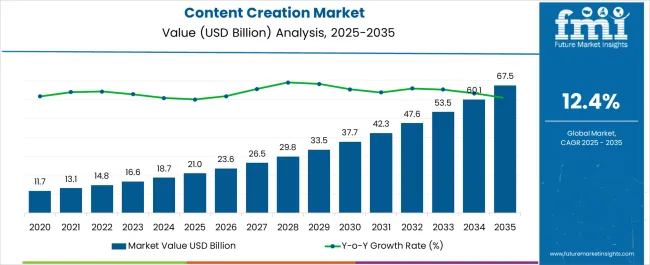
Enterprises interpreting this shift are moving budget from experimental pilot programs to core infrastructure, requiring vendors to demonstrate how AI tools like Firefly directly contribute to Annual Recurring Revenue (ARR) and retention. This signals a transition from "AI as a novelty" to "AI as a revenue engine" over the 2026–2036 period.
Across India (16.2%), China (14.5%), Canada (14.0%), Brazil (13.5%), Germany (12.6%), USA (11.8%), and UK (10.5%), growth concentrates where digital infrastructure aligns with creator monetization policies. Unprecedented demand for localized social media content creation in emerging economies is accelerating the shift from ad-based revenue models to direct affiliate commerce.
Content Creation Market Definition
The content creation market comprises the ecosystem of software, platforms, and services used to ideate, produce, and publish digital assets including video, audio, text, and graphics. It encompasses professional-grade tools for enterprises as well as democratized applications for individual creators, spanning the entire lifecycle from drafting to distribution.
Content Creation Market Inclusions
Included in this analysis are revenue streams from software subscriptions, platform monetization fees, and service-based models supporting digital production. The scope covers generative AI tools, video editing suites, graphic design platforms, and podcasting interfaces used by marketing agencies, educational institutions, and independent influencers.
Content Creation Market Exclusions
Hardware sales such as cameras, microphones, and workstations are excluded from the market sizing unless bundled as part of a proprietary service platform. Similarly, revenue generated solely from the consumption of content (e.g., movie ticket sales, pure advertising revenue for broadcasters) is omitted to focus on the creation infrastructure itself.
Content Creation Market Research Methodology
- Primary Research: Interviews were conducted with product leads at major software firms (Adobe, Canva), creator economy policy advisors, and digital marketing executives across key regions.
- Desk Research: Analysis of annual reports from Alphabet and Meta, government digital economy whitepapers from China and India, and patent filings provided baseline data.
- Market-Sizing and Forecasting: A hybrid model combined bottom-up creator economy user data with top-down enterprise software spending projections.
- Data Validation and Update Cycle: Forecasts were cross-referenced against server capacity expansion plans and semiconductor shipment volumes to verify AI workload feasibility.
Segmental Analysis
Content Creation Market Analysis by Content Format
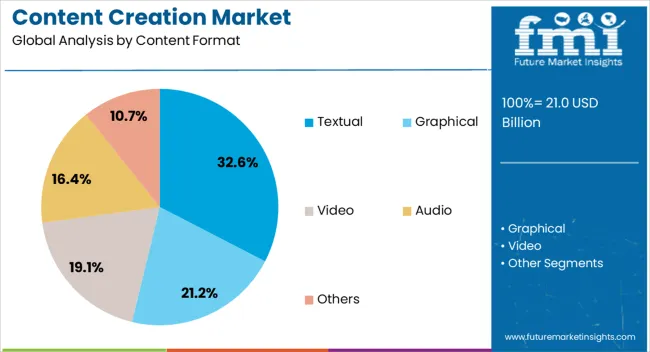
Video formats command 45.0% of the volume in 2026, driven by the algorithmic prioritization of short-form content across major social platforms. As bandwidth costs decrease and mobile processing power increases, video has transitioned from a high-barrier medium to the default language of digital communication.
- Algorithmic trigger: Platforms prioritize retention-driving media, compelling brands to pivot budgets toward high-fidelity video production to maintain visibility. By late 2024, Adobe reported that Firefly-powered generations surpassed 16 billion, with video and image assets leading this unprecedented volume [3]. Marketing teams utilizing video content management systems must automate editing workflows to keep pace with these volume demands.
- Monetization physics: Direct commerce integration reshapes video ROI, transforming it from a brand-awareness tool into a point-of-sale terminal. In 2024, the YouTube Shopping affiliate program expanded to include over 250,000 creators in the U.S. and South Korea, directly linking video views to transaction fees [5]. Suppliers are responding by embedding shopping metadata standards directly into video streaming editing timelines.
- Infrastructure constraint: High-resolution video strains storage and rendering pipelines, forcing a migration to cloud-native editing environments. Alphabet's 2024 capex expansion into 11 new cloud regions was explicitly targeted to support these data-intensive AI and media workloads [12]. Buyers optimize costs by adopting video processing platform solutions that offer tiered storage and localized rendering.
Content Creation Market Analysis by End Use

Individual creators represent 58.7% of the market share in 2026, reflecting the "gigification" of media where independent operators generate the majority of platform inventory. This segment's dominance forces enterprise software vendors to introduce "pro-sumer" tiers that blend professional capability with consumer-grade usability.
- Democratization driver: Generative AI tools remove technical skill barriers, allowing solopreneurs to produce agency-quality output without overhead. As of June 2025, China recorded 515 million generative AI users, a doubling of the user base in six months, indicating a massive influx of non-professional creators [7]. Software vendors must simplify interfaces to capture this expanding content creation software demographic.
- Monetization capability: Platform-native earning models incentivize consistent production, turning hobbyists into taxable business entities. The Ministry of Information and Broadcasting in India estimates the sector will grow at a 7% CAGR to reach INR 3,067 billion by 2027, driven largely by individual micro-entrepreneurs [1]. Creators prioritize tools with built-in affiliate marketing software integrations to maximize yield per asset.
- Subscription fatigue: The proliferation of single-point tools creates cost friction, pushing creators toward all-in-one suites. Adobe's Digital Media segment revenue reached USD 15.86 billion in 2024, validated by a shift toward bundled offerings that cover the entire creative stack [2]. Vendors that consolidate editor app capabilities with analytics and publishing will reduce churn.
Content Creation Market Analysis by Application
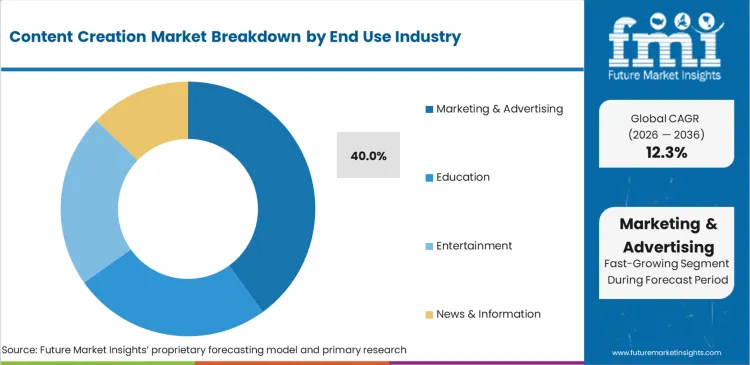
Marketing & Advertising applications generate 40.0% of total revenue in 2026, as personalized content becomes the primary lever for customer acquisition cost (CAC) optimization. Brands are moving away from generic campaigns toward hyper-localized, AI-generated variations that require massive asset velocity.
- Personalization trigger: Brands require thousands of asset variations to feed algorithmic ad auctions, making manual production economically unviable. In 2024, China's content creation and production revenue reached 3,125.8 billion yuan, growing 6.9% as commercial entities ramped up digital spending [6]. Marketing departments adopt content experience platforms to manage this scale efficiently.
- Skill-gap constraint: The rapid evolution of digital channels outpaces workforce readiness, creating a bottleneck in campaign execution. Government data from 2023 indicates that only 56% of the EU population possesses basic digital skills, a gap of 24 percentage points from the 2030 target [10]. Automation platforms that bridge this gap by offering template-driven design are seeing accelerated adoption in digital publishing platforms.
- Compliance necessity: As AI-generated content scales, brand safety and copyright verification become critical procurement criteria. Adobe's enterprise adoption is partly driven by indemnification guarantees for Firefly-generated assets, a feature that became a key differentiator in 2024 [3]. Buyers in regulated industries prioritize media asset management systems with built-in compliance checks.
Content Creation Market Drivers, Restraints, and Opportunities
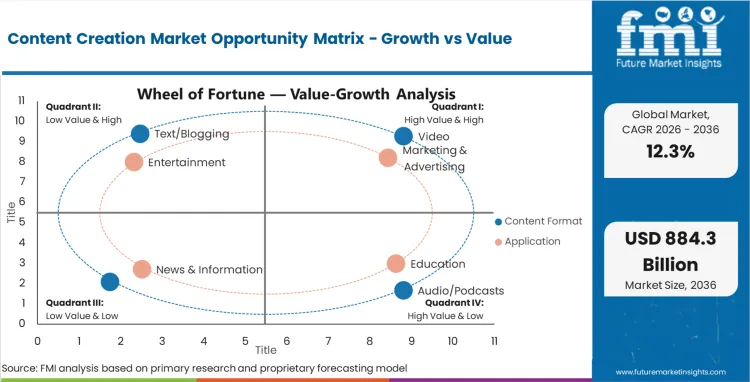
Generative AI democratization lowers technical barriers, expanding the user base to non-professionals and necessitating scalable, cloud-based creation suites. Adoption accelerates where intuitive interfaces allow rapid conversion of ideas into commercial assets without specialized training. In June 2025, the China Internet Network Information Center reported a generative AI user base of 515 million, doubling within a six-month window [7]. Suppliers must prioritize "prompt-to-video" and "prompt-to-design" capabilities to capture this exploding segment of first-time creators.
Workforce skill gaps and digital literacy disparities slow the enterprise adoption of advanced creative toolkits. Buyers mitigate this by investing in platforms that offer extensive learning libraries and AI-assisted workflows. In 2023, Eurostat highlighted that 56% of EU individuals aged 16–74 had only basic digital skills, significantly trailing the region's 2030 targets [10]. Vendors that embed educational prompts and simplified "express" modes into their software reduce the learning curve and improve license utilization.
- Service conversion: Direct-to-consumer monetization transforms creators into SMEs, shifting demand toward platforms that bundle creation with financial tools. In 2024, YouTube's Shopping affiliate program enrolled over 250,000 creators in the US and Korea, linking content directly to transaction revenue [5].
- Localization capacity: Regionalized content engines improve engagement in diverse markets, driving demand for tools that support vernacular languages and local cultural nuances. By April 2025, China had filed 1.57 million AI-related patent applications, reflecting a massive push to develop sovereign, localized creative technologies [15].
- Platform consolidation: Fragmented toolchains create workflow friction, prompting a shift toward unified suites that handle ideation, production, and analytics. Adobe's intent to acquire Semrush in late 2025 signals a strategic move to merge content creation with downstream audience visibility and SEO [9].
Regional Analysis
.webp "Top Country Growth Comparison Content Creation Market Cagr (2026 2036)")
Based on the regional analysis, the content creation market is segmented into North America, Latin America, Europe, East Asia, South Asia, Oceania and Middle East & Africa across 40+ countries. The full report also offers market attractiveness analysis based on regional trends.
| Country | CAGR (2026 to 2036) |
|---|---|
| India | 16.2% |
| China | 14.5% |
| Canada | 14.0% |
| Brazil | 13.5% |
| Germany | 12.6% |
| USA | 11.8% |
| United Kingdom | 10.5% |
Source: Future Market Insights (FMI) analysis, based on proprietary forecasting model and primary research
Asia Pacific Content Creation Market Analysis
Asia Pacific leads global growth, driven by a "mobile-first" creator economy where smartphone penetration and cheap data fuel massive video consumption. Governments are actively intervening to formalize this sector; policy frameworks are shifting from mere regulation to active incubation of digital creative hubs. In 2025, India's Ministry of Information and Broadcasting explicitly targeted the "Orange Economy" by allocating INR 400 crore to the Indian Institute of Creative Technologies [11]. Concurrently, China's domestic content creation revenue surged to 3,125.8 billion yuan in 2024, validating the immense scale of its internal digital market [6].
- India: Demand for Content Creation in India is set to grow at 16.2% CAGR through 2036, supported by government decentralization of creative hubs before procurement and budgeting cycles translate into higher deployment volumes. In November 2024, the Ministry of I&B highlighted the decentralization of creative centers to cities like Guwahati and Kochi, broadening the base of digital production [14]. Suppliers should target tier-2 city distributors to capture this emerging geographic demand.
- China: Content Creation sales in China are projected to rise at 14.5% CAGR from 2026 to 2036 as sovereign AI investments create a self-sustaining ecosystem, creating a clearer pathway from policy to purchase orders. By April 2025, China held 38.58% of global AI-related patent applications, totaling 1.57 million filings [15]. Domestic platforms will likely dominate, forcing international vendors to localize heavily or partner with regional tech giants.
As per FMI's projection, the region will see a rapid maturation of podcasting and audio segments as commute times and mobile usage patterns align. Watch Indonesia and Vietnam for mobile-centric growth as vendors with lightweight mobile apps gain adoption; see mobile video editing for proof points. Balance bids where data localization laws cap near-term cloud conversion.
North America Content Creation Market Analysis
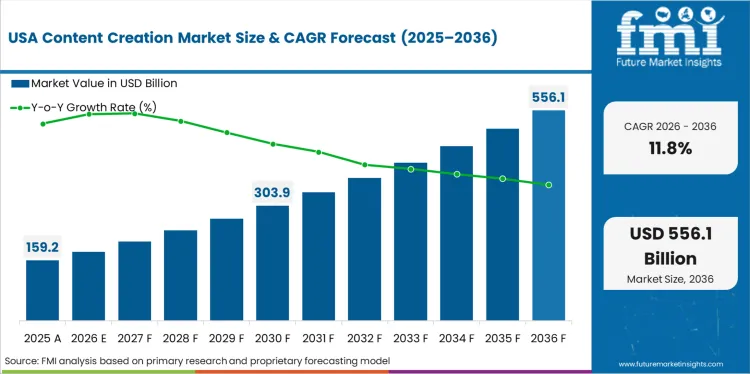
North America remains the center of high-value monetization, where the creator economy is transitioning into a formalized industrial sector. The focus here is on "infrastructure-as-a-service" for creators, with heavy investment in the backend compute power required to sustain generative AI workloads. Alphabet's groundbreaking of 11 new cloud regions and data center campuses in 2024 exemplifies this commitment to supporting high-fidelity AI generation [12]. Subscription fatigue is driving a consolidation of tools, evidenced by Google One crossing 100 million paid subscribers in early 2024 as users flocked to bundled storage and AI premium features [13].
- Canada: The Canada content creation sector is poised to expand at 14.0% CAGR during 2026 to 2036 because high digital literacy lifts utilisation rates and justifies technology refresh decisions. In 2024, Adobe reported record Digital Media revenues of USD 15.86 billion, with North American enterprise adoption being a primary contributor [2]. Buyers are increasingly mandating SOC2 and copyright indemnity, favoring established enterprise-grade vendors.
- USA: USA is expected to record 11.8% CAGR in Content Creation demand over 2026 to 2036 as platform-native commerce integration tightens the link between operational constraints and adoption-led investment. In 2024, YouTube's Shopping affiliate program expanded to over 250,000 creators, fundamentally altering the revenue mix for US-based influencers [5]. Tools that lack direct e-commerce integrations risk being displaced by multifunctional platforms.
FMI analysts opine that the US market will increasingly bifurcate between high-end professional studios and AI-assisted prosumers. FMI’s report includes Mexico and other regional players, noting that US-based trends often forecast shifts in these neighboring markets. Track affiliate marketing software adoption as a leading indicator of this commercial shift.
Latin America Content Creation Market Analysis
Latin America is emerging as a dynamic hub for social commerce and influencer-led marketing, outpacing global averages in engagement rates. The region's growth is fueled by a young demographic that adopts digital-first entertainment and shopping habits faster than legacy media consumption. Brazil acts as the anchor economy, where the integration of payment systems into social platforms is unlocking new revenue tiers for creators.
- Brazil: In Brazil, the content creation market is forecast to advance at 13.5% CAGR through 2036, with growth anchored in social commerce adoption that converts into measurable budget allocation. In 2024, Alphabet noted strong momentum in YouTube ads and subscription revenues globally, with significant contribution from high-engagement markets like Brazil [17]. Advertisers are shifting spend from broadcast TV to digital creator partnerships, necessitating robust analytics platforms.
According to FMI's estimates, the region faces headwinds from hardware costs, pushing demand toward cloud-based, browser-accessible tools that run on mid-range devices. FMI’s report includes Argentina and Chile, where similar youth-driven digital trends are emerging. Watch web content management solutions that offer lightweight mobile interfaces.
Europe Content Creation Market Analysis

Europe presents a complex landscape where stringent data privacy regulations (GDPR, AI Act) coexist with a strong demand for high-quality, compliant content. The market is driven by "compliance-first" creation, where enterprise buyers prioritize tools that guarantee copyright safety and data sovereignty. However, a persistent digital skills gap remains a structural constraint that vendors must address through intuitive design and educational support.
- Germany: Germany is likely to see content creation revenues increase at 12.6% CAGR during 2026 to 2036, given the industrial need for technical content and the resulting push for capacity upgrades. In 2023, Europe government data revealed that 56% of the EU population had only basic digital skills, highlighting a critical need for automated, easy-to-use creative software [10]. Vendors offering AI-assisted templates for technical documentation will find strong traction here.
- United Kingdom: Growth in content creation across United Kingdom is estimated at 10.5% CAGR through 2036, driven by a mature digital advertising sector that increases the value of reliability and compliance in buyer criteria. Adobe's Firefly innovation, which surpassed 16 billion generations in 2024, has seen strong uptake in UK creative agencies due to its commercially safe training data [3]. Agencies are consolidating toolsets to mitigate legal risk and streamline procurement.
FMI analysts opine that Europe will lead in the regulation of synthetic media, creating a niche for watermarking and provenance-tracking tools. FMI’s report includes France and Italy, which are critical hubs for fashion and luxury content. Track digital publishing platforms for integration of new EU accessibility standards.
Competitive Aligners for Market Players
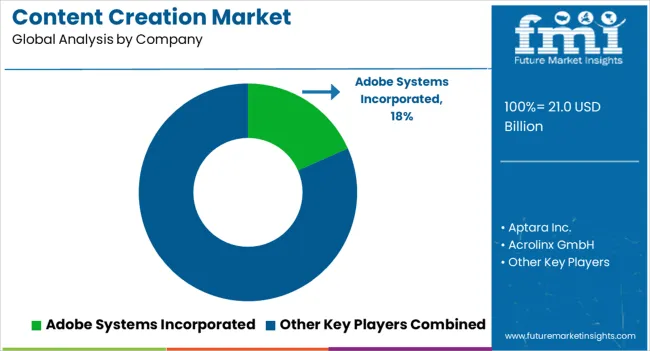
Competitive posture shifts as infrastructure ownership changes lead time and reliability. Vendor advantage realigns where massive capex in AI-ready data centers resets buyer criteria and narrows shortlists. In 2024, Alphabet broke ground on 11 new Cloud regions and data center campuses, specifically to fuel AI and Cloud workloads [12]. Suppliers with owned infrastructure can offer lower latency and higher reliability for generative tasks, while buyers award multisite scope to these vertically integrated giants to de-risk their critical content supply chains.
RoutetoMarket recalibrates as platform consolidation improves access and shortens commissioning. Incumbency strengthens where end-to-end suite coverage reduces switching risk and raises renewal probability. Adobe’s intent to acquire Semrush in late 2025 exemplifies this shift, bridging the gap between content creation and downstream audience visibility [9]. Buyers are increasingly prioritizing vendors that can prove ROI through integrated analytics, moving budget away from isolated point solutions toward comprehensive ecosystems that handle everything from design to SEO.
Recent Developments
The report includes full coverage of key trends from competitive benchmarking. Some of the recent developments covered in the reports:
- In May 2025, Ministry of Information & Broadcasting launched the Create in India Challenge (CIC) and WAVES OTT Platform to bolster the creator economy at WAVES 2025 [11].
- In December 2024, Adobe Inc. reached a milestone of surpassing 16 billion generations powered by its Firefly AI across creative tools [3].
- In January 2024, Qianhai Authority released a policy document to support high-quality AI development and launched China's first large model and algorithm innovation center [14].
Key Players in Content Creation Market
- Adobe
- Canva
- Alphabet (YouTube)
- Meta
- ByteDance
- Microsoft
- Apple
- Spotify
- Patreon
- Unity Technologies
Scope of the Report
| Metric | Value |
|---|---|
| Quantitative Units | USD 277.2 billion (2026) to USD 885.9 billion (2036), at a CAGR of 12.30% |
| Market Definition | The content creation market comprises the ecosystem of software, platforms, and services used to ideate, produce, and publish digital assets including video, audio, text, and graphics, encompassing professional-grade tools and democratized applications. |
| Content Format Segmentation | Video, Audio/Podcasts, Text/Blogging, Graphics/Infographics |
| Application Segmentation | Marketing & Advertising, Education, Entertainment, News & Information |
| Application Coverage | Social Media Content, Corporate Communications, Digital Marketing, E-learning, Broadcast Media |
| Regions Covered | North America, Latin America, Europe, East Asia, South Asia, Oceania, Middle East and Africa |
| Countries Covered | United States, Canada, Mexico, Brazil, Argentina, Germany, France, United Kingdom, Italy, Spain, China, India, Japan, South Korea, Indonesia, Australia and 40 plus countries |
| Key Companies Profiled | Adobe, Canva, Alphabet (YouTube), Meta, ByteDance, Microsoft, Apple, Spotify, Patreon, Unity Technologies |
| Forecast Period | 2026 to 2036 |
| Approach | Hybrid top-down and bottom-up market modeling validated through primary interviews with platform leads and creator economy experts, supported by digital economy whitepapers and user growth data. |
Top Segments Studied in the Content Creation Market Research Report
Content Format
- Video
- Audio/Podcasts
- Text/Blogging
- Graphics/Infographics
Application
- Marketing & Advertising
- Education
- Entertainment
- News & Information
End Use
- Individual Creators
- Small & Medium Enterprises (SMEs)
- Large Enterprises
- Media Houses
Region
-
Asia Pacific
- India
- China
- Japan
- South Korea
- Indonesia
- Australia & New Zealand
- ASEAN
- Rest of Asia Pacific
- Europe
- Germany
- Italy
- France
- United Kingdom
- Spain
- Benelux
- Nordics
- Central & Eastern Europe
- Rest of Europe
- North America
- United States
- Canada
- Mexico
- Latin America
- Brazil
- Argentina
- Chile
- Rest of Latin America
- Middle East & Africa
- Kingdom of Saudi Arabia
- United Arab Emirates
- South Africa
- Turkey
- Rest of Middle East & Africa
Bibliography
- [1] Ministry of Information and Broadcasting. (2025). Press Release: Media & Entertainment ecosystem growth estimate.
- [2] Adobe Inc. (2024). Q4 and FY24 Earnings Release: Digital Media segment revenue.
- [3] Adobe Inc. (2024). Investor Presentation: Firefly-powered generations.
- [4] Alphabet Inc. (2025). 2024 Q4 Earnings Call: Cloud and YouTube revenue run rate.
- [5] Alphabet Inc. (2025). 2024 Q4 Earnings Call: YouTube Shopping affiliate program.
- [6] National Bureau of Statistics of China. (2025). Statistical Communiqué: Content creation and production revenue.
- [7] China Internet Network Information Center. (2025). Report on Generative AI User Base.
- [8] Adobe Inc. (2024). Earnings Call Script: Shantanu Narayen on AI milestones.
- [9] Adobe Inc. (2025). Investor Transcript: Intent to acquire Semrush.
- [10] EC Europa. (2023). Statistics Explained: Digital skills in the EU.
- [11] Ministry of Information and Broadcasting. (2025). Press Release: Launch of Create in India Challenge.
- [12] Alphabet Inc. (2025). 2024 Q4 Earnings Call: Data center expansion.
- [13] Alphabet Inc. (2024). 2024 Q1 Earnings Call: Google One subscribers.
- [14] Ministry of Information & Broadcasting. (2024). Annual Report 2024-25: Creative hubs decentralization.
- [15] China Internet Network Information Center. (2025). Report on AI Patent Applications.
- [16] Qianhai Authority. (2024). Policy Document: AI development and innovation center.
- [17] Alphabet Inc. (2024). Exhibit 99.1: Q4 2024 Results.
This Report Addresses
- Market intelligence to enable structured strategic decision making across digital media platforms, creator economies, enterprise marketing ecosystems, and AI-enabled content production environments
- Market size estimation and 10 year revenue forecasts from 2026 to 2036, supported by validated digital advertising spend data, creator monetization benchmarks, and platform revenue disclosures
- Growth opportunity mapping across video, short-form content, live streaming, podcasts, written media, gaming content, and immersive formats with emphasis on monetization models, audience engagement intensity, and platform diversification
- Segment and regional revenue forecasts covering individual creators, influencer networks, media houses, enterprise marketing teams, and agency-led content operations
- Competition strategy assessment including platform ecosystem positioning, subscription and ad-based revenue models, creator fund structures, intellectual property monetization strategies, and technology capability benchmarking
- Technology innovation tracking across AI-assisted editing tools, generative media platforms, automation workflows, analytics-driven content optimization, and cross-platform distribution systems
- Regulatory and compliance impact analysis covering copyright enforcement, data privacy mandates, advertising disclosure standards, algorithm transparency requirements, and content moderation policies
- Market report delivery in PDF, Excel, PPT, and interactive dashboard formats for platform operators, brand strategists, creator economy investors, and digital transformation leaders
Frequently Asked Questions
How large is the demand for Content Creation in the global market in 2026?
Demand for Content Creation in the global market is estimated to be valued at USD 277.2 billion in 2026.
What will be the market size of Content Creation in the global market by 2036?
Market size for Content Creation is projected to reach USD 885.9 billion by 2036.
What is the expected demand growth for Content Creation in the global market between 2026 and 2036?
Demand for Content Creation in the global market is expected to grow at a CAGR of 12.30% between 2026 and 2036.
Which Content Format is poised to lead global sales by 2026?
Video is expected to be the dominant form, capturing approximately 45.0% of global market share in 2026 due to high engagement and algorithmic prioritization.
How significant is the role of Marketing & Advertising Application in driving Content Creation adoption in 2026?
Marketing & Advertising represents a critical segment, projected to hold a substantial 40.0% share of the total market in 2026 as brands automate personalized campaigns.
What is Driving Content Creation Demand in India?
Government initiatives like the decentralization of creative hubs and the "Create in India" challenge are driving growth.
What Compliance Standards are Referenced for India?
Ministry of Information and Broadcasting policy frameworks for the "Orange Economy" are referenced as key benchmarks.
What is the India Growth Outlook in this Report?
India is projected to grow at a CAGR of 16.2% during 2026 to 2036.
Why is Asia Pacific described as an Important Regulation Hub in this Report?
Growth is driven by sovereign AI policies and government-led incubation of digital creative economies in China and India.
What Type of Demand Dominates in Asia Pacific?
Mobile-first, short-form video creation dominates regional consumption, fueled by massive smartphone penetration.
What is China Growth Outlook in this Report?
China is projected to expand at a CAGR of 14.5% during 2026 to 2036.
Does the Report Cover Japan in its Regional Analysis?
Japan is included within East Asia under the regional scope of analysis.
What are the Sources referred to for analyzing the Market in Japan?
Official statistics and digital economy reports covering creative software adoption are cited as primary reference sources.
What is the Main Demand Theme Linked to Japan in Asia Coverage?
Asia Pacific demand is associated with the localization of content tools to support vernacular languages and cultural nuances.
Does the Report Cover South Korea in its Regional Analysis?
South Korea is included within East Asia under the regional coverage framework.
What is the Main Korea Related Demand Theme in Asia Coverage?
Direct commerce integration in video platforms is emphasized, as seen in the expansion of shopping affiliate programs.
Which Product Formats are Strategically Important for North America Supply Chains?
Cloud-native platforms with integrated AI infrastructure are prioritized to support high-fidelity generation.
What is Content Creation and What is It Mainly Used For?
Content creation refers to the ecosystem of tools for producing digital assets, mainly used for marketing, entertainment, and education.
What does Content Creation Market Mean in this Report?
Content creation market refers to the global revenue from software, platforms, and services enabling digital asset production.
What is Included in the Scope of this Content Creation Market Report?
Scope covers video, audio, text, and graphics tools, along with applications in marketing, education, and entertainment.
What is Excluded from the Scope of this Report?
Hardware sales like cameras and pure content consumption revenue (e.g., ticket sales) are excluded.
What does Market Forecast Mean on this Page?
Market forecast represents a model-based projection built on defined assumptions for strategic planning purposes.
How does FMI Build and Validate the Content Creation Market Forecast?
Forecast is developed using hybrid top-down and bottom-up modeling validated through primary interviews and user data.
What does Zero Reliance on Speculative Third Party Market Research Mean Here?
Primary interviews and verifiable public datasets from entities like Eurostat and NBS China are used instead of unverified estimates.
Table of Content
- Executive Summary
- Global Market Outlook
- Demand to side Trends
- Supply to side Trends
- Technology Roadmap Analysis
- Analysis and Recommendations
- Market Overview
- Market Coverage / Taxonomy
- Market Definition / Scope / Limitations
- Research Methodology
- Chapter Orientation
- Analytical Lens and Working Hypotheses
- Market Structure, Signals, and Trend Drivers
- Benchmarking and Cross-market Comparability
- Market Sizing, Forecasting, and Opportunity Mapping
- Research Design and Evidence Framework
- Desk Research Programme (Secondary Evidence)
- Company Annual and Sustainability Reports
- Peer-reviewed Journals and Academic Literature
- Corporate Websites, Product Literature, and Technical Notes
- Earnings Decks and Investor Briefings
- Statutory Filings and Regulatory Disclosures
- Technical White Papers and Standards Notes
- Trade Journals, Industry Magazines, and Analyst Briefs
- Conference Proceedings, Webinars, and Seminar Materials
- Government Statistics Portals and Public Data Releases
- Press Releases and Reputable Media Coverage
- Specialist Newsletters and Curated Briefings
- Sector Databases and Reference Repositories
- FMI Internal Proprietary Databases and Historical Market Datasets
- Subscription Datasets and Paid Sources
- Social Channels, Communities, and Digital Listening Inputs
- Additional Desk Sources
- Expert Input and Fieldwork (Primary Evidence)
- Primary Modes
- Qualitative Interviews and Expert Elicitation
- Quantitative Surveys and Structured Data Capture
- Blended Approach
- Why Primary Evidence is Used
- Field Techniques
- Interviews
- Surveys
- Focus Groups
- Observational and In-context Research
- Social and Community Interactions
- Stakeholder Universe Engaged
- C-suite Leaders
- Board Members
- Presidents and Vice Presidents
- R&D and Innovation Heads
- Technical Specialists
- Domain Subject-matter Experts
- Scientists
- Physicians and Other Healthcare Professionals
- Governance, Ethics, and Data Stewardship
- Research Ethics
- Data Integrity and Handling
- Primary Modes
- Tooling, Models, and Reference Databases
- Desk Research Programme (Secondary Evidence)
- Data Engineering and Model Build
- Data Acquisition and Ingestion
- Cleaning, Normalisation, and Verification
- Synthesis, Triangulation, and Analysis
- Quality Assurance and Audit Trail
- Market Background
- Market Dynamics
- Drivers
- Restraints
- Opportunity
- Trends
- Scenario Forecast
- Demand in Optimistic Scenario
- Demand in Likely Scenario
- Demand in Conservative Scenario
- Opportunity Map Analysis
- Product Life Cycle Analysis
- Supply Chain Analysis
- Investment Feasibility Matrix
- Value Chain Analysis
- PESTLE and Porter’s Analysis
- Regulatory Landscape
- Regional Parent Market Outlook
- Production and Consumption Statistics
- Import and Export Statistics
- Market Dynamics
- Global Market Analysis 2021 to 2025 and Forecast, 2026 to 2036
- Historical Market Size Value (USD Million) Analysis, 2021 to 2025
- Current and Future Market Size Value (USD Million) Projections, 2026 to 2036
- Y to o to Y Growth Trend Analysis
- Absolute $ Opportunity Analysis
- Global Market Pricing Analysis 2021 to 2025 and Forecast 2026 to 2036
- Global Market Analysis 2021 to 2025 and Forecast 2026 to 2036, By Content Format
- Introduction / Key Findings
- Historical Market Size Value (USD Million) Analysis By Content Format , 2021 to 2025
- Current and Future Market Size Value (USD Million) Analysis and Forecast By Content Format , 2026 to 2036
- Video
- Audio/Podcasts
- Text/Blogging
- Graphics/Infographics
- Video
- Y to o to Y Growth Trend Analysis By Content Format , 2021 to 2025
- Absolute $ Opportunity Analysis By Content Format , 2026 to 2036
- Global Market Analysis 2021 to 2025 and Forecast 2026 to 2036, By Application
- Introduction / Key Findings
- Historical Market Size Value (USD Million) Analysis By Application, 2021 to 2025
- Current and Future Market Size Value (USD Million) Analysis and Forecast By Application, 2026 to 2036
- Marketing & Advertising
- Education
- Entertainment
- News & Information
- Marketing & Advertising
- Y to o to Y Growth Trend Analysis By Application, 2021 to 2025
- Absolute $ Opportunity Analysis By Application, 2026 to 2036
- Global Market Analysis 2021 to 2025 and Forecast 2026 to 2036, By End Use
- Introduction / Key Findings
- Historical Market Size Value (USD Million) Analysis By End Use, 2021 to 2025
- Current and Future Market Size Value (USD Million) Analysis and Forecast By End Use, 2026 to 2036
- Individual Creators
- Small & Medium Enterprises
- Large Enterprises
- Media Houses
- Individual Creators
- Y to o to Y Growth Trend Analysis By End Use, 2021 to 2025
- Absolute $ Opportunity Analysis By End Use, 2026 to 2036
- Global Market Analysis 2021 to 2025 and Forecast 2026 to 2036, By Region
- Introduction
- Historical Market Size Value (USD Million) Analysis By Region, 2021 to 2025
- Current Market Size Value (USD Million) Analysis and Forecast By Region, 2026 to 2036
- North America
- Latin America
- Western Europe
- Eastern Europe
- East Asia
- South Asia and Pacific
- Middle East & Africa
- Market Attractiveness Analysis By Region
- North America Market Analysis 2021 to 2025 and Forecast 2026 to 2036, By Country
- Historical Market Size Value (USD Million) Trend Analysis By Market Taxonomy, 2021 to 2025
- Market Size Value (USD Million) Forecast By Market Taxonomy, 2026 to 2036
- By Country
- USA
- Canada
- Mexico
- By Content Format
- By Application
- By End Use
- By Country
- Market Attractiveness Analysis
- By Country
- By Content Format
- By Application
- By End Use
- Key Takeaways
- Latin America Market Analysis 2021 to 2025 and Forecast 2026 to 2036, By Country
- Historical Market Size Value (USD Million) Trend Analysis By Market Taxonomy, 2021 to 2025
- Market Size Value (USD Million) Forecast By Market Taxonomy, 2026 to 2036
- By Country
- Brazil
- Chile
- Rest of Latin America
- By Content Format
- By Application
- By End Use
- By Country
- Market Attractiveness Analysis
- By Country
- By Content Format
- By Application
- By End Use
- Key Takeaways
- Western Europe Market Analysis 2021 to 2025 and Forecast 2026 to 2036, By Country
- Historical Market Size Value (USD Million) Trend Analysis By Market Taxonomy, 2021 to 2025
- Market Size Value (USD Million) Forecast By Market Taxonomy, 2026 to 2036
- By Country
- Germany
- UK
- Italy
- Spain
- France
- Nordic
- BENELUX
- Rest of Western Europe
- By Content Format
- By Application
- By End Use
- By Country
- Market Attractiveness Analysis
- By Country
- By Content Format
- By Application
- By End Use
- Key Takeaways
- Eastern Europe Market Analysis 2021 to 2025 and Forecast 2026 to 2036, By Country
- Historical Market Size Value (USD Million) Trend Analysis By Market Taxonomy, 2021 to 2025
- Market Size Value (USD Million) Forecast By Market Taxonomy, 2026 to 2036
- By Country
- Russia
- Poland
- Hungary
- Balkan & Baltic
- Rest of Eastern Europe
- By Content Format
- By Application
- By End Use
- By Country
- Market Attractiveness Analysis
- By Country
- By Content Format
- By Application
- By End Use
- Key Takeaways
- East Asia Market Analysis 2021 to 2025 and Forecast 2026 to 2036, By Country
- Historical Market Size Value (USD Million) Trend Analysis By Market Taxonomy, 2021 to 2025
- Market Size Value (USD Million) Forecast By Market Taxonomy, 2026 to 2036
- By Country
- China
- Japan
- South Korea
- By Content Format
- By Application
- By End Use
- By Country
- Market Attractiveness Analysis
- By Country
- By Content Format
- By Application
- By End Use
- Key Takeaways
- South Asia and Pacific Market Analysis 2021 to 2025 and Forecast 2026 to 2036, By Country
- Historical Market Size Value (USD Million) Trend Analysis By Market Taxonomy, 2021 to 2025
- Market Size Value (USD Million) Forecast By Market Taxonomy, 2026 to 2036
- By Country
- India
- ASEAN
- Australia & New Zealand
- Rest of South Asia and Pacific
- By Content Format
- By Application
- By End Use
- By Country
- Market Attractiveness Analysis
- By Country
- By Content Format
- By Application
- By End Use
- Key Takeaways
- Middle East & Africa Market Analysis 2021 to 2025 and Forecast 2026 to 2036, By Country
- Historical Market Size Value (USD Million) Trend Analysis By Market Taxonomy, 2021 to 2025
- Market Size Value (USD Million) Forecast By Market Taxonomy, 2026 to 2036
- By Country
- Kingdom of Saudi Arabia
- Other GCC Countries
- Turkiye
- South Africa
- Other African Union
- Rest of Middle East & Africa
- By Content Format
- By Application
- By End Use
- By Country
- Market Attractiveness Analysis
- By Country
- By Content Format
- By Application
- By End Use
- Key Takeaways
- Key Countries Market Analysis
- USA
- Pricing Analysis
- Market Share Analysis, 2025
- By Content Format
- By Application
- By End Use
- Canada
- Pricing Analysis
- Market Share Analysis, 2025
- By Content Format
- By Application
- By End Use
- Mexico
- Pricing Analysis
- Market Share Analysis, 2025
- By Content Format
- By Application
- By End Use
- Brazil
- Pricing Analysis
- Market Share Analysis, 2025
- By Content Format
- By Application
- By End Use
- Chile
- Pricing Analysis
- Market Share Analysis, 2025
- By Content Format
- By Application
- By End Use
- Germany
- Pricing Analysis
- Market Share Analysis, 2025
- By Content Format
- By Application
- By End Use
- UK
- Pricing Analysis
- Market Share Analysis, 2025
- By Content Format
- By Application
- By End Use
- Italy
- Pricing Analysis
- Market Share Analysis, 2025
- By Content Format
- By Application
- By End Use
- Spain
- Pricing Analysis
- Market Share Analysis, 2025
- By Content Format
- By Application
- By End Use
- France
- Pricing Analysis
- Market Share Analysis, 2025
- By Content Format
- By Application
- By End Use
- India
- Pricing Analysis
- Market Share Analysis, 2025
- By Content Format
- By Application
- By End Use
- ASEAN
- Pricing Analysis
- Market Share Analysis, 2025
- By Content Format
- By Application
- By End Use
- Australia & New Zealand
- Pricing Analysis
- Market Share Analysis, 2025
- By Content Format
- By Application
- By End Use
- China
- Pricing Analysis
- Market Share Analysis, 2025
- By Content Format
- By Application
- By End Use
- Japan
- Pricing Analysis
- Market Share Analysis, 2025
- By Content Format
- By Application
- By End Use
- South Korea
- Pricing Analysis
- Market Share Analysis, 2025
- By Content Format
- By Application
- By End Use
- Russia
- Pricing Analysis
- Market Share Analysis, 2025
- By Content Format
- By Application
- By End Use
- Poland
- Pricing Analysis
- Market Share Analysis, 2025
- By Content Format
- By Application
- By End Use
- Hungary
- Pricing Analysis
- Market Share Analysis, 2025
- By Content Format
- By Application
- By End Use
- Kingdom of Saudi Arabia
- Pricing Analysis
- Market Share Analysis, 2025
- By Content Format
- By Application
- By End Use
- Turkiye
- Pricing Analysis
- Market Share Analysis, 2025
- By Content Format
- By Application
- By End Use
- South Africa
- Pricing Analysis
- Market Share Analysis, 2025
- By Content Format
- By Application
- By End Use
- USA
- Market Structure Analysis
- Competition Dashboard
- Competition Benchmarking
- Market Share Analysis of Top Players
- By Regional
- By Content Format
- By Application
- By End Use
- Competition Analysis
- Competition Deep Dive
- Adobe
- Overview
- Product Portfolio
- Profitability by Market Segments (Product/Age /Sales Channel/Region)
- Sales Footprint
- Strategy Overview
- Marketing Strategy
- Product Strategy
- Channel Strategy
- Canva
- Alphabet (YouTube)
- Meta
- ByteDance
- Adobe
- Competition Deep Dive
- Assumptions & Acronyms Used
List of Tables
- Table 1: Global Market Value (USD Million) Forecast by Region, 2021 to 2036
- Table 2: Global Market Value (USD Million) Forecast by Content Format , 2021 to 2036
- Table 3: Global Market Value (USD Million) Forecast by Application, 2021 to 2036
- Table 4: Global Market Value (USD Million) Forecast by End Use, 2021 to 2036
- Table 5: North America Market Value (USD Million) Forecast by Country, 2021 to 2036
- Table 6: North America Market Value (USD Million) Forecast by Content Format , 2021 to 2036
- Table 7: North America Market Value (USD Million) Forecast by Application, 2021 to 2036
- Table 8: North America Market Value (USD Million) Forecast by End Use, 2021 to 2036
- Table 9: Latin America Market Value (USD Million) Forecast by Country, 2021 to 2036
- Table 10: Latin America Market Value (USD Million) Forecast by Content Format , 2021 to 2036
- Table 11: Latin America Market Value (USD Million) Forecast by Application, 2021 to 2036
- Table 12: Latin America Market Value (USD Million) Forecast by End Use, 2021 to 2036
- Table 13: Western Europe Market Value (USD Million) Forecast by Country, 2021 to 2036
- Table 14: Western Europe Market Value (USD Million) Forecast by Content Format , 2021 to 2036
- Table 15: Western Europe Market Value (USD Million) Forecast by Application, 2021 to 2036
- Table 16: Western Europe Market Value (USD Million) Forecast by End Use, 2021 to 2036
- Table 17: Eastern Europe Market Value (USD Million) Forecast by Country, 2021 to 2036
- Table 18: Eastern Europe Market Value (USD Million) Forecast by Content Format , 2021 to 2036
- Table 19: Eastern Europe Market Value (USD Million) Forecast by Application, 2021 to 2036
- Table 20: Eastern Europe Market Value (USD Million) Forecast by End Use, 2021 to 2036
- Table 21: East Asia Market Value (USD Million) Forecast by Country, 2021 to 2036
- Table 22: East Asia Market Value (USD Million) Forecast by Content Format , 2021 to 2036
- Table 23: East Asia Market Value (USD Million) Forecast by Application, 2021 to 2036
- Table 24: East Asia Market Value (USD Million) Forecast by End Use, 2021 to 2036
- Table 25: South Asia and Pacific Market Value (USD Million) Forecast by Country, 2021 to 2036
- Table 26: South Asia and Pacific Market Value (USD Million) Forecast by Content Format , 2021 to 2036
- Table 27: South Asia and Pacific Market Value (USD Million) Forecast by Application, 2021 to 2036
- Table 28: South Asia and Pacific Market Value (USD Million) Forecast by End Use, 2021 to 2036
- Table 29: Middle East & Africa Market Value (USD Million) Forecast by Country, 2021 to 2036
- Table 30: Middle East & Africa Market Value (USD Million) Forecast by Content Format , 2021 to 2036
- Table 31: Middle East & Africa Market Value (USD Million) Forecast by Application, 2021 to 2036
- Table 32: Middle East & Africa Market Value (USD Million) Forecast by End Use, 2021 to 2036
List of Figures
- Figure 1: Global Market Pricing Analysis
- Figure 2: Global Market Value (USD Million) Forecast 2021-2036
- Figure 3: Global Market Value Share and BPS Analysis by Content Format , 2026 and 2036
- Figure 4: Global Market Y-o-Y Growth Comparison by Content Format , 2026-2036
- Figure 5: Global Market Attractiveness Analysis by Content Format
- Figure 6: Global Market Value Share and BPS Analysis by Application, 2026 and 2036
- Figure 7: Global Market Y-o-Y Growth Comparison by Application, 2026-2036
- Figure 8: Global Market Attractiveness Analysis by Application
- Figure 9: Global Market Value Share and BPS Analysis by End Use, 2026 and 2036
- Figure 10: Global Market Y-o-Y Growth Comparison by End Use, 2026-2036
- Figure 11: Global Market Attractiveness Analysis by End Use
- Figure 12: Global Market Value (USD Million) Share and BPS Analysis by Region, 2026 and 2036
- Figure 13: Global Market Y-o-Y Growth Comparison by Region, 2026-2036
- Figure 14: Global Market Attractiveness Analysis by Region
- Figure 15: North America Market Incremental Dollar Opportunity, 2026-2036
- Figure 16: Latin America Market Incremental Dollar Opportunity, 2026-2036
- Figure 17: Western Europe Market Incremental Dollar Opportunity, 2026-2036
- Figure 18: Eastern Europe Market Incremental Dollar Opportunity, 2026-2036
- Figure 19: East Asia Market Incremental Dollar Opportunity, 2026-2036
- Figure 20: South Asia and Pacific Market Incremental Dollar Opportunity, 2026-2036
- Figure 21: Middle East & Africa Market Incremental Dollar Opportunity, 2026-2036
- Figure 22: North America Market Value Share and BPS Analysis by Country, 2026 and 2036
- Figure 23: North America Market Value Share and BPS Analysis by Content Format , 2026 and 2036
- Figure 24: North America Market Y-o-Y Growth Comparison by Content Format , 2026-2036
- Figure 25: North America Market Attractiveness Analysis by Content Format
- Figure 26: North America Market Value Share and BPS Analysis by Application, 2026 and 2036
- Figure 27: North America Market Y-o-Y Growth Comparison by Application, 2026-2036
- Figure 28: North America Market Attractiveness Analysis by Application
- Figure 29: North America Market Value Share and BPS Analysis by End Use, 2026 and 2036
- Figure 30: North America Market Y-o-Y Growth Comparison by End Use, 2026-2036
- Figure 31: North America Market Attractiveness Analysis by End Use
- Figure 32: Latin America Market Value Share and BPS Analysis by Country, 2026 and 2036
- Figure 33: Latin America Market Value Share and BPS Analysis by Content Format , 2026 and 2036
- Figure 34: Latin America Market Y-o-Y Growth Comparison by Content Format , 2026-2036
- Figure 35: Latin America Market Attractiveness Analysis by Content Format
- Figure 36: Latin America Market Value Share and BPS Analysis by Application, 2026 and 2036
- Figure 37: Latin America Market Y-o-Y Growth Comparison by Application, 2026-2036
- Figure 38: Latin America Market Attractiveness Analysis by Application
- Figure 39: Latin America Market Value Share and BPS Analysis by End Use, 2026 and 2036
- Figure 40: Latin America Market Y-o-Y Growth Comparison by End Use, 2026-2036
- Figure 41: Latin America Market Attractiveness Analysis by End Use
- Figure 42: Western Europe Market Value Share and BPS Analysis by Country, 2026 and 2036
- Figure 43: Western Europe Market Value Share and BPS Analysis by Content Format , 2026 and 2036
- Figure 44: Western Europe Market Y-o-Y Growth Comparison by Content Format , 2026-2036
- Figure 45: Western Europe Market Attractiveness Analysis by Content Format
- Figure 46: Western Europe Market Value Share and BPS Analysis by Application, 2026 and 2036
- Figure 47: Western Europe Market Y-o-Y Growth Comparison by Application, 2026-2036
- Figure 48: Western Europe Market Attractiveness Analysis by Application
- Figure 49: Western Europe Market Value Share and BPS Analysis by End Use, 2026 and 2036
- Figure 50: Western Europe Market Y-o-Y Growth Comparison by End Use, 2026-2036
- Figure 51: Western Europe Market Attractiveness Analysis by End Use
- Figure 52: Eastern Europe Market Value Share and BPS Analysis by Country, 2026 and 2036
- Figure 53: Eastern Europe Market Value Share and BPS Analysis by Content Format , 2026 and 2036
- Figure 54: Eastern Europe Market Y-o-Y Growth Comparison by Content Format , 2026-2036
- Figure 55: Eastern Europe Market Attractiveness Analysis by Content Format
- Figure 56: Eastern Europe Market Value Share and BPS Analysis by Application, 2026 and 2036
- Figure 57: Eastern Europe Market Y-o-Y Growth Comparison by Application, 2026-2036
- Figure 58: Eastern Europe Market Attractiveness Analysis by Application
- Figure 59: Eastern Europe Market Value Share and BPS Analysis by End Use, 2026 and 2036
- Figure 60: Eastern Europe Market Y-o-Y Growth Comparison by End Use, 2026-2036
- Figure 61: Eastern Europe Market Attractiveness Analysis by End Use
- Figure 62: East Asia Market Value Share and BPS Analysis by Country, 2026 and 2036
- Figure 63: East Asia Market Value Share and BPS Analysis by Content Format , 2026 and 2036
- Figure 64: East Asia Market Y-o-Y Growth Comparison by Content Format , 2026-2036
- Figure 65: East Asia Market Attractiveness Analysis by Content Format
- Figure 66: East Asia Market Value Share and BPS Analysis by Application, 2026 and 2036
- Figure 67: East Asia Market Y-o-Y Growth Comparison by Application, 2026-2036
- Figure 68: East Asia Market Attractiveness Analysis by Application
- Figure 69: East Asia Market Value Share and BPS Analysis by End Use, 2026 and 2036
- Figure 70: East Asia Market Y-o-Y Growth Comparison by End Use, 2026-2036
- Figure 71: East Asia Market Attractiveness Analysis by End Use
- Figure 72: South Asia and Pacific Market Value Share and BPS Analysis by Country, 2026 and 2036
- Figure 73: South Asia and Pacific Market Value Share and BPS Analysis by Content Format , 2026 and 2036
- Figure 74: South Asia and Pacific Market Y-o-Y Growth Comparison by Content Format , 2026-2036
- Figure 75: South Asia and Pacific Market Attractiveness Analysis by Content Format
- Figure 76: South Asia and Pacific Market Value Share and BPS Analysis by Application, 2026 and 2036
- Figure 77: South Asia and Pacific Market Y-o-Y Growth Comparison by Application, 2026-2036
- Figure 78: South Asia and Pacific Market Attractiveness Analysis by Application
- Figure 79: South Asia and Pacific Market Value Share and BPS Analysis by End Use, 2026 and 2036
- Figure 80: South Asia and Pacific Market Y-o-Y Growth Comparison by End Use, 2026-2036
- Figure 81: South Asia and Pacific Market Attractiveness Analysis by End Use
- Figure 82: Middle East & Africa Market Value Share and BPS Analysis by Country, 2026 and 2036
- Figure 83: Middle East & Africa Market Value Share and BPS Analysis by Content Format , 2026 and 2036
- Figure 84: Middle East & Africa Market Y-o-Y Growth Comparison by Content Format , 2026-2036
- Figure 85: Middle East & Africa Market Attractiveness Analysis by Content Format
- Figure 86: Middle East & Africa Market Value Share and BPS Analysis by Application, 2026 and 2036
- Figure 87: Middle East & Africa Market Y-o-Y Growth Comparison by Application, 2026-2036
- Figure 88: Middle East & Africa Market Attractiveness Analysis by Application
- Figure 89: Middle East & Africa Market Value Share and BPS Analysis by End Use, 2026 and 2036
- Figure 90: Middle East & Africa Market Y-o-Y Growth Comparison by End Use, 2026-2036
- Figure 91: Middle East & Africa Market Attractiveness Analysis by End Use
- Figure 92: Global Market - Tier Structure Analysis
- Figure 93: Global Market - Company Share Analysis
Full Research Suite comprises of:

Market outlook & trends analysis
Interviews & case studies
Strategic recommendations
Vendor profiles & capabilities analysis
5-year forecasts
8 regions and 60+ country-level data splits
Market segment data splits
12 months of continuous data updates
DELIVERED AS:
PDF EXCEL ONLINE


